


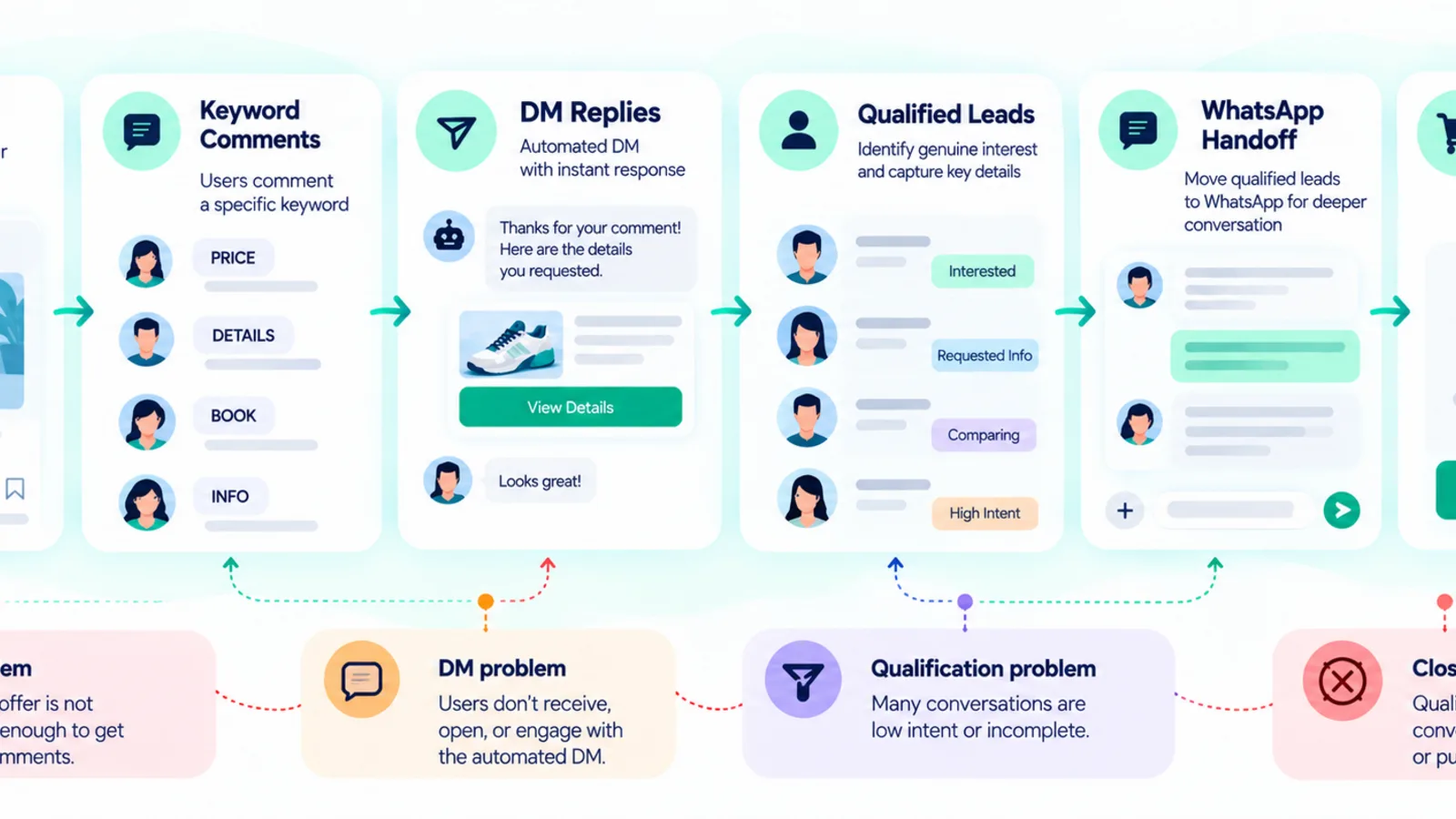
Short answer: Instagram DM automation works best when it turns a specific public action—such as a keyword comment, Story reply, giveaway entry, or promo-code request—into an immediate private conversation. The strongest patterns are not about automating every message. They are about delivering one promised next step quickly, collecting useful first-party information when appropriate, and escalating buying questions to a person or a WhatsApp workflow when the conversation needs more depth.
Publicly reported examples from brands, creators, ecommerce businesses, gyms, and service teams show several repeatable patterns: comment-to-DM product offers, keyword-based bookings, creator lead magnets, giveaway data capture, Shopify-linked promotions, and AI-assisted qualification followed by human sales. The figures below come from the relevant public case materials and should be treated as vendor- or platform-reported results, not independently audited benchmarks. None of these organizations should be interpreted as Mark360.ai customers.
The practical lesson for 2026 is simple: do not automate the conversation just because you can; automate the predictable first step and design a deliberate closer. For some journeys, that closer is a product page. For others, it is a booking form, a lead magnet, WhatsApp, Shopify verification, or a human teammate.
Why Instagram Engagement Dies Without a Conversation Path
Likes, views, saves, comments, and Story interactions can show interest, but engagement alone does not tell a customer what to do next. A person can comment “price,” reply to a Story, or ask whether a product is available and still leave before anyone responds.
That gap is where Instagram DM automation becomes useful. Instead of treating Instagram as only a publishing channel, a business can create a small conversation path around the action already taken by the user.
- Public signal: the person comments, replies to a Story, mentions the brand, or responds to a campaign.
- Trigger: a specific keyword, post, Story interaction, or inbound message starts the workflow.
- Immediate response: an Instagram auto reply delivers the promised information.
- Qualification: the flow asks one or two useful questions when qualification is necessary.
- Closer: the user goes to a booking page, ecommerce checkout, WhatsApp conversation, or human teammate.
This structure matters because automation should remove repetitive work without pretending that every customer has the same intent. A person asking for a size chart needs a different path from someone asking for a bulk quotation. A creator requesting a free guide needs a different path from a customer asking whether an order has shipped.
For Indian brands, the pattern can be especially practical around product launches, local appointments, festive offers, creator collaborations, and ecommerce campaigns where Instagram creates demand but a more structured channel is needed to complete the sale or support conversation.
Pattern A — Keyword Comment-to-DM for Product and Flash Sales
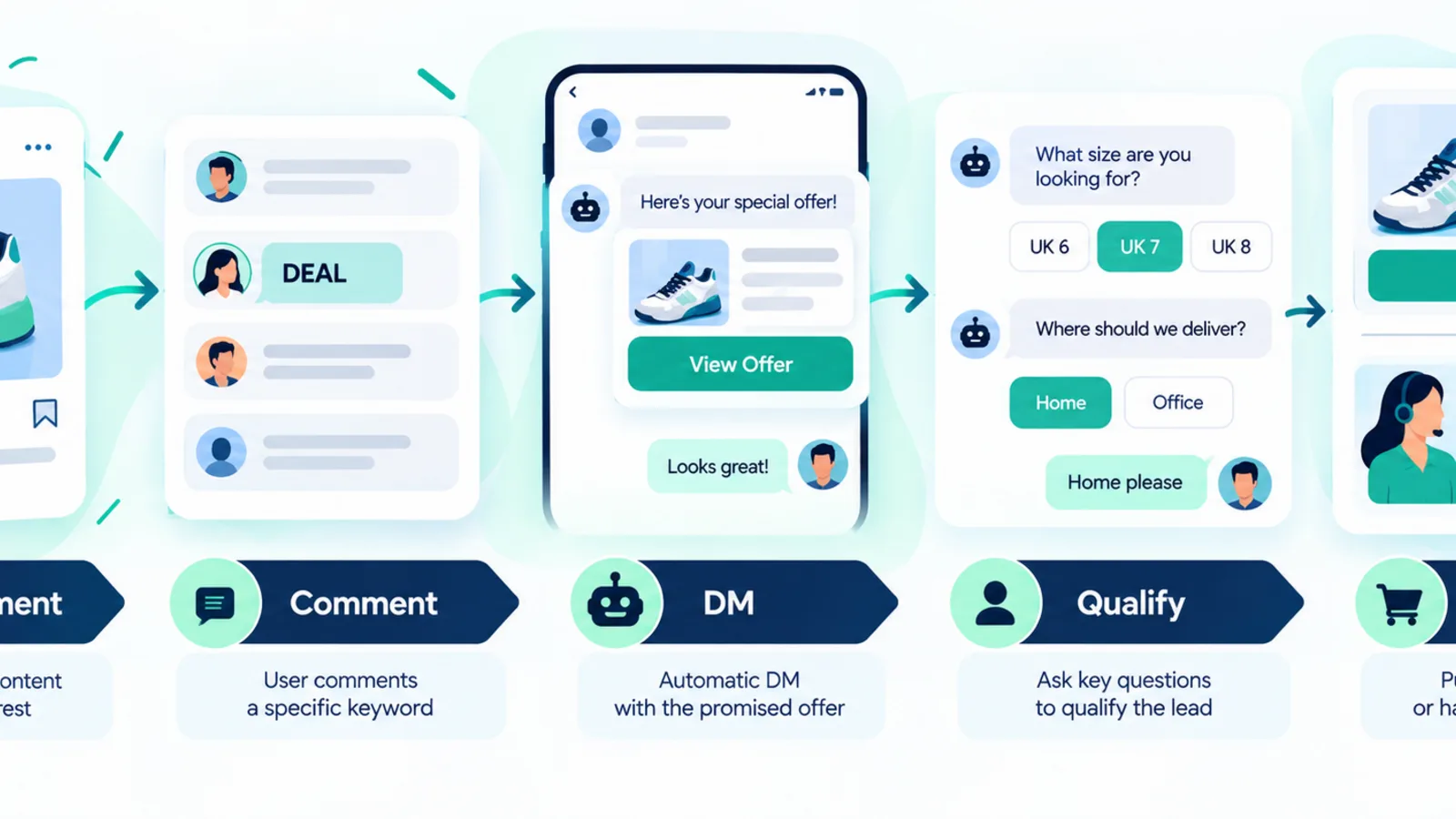
One of the clearest Instagram comment-to-DM patterns is: “Comment a keyword and we will send you the offer.” The public comment creates an explicit signal of interest, while the DM becomes the private delivery mechanism.
EZContacts-style product campaign
EZContacts is a useful publicly reported example of this pattern. Public case materials describe specific-keyword comment-to-DM campaigns, flash-sale messaging, and trackable promotional codes. The reported results included leads up to 400% higher over 30 days, comment-to-lead improvement from 2% to 8%, and a reported response-time reduction from four hours to 12 minutes.
These figures are reported campaign results rather than independent benchmarks. The transferable idea is more important than the headline number: the keyword creates a measurable bridge between content engagement and an offer.
A simple version for a fashion or D2C brand could be:
- Publish a Reel showing the product and the offer.
- Tell viewers exactly which keyword to comment, such as
DEAL,SIZE, or the product name. - Send an Instagram auto reply containing the promised information.
- Ask one qualifying question only if it changes the next step.
- Move purchase-ready conversations toward checkout or a suitable WhatsApp handoff.
The important design principle is one keyword, one promise, one next action. A keyword such as “PRICE” should not trigger a five-message sales pitch. It should answer the price question and then make the next step obvious.
When this pattern works best
- Flash sales and limited-time offers
- New product launches
- Price and availability requests
- Size or colour requests
- Product links that are cumbersome to find through a bio
- Campaigns where promotional codes need attribution
Mark360 can fit this pattern through an Instagram comment-to-DM workflow, with the conversation continuing into a managed inbox and, where appropriate, an ecommerce or WhatsApp workflow.
Pattern B — Local Services Booking from Instagram DMs
Local businesses have a different conversion problem: interest often needs to become an appointment before it becomes a sale. A fitness studio, salon, clinic, restaurant, tutor, or local service provider may receive dozens of questions about timings, availability, pricing, or trial sessions.
Gold’s Gym Costa Rica-style keyword-to-booking flow
Publicly reported materials for Gold’s Gym Costa Rica describe an Instagram keyword flow using “citas” to guide people toward bookings. The reported outcomes included nine times more Instagram bookings, Instagram accounting for 40% of total bookings, and a 99% faster support response.
Again, these are reported case-study figures rather than independently audited results. The reusable pattern is the important part: the keyword is not the conversion; it is the entry point into a booking journey.
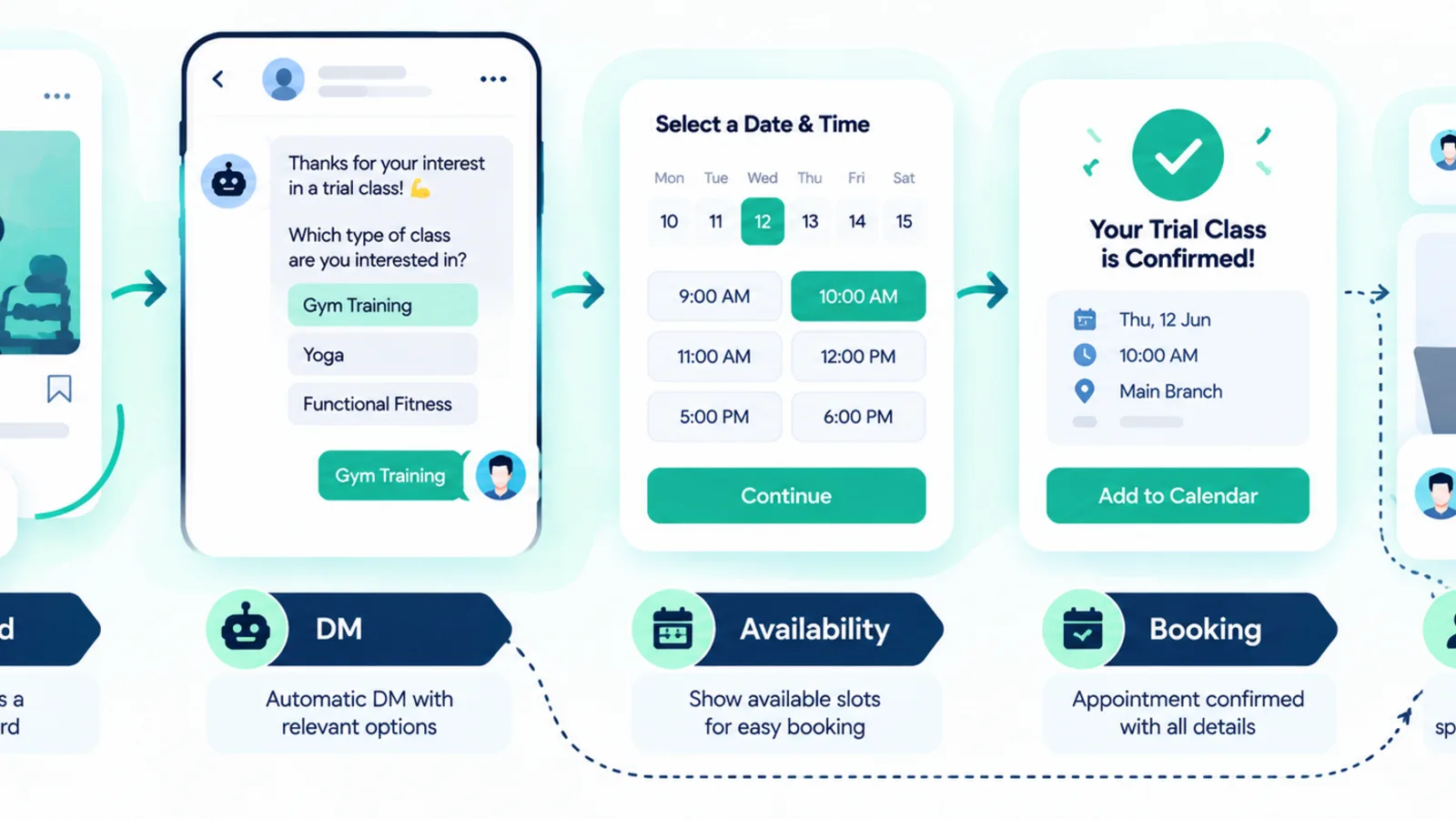
A gym in India could adapt the model without copying the exact campaign. For example, a Reel could say “Comment TRIAL for this week’s trial-class slots.” The automated DM could then provide the available class categories and ask the person to choose a preferred time. A human or booking system can handle the final appointment confirmation.
The same pattern can work for:
- Salon appointment requests
- Fitness trials and membership enquiries
- Photography enquiries
- Coaching consultations
- Restaurant reservations or event enquiries
- Home-service estimates
The automation should stop where the business needs judgement. For example, a customer asking “Do you have a 7 PM slot?” can receive structured availability, while a customer describing a complicated service requirement should be routed to a person.
Pattern C — Creator Lead Magnets and Digital Offers
Creators often have a different asset to deliver: a guide, checklist, recipe, template, course resource, waitlist invitation, newsletter, or digital product.
Here the Instagram DM is less about closing a transaction immediately and more about converting content engagement into a permission-based next step.
Contando Estrelas-style conversational creator flow
Publicly reported case materials for Contando Estrelas describe conversational comment-to-DM flows involving AI and human handoff. The reported results included 400% sales growth in 30 days, a 12% lead-to-sale rate, and more than 500 comments per post.
Those results should be read as the organization's reported campaign outcomes, not as a general conversion promise. The practical pattern is a creator funnel that combines scale with escalation:
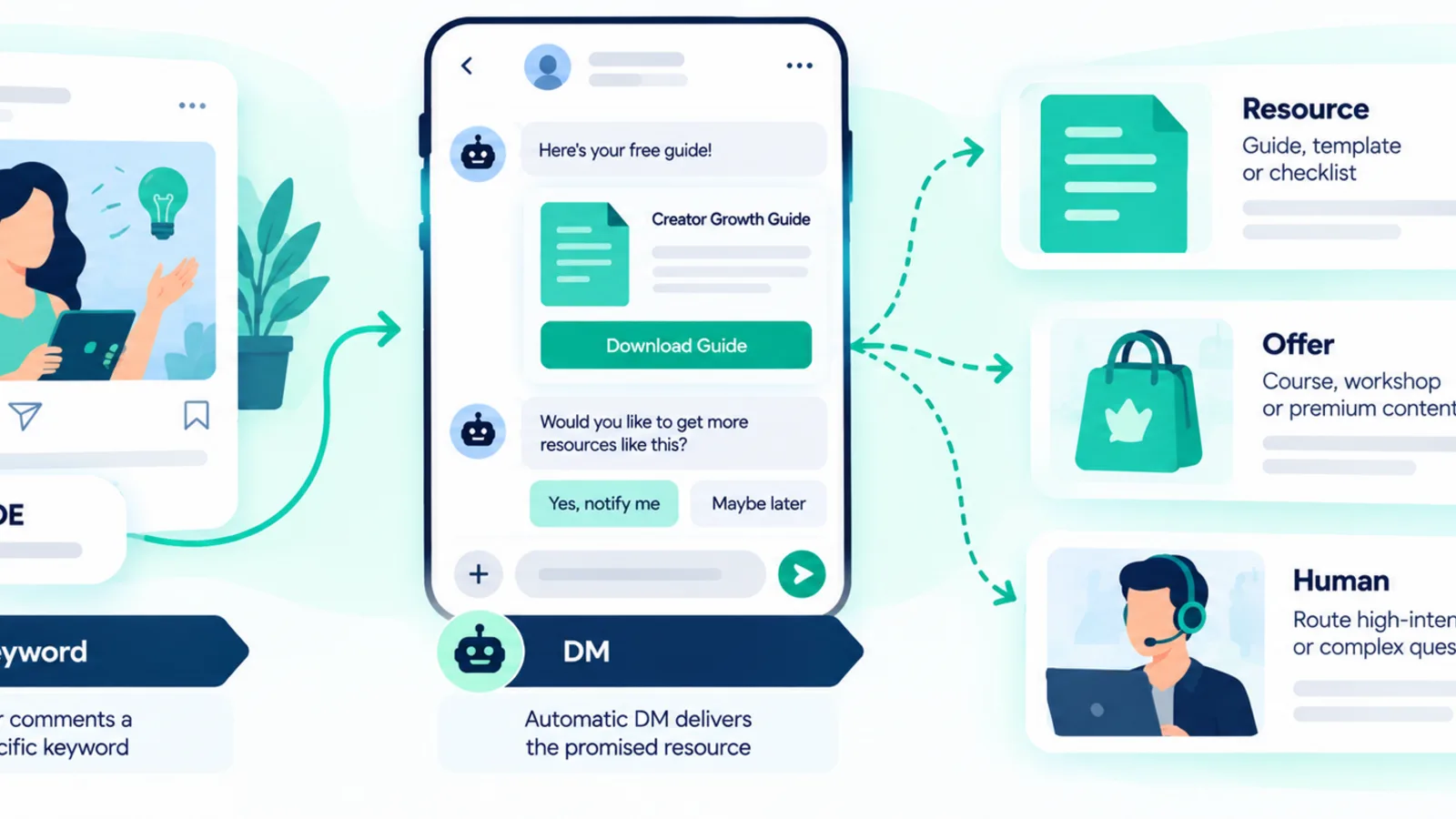
- The creator publishes useful content.
- The post offers a specific resource through a keyword.
- The commenter receives the resource privately.
- The conversation can ask a lightweight qualifying question.
- High-intent or unusual questions move to a human.
A creator selling a paid workshop might use WORKSHOP. A business educator could use CHECKLIST. A food creator might use RECIPE. The best keyword is connected directly to the content and the promised deliverable.
This also creates a cleaner measurement model. Instead of reporting only Reel views, the creator can observe keyword comments, DMs delivered, replies, resource clicks, qualified conversations, and downstream purchases.
Creator lead magnets need a clear promise
The automation should deliver what the post promised. If the CTA says “Comment GUIDE and I’ll send the checklist,” the first DM should contain the checklist or its direct access path. Do not make the user answer several questions before receiving the promised resource unless that additional step is clearly disclosed and genuinely necessary.
Pattern D — Giveaways, Story Mentions, and First-Party Data
Giveaways can generate enormous interaction volume, but the strategic question is what happens after someone enters. A useful automation does more than count comments: it creates a clear, permission-based path to continue the relationship.
Four Reasons-style giveaway mechanics
Publicly reported Four Reasons campaign materials describe a gamified giveaway using keyword and comment actions, Story mentions, referral IDs, and DM capture. Reported results included 227.59% ROI, $19,000 in attributed sales, a 346% increase in Instagram sales conversion, CPL moving from $17 to $0.65, and 3,539 subscribers from $2,300 in ad spend.
These are campaign-reported figures and should not be interpreted as universal giveaway benchmarks. The transferable structure is the combination of participation → conversation → identifiable lead → measurable outcome.
Roma by Rochi-style Story and comment capture
Publicly reported materials for Roma by Rochi describe a “SORTEO” keyword combined with Story-mention triggers and email capture. The reported campaign outcomes included a 741% engagement lift, an 82% reach increase, more than 43,000 comments, more than 4,470 emails, and more than 6,000 followers in one week.
For a modern campaign team, the lesson is not to copy the giveaway mechanics blindly. Instead, decide what data is genuinely needed, explain the value exchange, and make the automated path easy to understand.
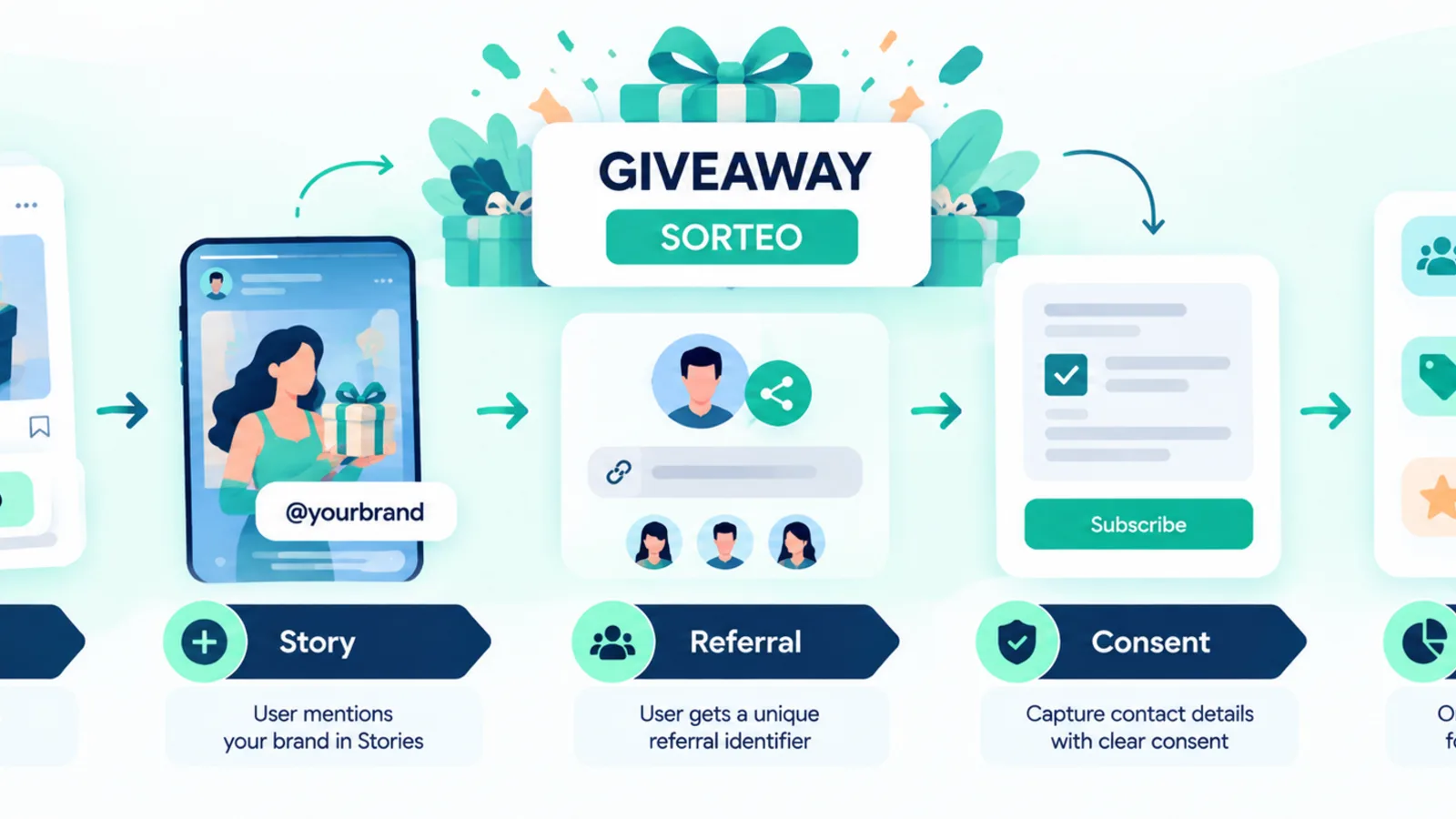
For example, a brand could use a campaign keyword to acknowledge an entry, provide the campaign details, and optionally invite the participant to receive future updates. The marketing team can then separate giveaway participants from product-intent leads instead of treating every participant as a sales lead.
Pattern E — Promo-Code Keyword DMs and Shopify Checks
Ecommerce automation becomes more useful when Instagram intent can be connected to actual product or customer information. A keyword can identify the campaign while a commerce system verifies what should happen next.
ILTHY-style promotional flow
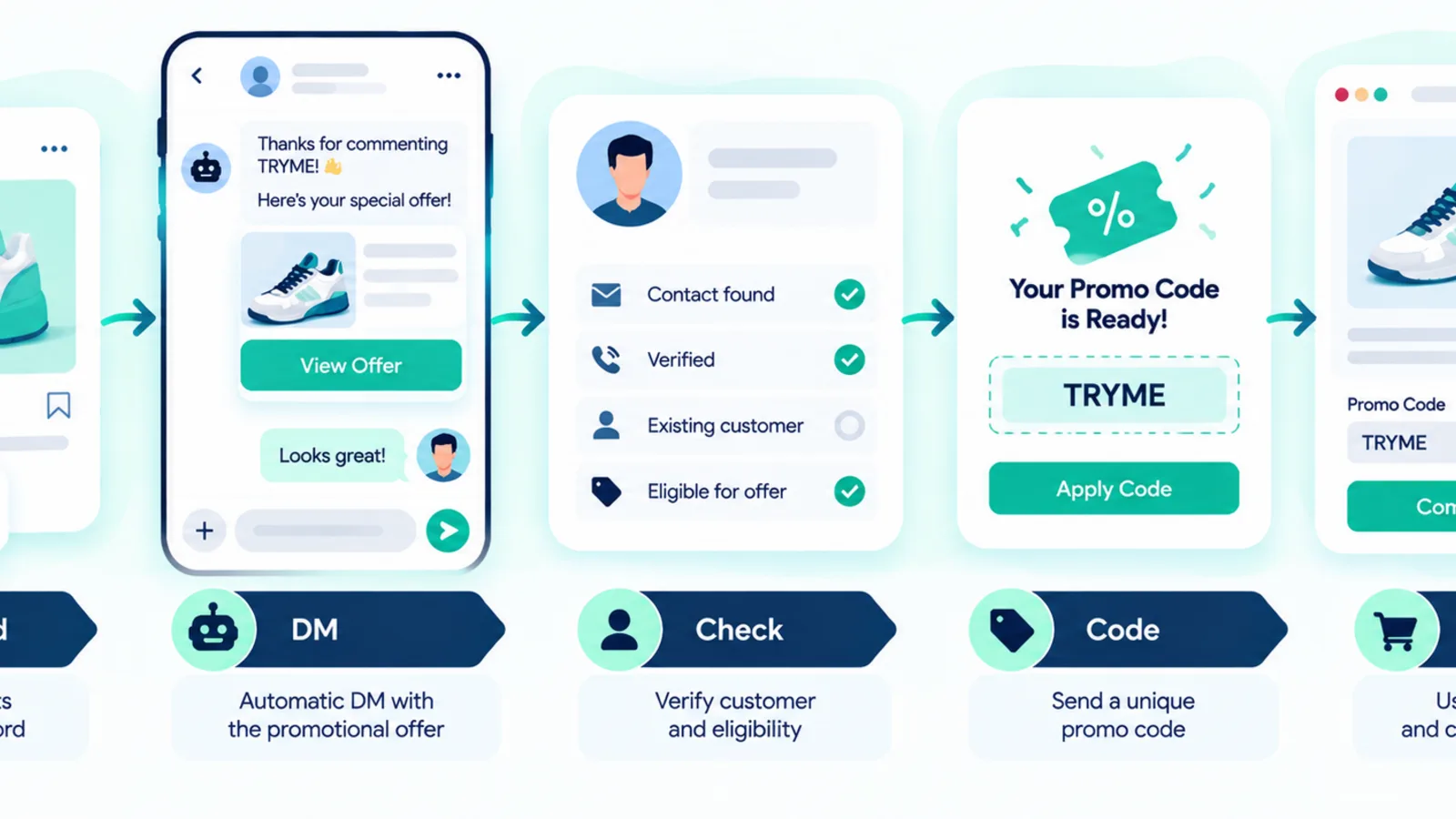
Publicly reported ILTHY campaign materials describe a bio promotion leading users to a TRYME keyword DM, contact capture, a Shopify check, and a gift-card flow. Reported results included a 22% conversion increase, $2,303 in first-campaign sales, 43 orders from 197 engaged people, and $1,075 generated in 15 hours during Memorial Day.
The useful architecture is:
- Instagram: the campaign creates interest.
- Keyword: the user explicitly requests the offer.
- DM: the automation explains the next step.
- Commerce check: customer or order information can determine eligibility where the integration supports it.
- Offer: the correct code, gift, product path, or next action is delivered.
TheCultt-style product conversation
Publicly reported TheCultt materials describe welcome DMs, comment replies for price, availability, and condition, contests, and ads. Reported outcomes included a 37% increase in purchase conversion, 47% more chats, CAC below $2, and 170 purchases from 450 promotional codes over roughly three and a half months.
For Shopify brands, this points toward a broader Instagram-to-commerce system rather than a single chatbot message. Mark360 can be positioned softly here: Instagram can open the conversation, while a Shopify-connected WhatsApp workflow can support cart recovery, order updates, promotional journeys, and other commerce use cases through the appropriate integrations.
Pattern F — WhatsApp Qualification and the Human Close
Instagram is often the discovery channel. WhatsApp can become the closer when the customer needs a longer conversation, product recommendations, order context, or a sales representative.
La Repa de Sueños-style AI qualification
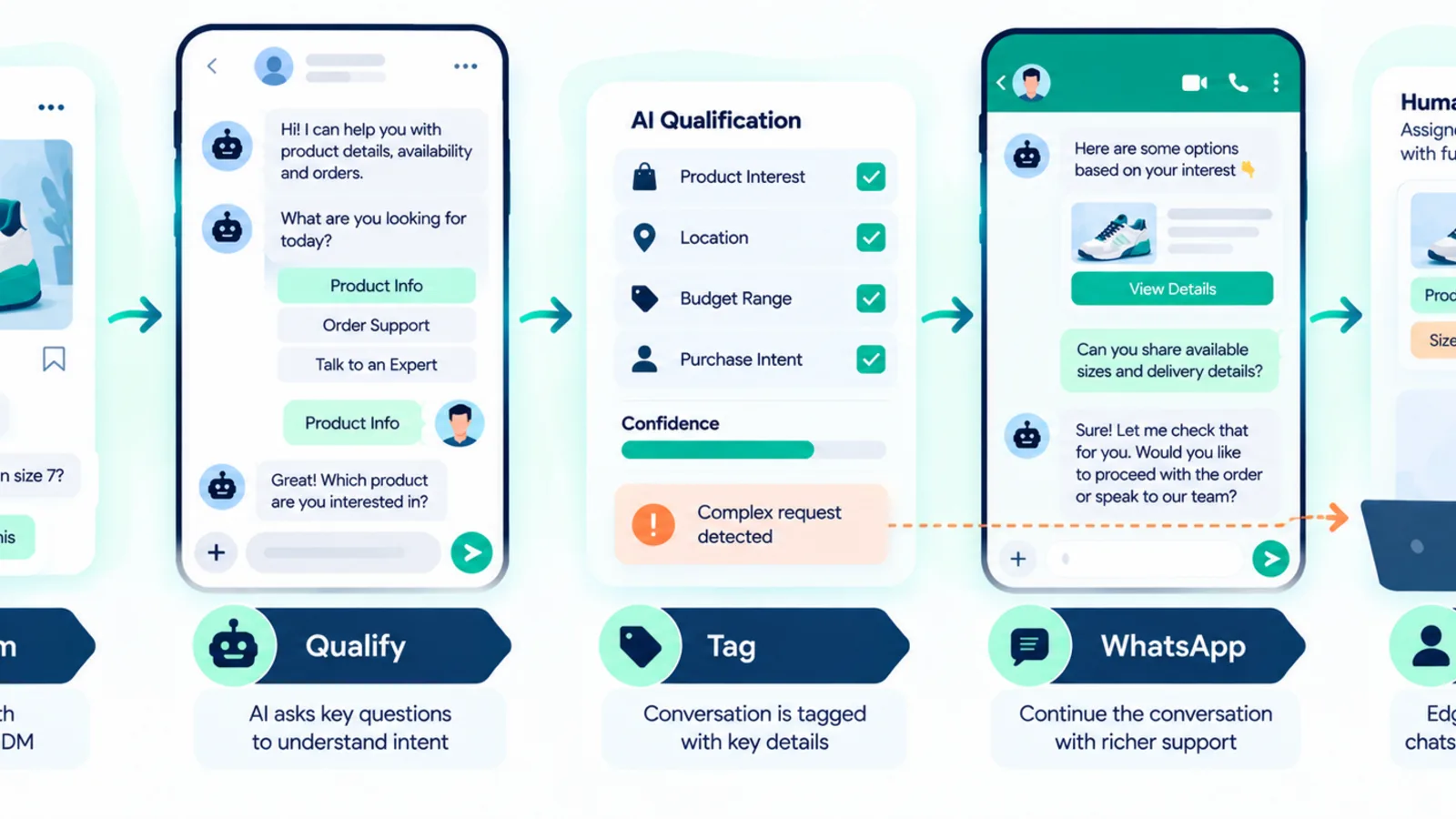
Publicly reported La Repa de Sueños materials describe WhatsApp AI qualification followed by a tagged human sales takeover. Reported outcomes included response time improving from four hours to five minutes, a 35% sales increase, and a 90% reduction in sales workload.
The important architecture is not “AI replaces sales.” It is AI handles predictable qualification, then a person receives the conversation with context.
That can look like:
- Instagram captures initial intent.
- The user chooses WhatsApp when a deeper conversation is useful.
- WhatsApp asks structured questions such as product category, location, budget range, or requirement.
- The system tags the conversation.
- A sales teammate takes over when the conversation reaches a defined threshold.
What Meta case stories add to the pattern
Meta's published WhatsApp success materials provide additional examples of structured conversational commerce. In the Trendyol case, Meta reports more than 123,000 customers reached in one week, 13% of conversations showing shoppable recommendations, and a median reply time below seven seconds. In the TXC case, Meta reports 93% of inquiries resolved without escalation, order-status response time improving from 35 minutes to three minutes, and more than 1,400 hours of waiting saved.
These are official platform case-study claims. They are useful as examples of what a mature conversational workflow can look like, but they should not be treated as universal performance benchmarks.
Meta Business provides the broader platform context for businesses building messaging journeys, while WhatsApp Business covers WhatsApp business messaging capabilities.
What These Examples Share: Speed, Specific Keywords, Clear Offers, Consent, and Human Escalation
Across the public examples, the same design principles appear repeatedly.
| Pattern | Trigger | Automated first step | Closer |
|---|---|---|---|
| Product sale | Keyword comment | Offer, price, or product link | Checkout or sales chat |
| Local booking | Booking keyword | Availability or booking path | Appointment confirmation |
| Creator lead magnet | Comment keyword | Guide, template, or resource | Digital offer or consultation |
| Giveaway | Keyword, comment, or Story interaction | Entry confirmation | Consent-based nurture |
| Ecommerce promotion | Promo keyword | Offer or eligibility check | Shopify purchase path |
| Complex enquiry | DM or WhatsApp request | Qualification | Human sales takeover |
Speed matters because intent can decay. Specific keywords reduce accidental triggers. Clear offers prevent confusion. Consent protects the relationship. Human escalation handles the conversations where rules are not enough.
This is why the strongest Instagram DM automation is usually narrow rather than enormous. One good flow for one high-volume use case can be easier to measure and improve than a giant automation that tries to answer everything.
Mapping the Patterns to an Instagram → WhatsApp Shared Inbox
A shared inbox becomes useful when the business has more than one channel but wants one operational view of customer intent.
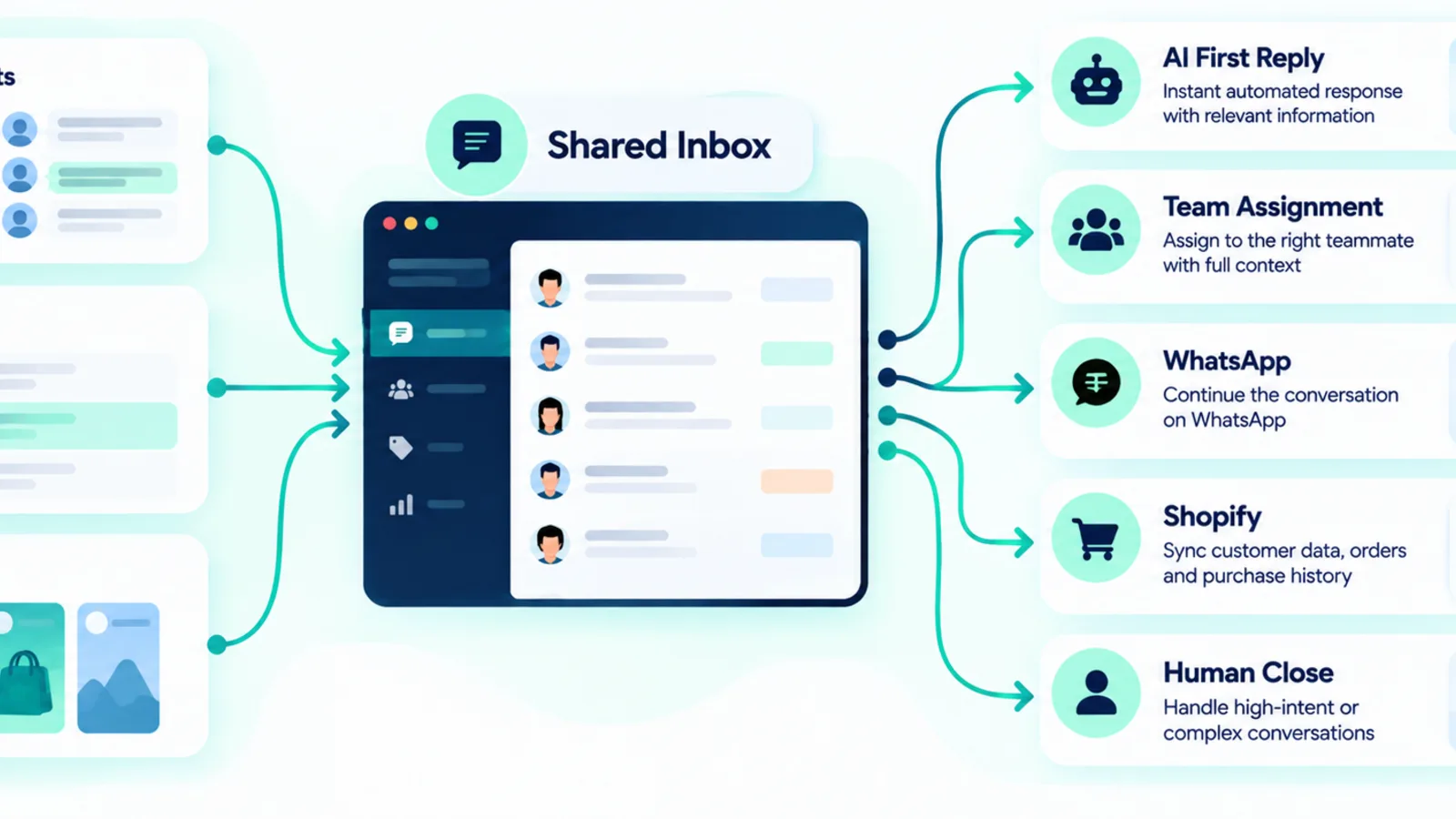
A practical architecture can be divided into four layers:
1. Instagram acquisition layer
Reels, posts, Stories, creator collaborations, and ads create the initial interaction. Relevant internal Mark360 resources can cover Reels comment-to-DM, DM keyword auto-reply, comment-to-DM funnels, and Story reply automation.
2. Conversation layer
The first DM should answer the user's immediate reason for interacting. A short menu, qualifying question, resource, product link, or booking option is usually enough to establish the next step.
3. WhatsApp closing layer
When the user needs richer product assistance, ongoing support, order context, or a human conversation, WhatsApp can become the next channel. For ecommerce teams, this is where a Shopify WhatsApp workflow can support the appropriate commerce journey.
4. Human operations layer
Human assignment should have explicit triggers. Examples include high-value leads, complaints, unusual requests, payment problems, negotiation, product exceptions, or low-confidence AI responses.
For teams comparing operational tooling, a shared Instagram and WhatsApp inbox can reduce the need to switch between separate conversations and helps make ownership visible.
Compliance Guardrails: Consent, Messaging Windows, and No Unsolicited Auto-DM to New Followers
Automation should be designed around user-initiated interactions and the capabilities permitted by the relevant Meta messaging APIs. A business should not assume that because a person follows an account, the account is entitled to send arbitrary promotional DMs.
For keyword flows, make the user action explicit. “Comment GUIDE and I’ll send it” creates a clear expectation. The DM should fulfil that expectation instead of turning the interaction into an unrelated sales broadcast.
Teams should also distinguish between an inbound conversation and a campaign audience. Messaging permissions, conversation windows, templates, promotional rules, and regional requirements can change. Always validate the current requirements in official Meta Business Help, Instagram Help, and WhatsApp Business policies before launching a high-volume workflow.
For creators working with brands, advertising disclosure is a separate consideration. Instagram's branded-content guidance says paid or value-exchange relationships can require the paid partnership label. See the relevant Instagram branded-content guidance when creator campaigns involve commercial partnerships.
A useful internal rule is: automate the response to an action the user actually took, make the promised value clear, and provide a human route when the automation cannot confidently handle the request.
Metrics Checklist: Comment-to-DM Rate, Reply Time, WhatsApp Handoff, Qualified Leads, Codes, and Revenue
Do not judge Instagram DM automation by the number of automated messages sent. The useful metrics follow the customer journey.
| Metric | What it tells you | Diagnostic question |
|---|---|---|
| Keyword comment rate | Whether the content CTA creates explicit intent | Are people taking the requested action? |
| DM delivery / response rate | Whether the first private step works | Does the first message make sense? |
| Reply rate | Whether the conversation earns a response | Is the next question relevant? |
| WhatsApp handoff rate | How often Instagram conversations need a deeper channel | Are we moving the right conversations? |
| Qualified lead rate | Whether automation is filtering useful prospects | Are sales teams receiving context? |
| Promo-code usage | Whether campaigns create attributable purchases | Which content or keyword produced orders? |
| Revenue / bookings | Business outcome | Did the conversation produce the intended result? |
Response time is another useful operational metric. If customers routinely ask questions outside working hours, the objective is not necessarily to replace the team. It may be to provide an immediate first answer and queue the conversation with enough context for the next available human.
Choosing a First Pattern This Week
If your team is new to Instagram DM automation, start with the use case that already produces repetitive inbound intent. Do not begin by automating the entire inbox.
- Pick one high-volume interaction. Examples: price questions, trial bookings, guide requests, product availability, or promo codes.
- Choose one distinctive keyword or trigger. Make it easy to understand and directly related to the offer.
- Write the first DM around the user's reason for interacting. Deliver the promised value before adding additional sales questions.
- Define the closer. Decide whether the conversation ends at a link, booking, Shopify flow, WhatsApp handoff, or human assignment.
- Measure the whole path. Track comments, DMs, replies, qualified leads, handoffs, codes, bookings, and revenue where available.
- Review edge cases. Test unclear comments, duplicate interactions, complaints, product exceptions, and questions the automation cannot answer.
The examples in this article suggest a useful operating philosophy: Instagram is often where intent becomes visible; the DM is where intent becomes understandable; WhatsApp or a human teammate is where many complex conversations become closable.
That does not mean every Instagram conversation should leave Instagram. If a customer only wants a product link or a free resource, the simplest path is often the best path. WhatsApp becomes valuable when the conversation benefits from deeper qualification, ongoing customer context, commerce support, or human sales involvement.
For Mark360, the practical opportunity is to connect these pieces without turning every interaction into an automated sales pitch: Instagram comment-to-DM for explicit engagement, keyword auto-replies for inbound intent, Story reply automation for ephemeral campaigns, a shared Instagram + WhatsApp inbox for team operations, AI first replies for predictable questions, and human assignment for the cases where judgement matters.
The strongest workflow is therefore not the one with the most automation. It is the one that makes the customer's next step obvious while giving the business enough context to know when automation should stop.