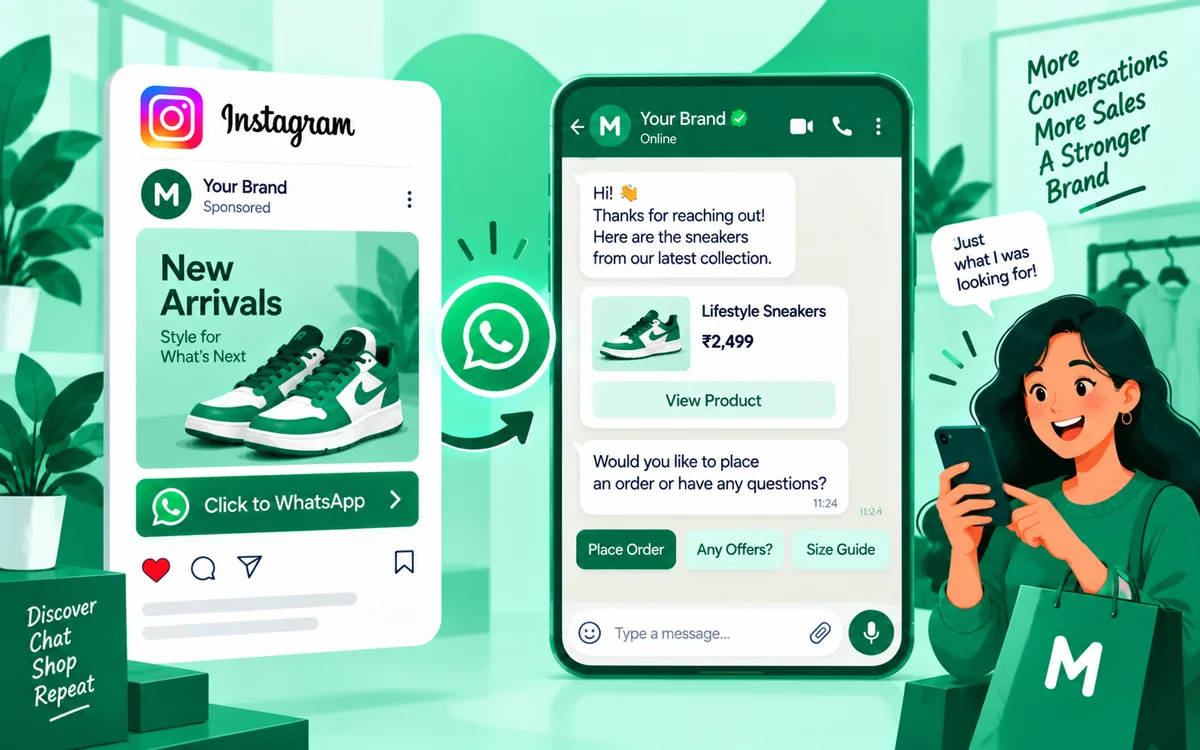



Abandoned carts become lost revenue when email arrives late, the recovery link breaks, or shoppers cannot ask a question. A consent-first whatsapp abandoned cart shopify flow adds a conversational recovery path without ignoring templates, privacy or support operations.
Best WhatsApp abandoned cart flow 2026
Detect the abandoned checkout, verify WhatsApp consent, wait for a useful delay, check that no order exists, send an approved template with a validated recovery URL, route replies, and stop after purchase or opt-out.
Why abandoned cart emails fail
Email can be missed in a crowded inbox, arrive after intent has cooled, contain an expired link, or offer no conversational help. WhatsApp can be faster, but only for eligible customers and compliant templates.
Timing sequence graphic
Graphic: checkout abandoned → 15–30 minutes helpful reminder → 4–6 hours product/value reminder → 18–24 hours final reminder → stop on conversion, opt-out or expiry. Use frequency caps and test timings by market.
Message template anatomy
- Context: “You left something in your cart.”
- Dynamic product/cart data.
- One benefit or support cue.
- One clear Complete checkout CTA.
- Reply-to-support path.
- Business identity and compliant opt-out.
Consent checklist
- Use an explicit, non-preselected WhatsApp opt-in.
- Explain message types and identify the business.
- Store consent source and status.
- Suppress immediately after opt-out.
- Use approved templates for applicable business-initiated messages.
How to connect WhatsApp to Shopify
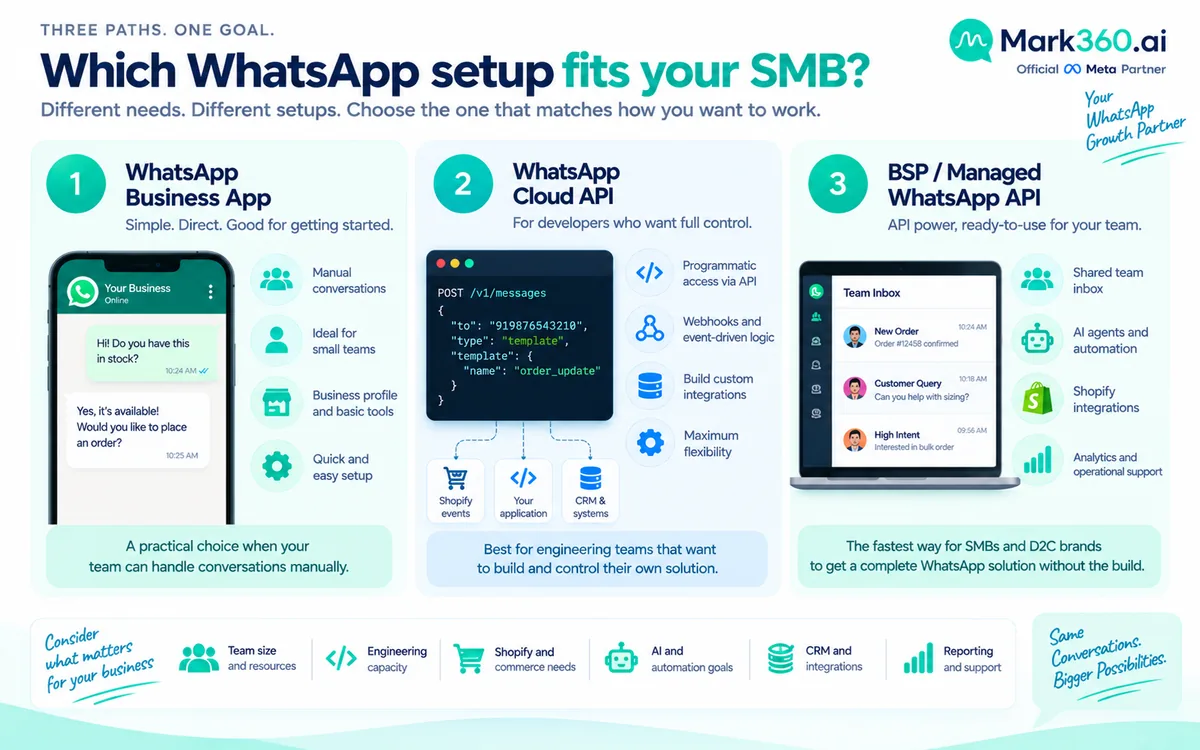
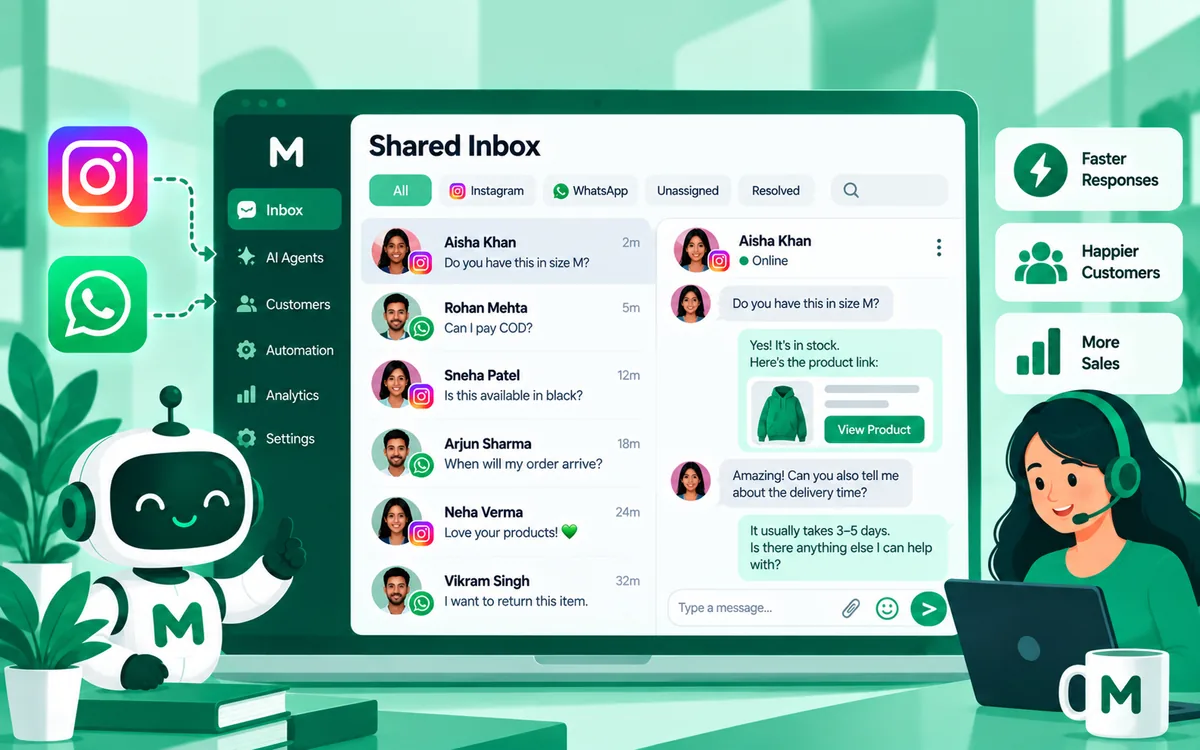
Connect Shopify cart/checkout events, the WhatsApp Business Account, consent records, templates and order webhooks through Shopify functionality, an app or BSP. Map variables, validate the recovery URL, connect replies to an agent/AI workflow, and use idempotency to prevent duplicates.
Testing and metrics
Test guest and logged-in checkout, mobile links, currencies, purchase stop conditions, opt-out, replies, template failures, webhook retries and agent handoff. Track eligible carts, sends, delivery, reads, clicks, recovered checkouts, recovered revenue, conversion, replies and opt-outs.
Troubleshooting
No message: check eligibility, consent, number, workflow and template. Broken link: regenerate and validate the checkout URL. Duplicate: inspect event IDs and stop conditions. Agent chaos: add routing, ownership, tags and escalation.
Mark360.ai
Mark360.ai can be the WhatsApp automation layer for Shopify journeys, templates, recovery, routing and analytics. Begin with a small measurable flow, then expand after validating consent and revenue attribution.