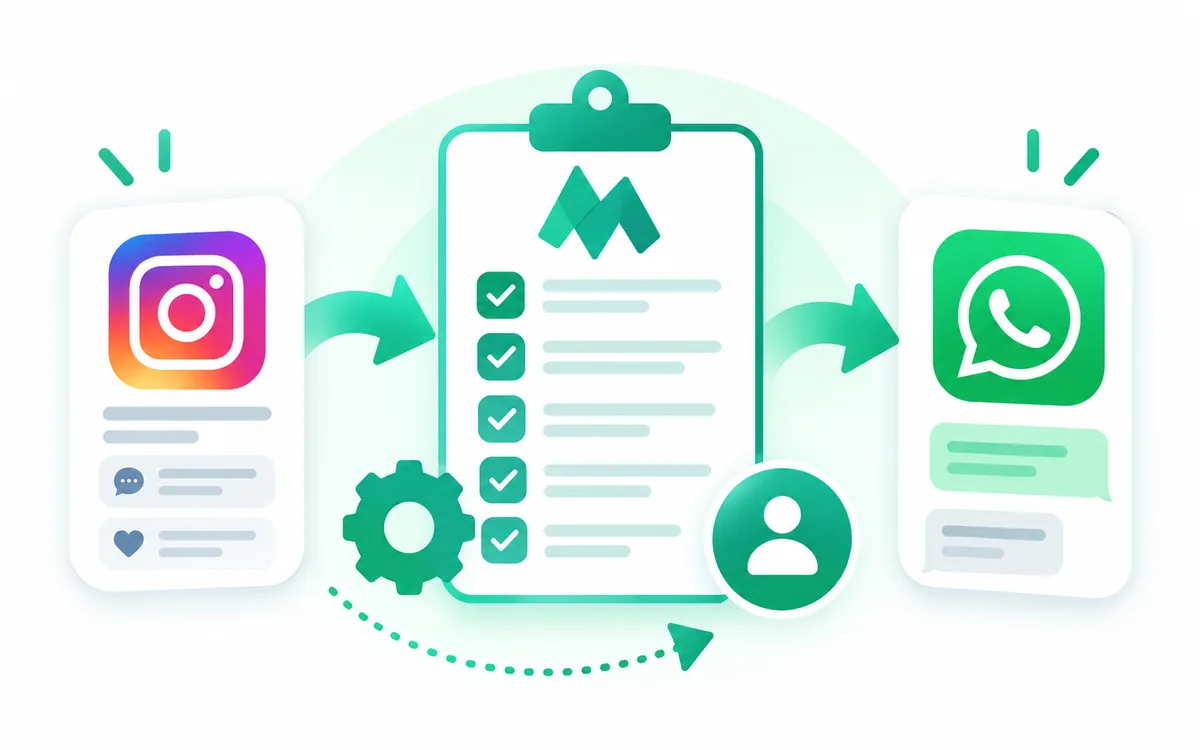


Direct answer: Instagram DM automation is best for discovery, social proof, and content-led capture. The WhatsApp Business API is best for conversion ops — templates, catalogs, Click-to-WhatsApp ads, multi-agent inbox, and multi-day nurture. Global brands should usually use both: Instagram for attention, WhatsApp for commitment, connected by consent-aware handoffs and AI agents.
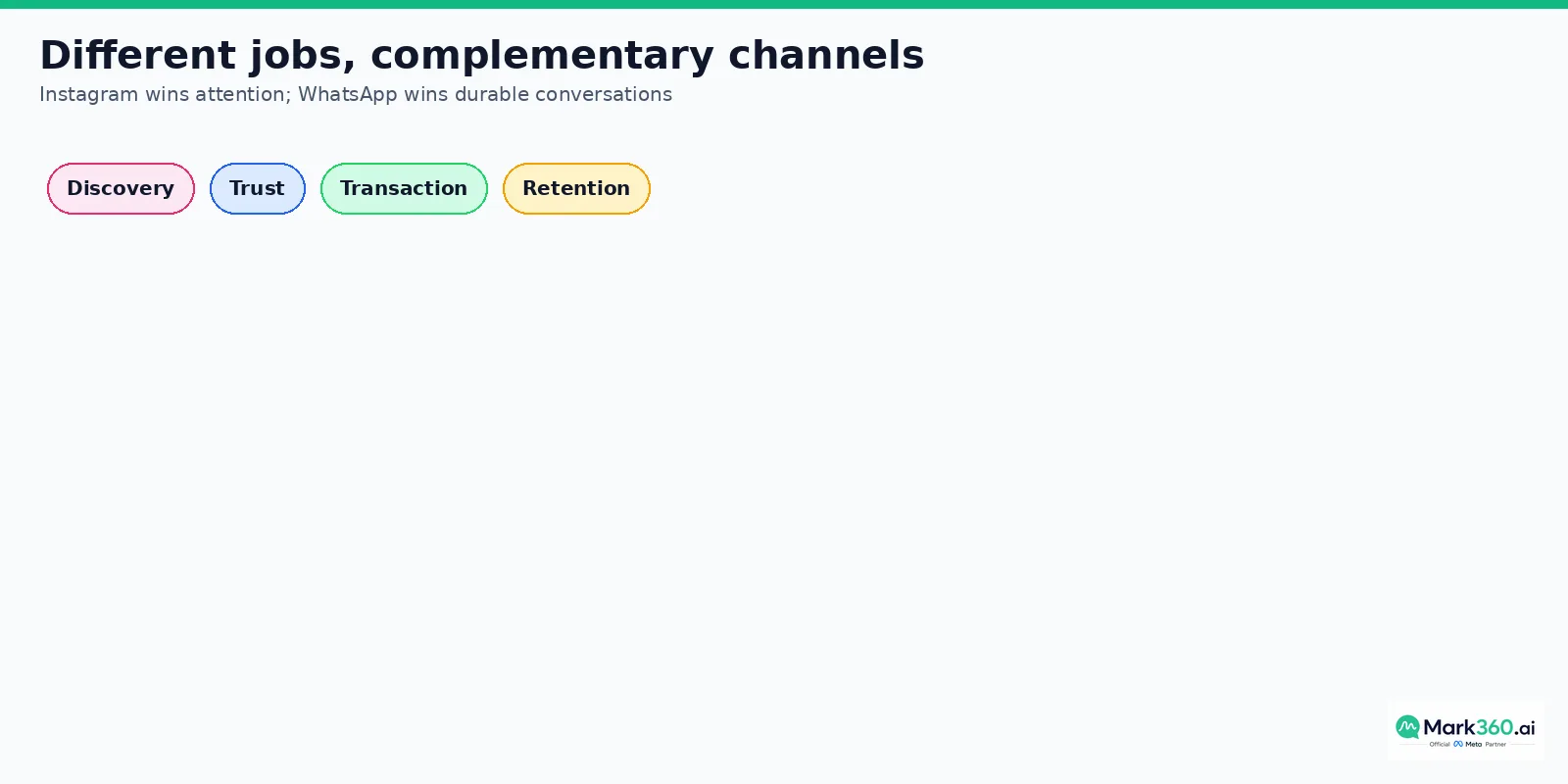
Different jobs, complementary Meta channels
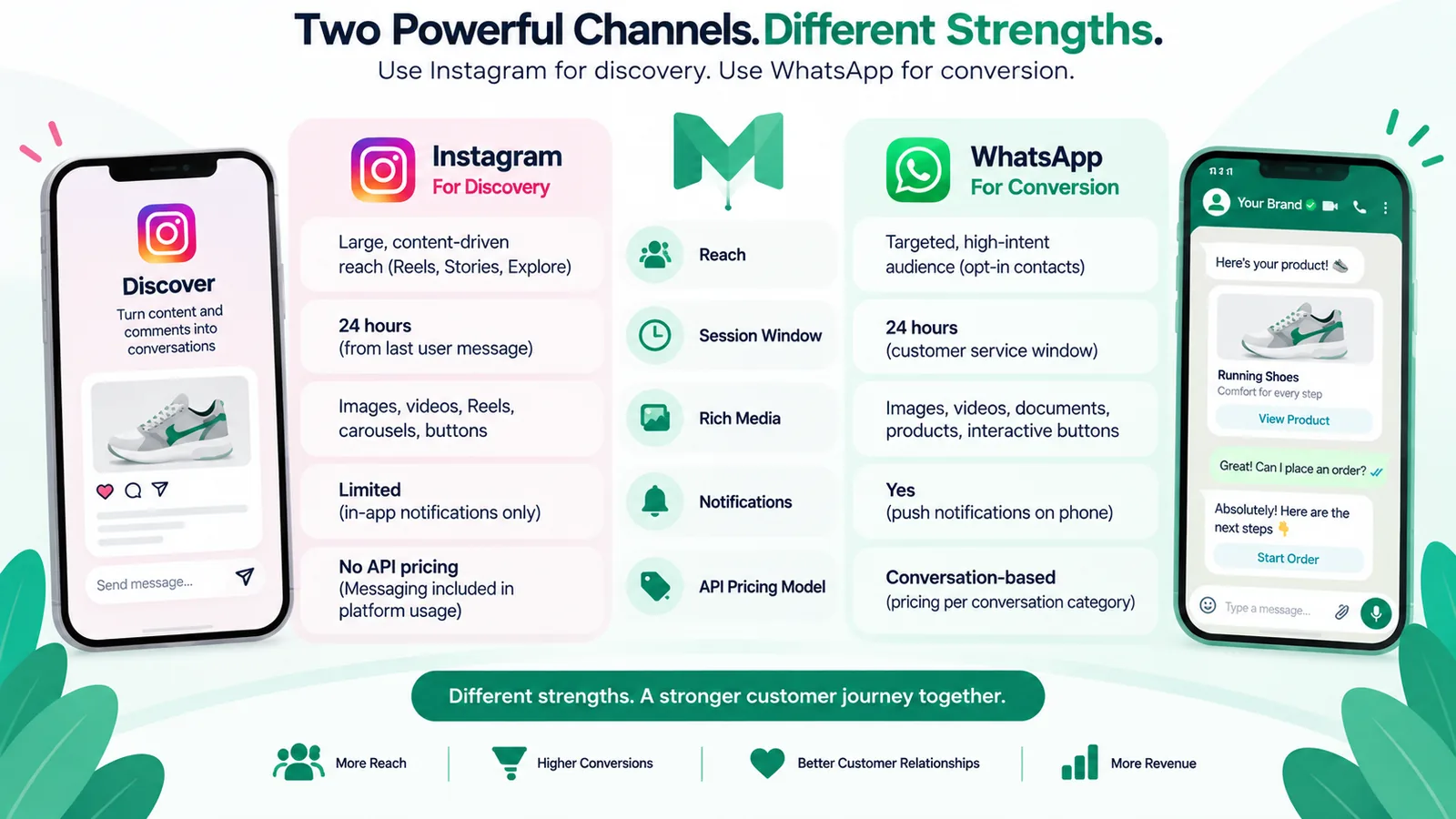
Choosing Instagram versus WhatsApp as rivals misses how Meta funnels work. Instagram creates demand in public feeds. WhatsApp converts demand in private, high-trust threads. The right question is which channel leads for each use case — and how you bridge them.
Related: comment-to-DM to WhatsApp funnel, AI agent vs flows, Click to WhatsApp ads.
Capability comparison

Instagram DM automation shines with Reels, creators, comment keywords, and social discovery. Messaging API rules and windows apply. It is weaker for long nurture and heavy transactional ops.
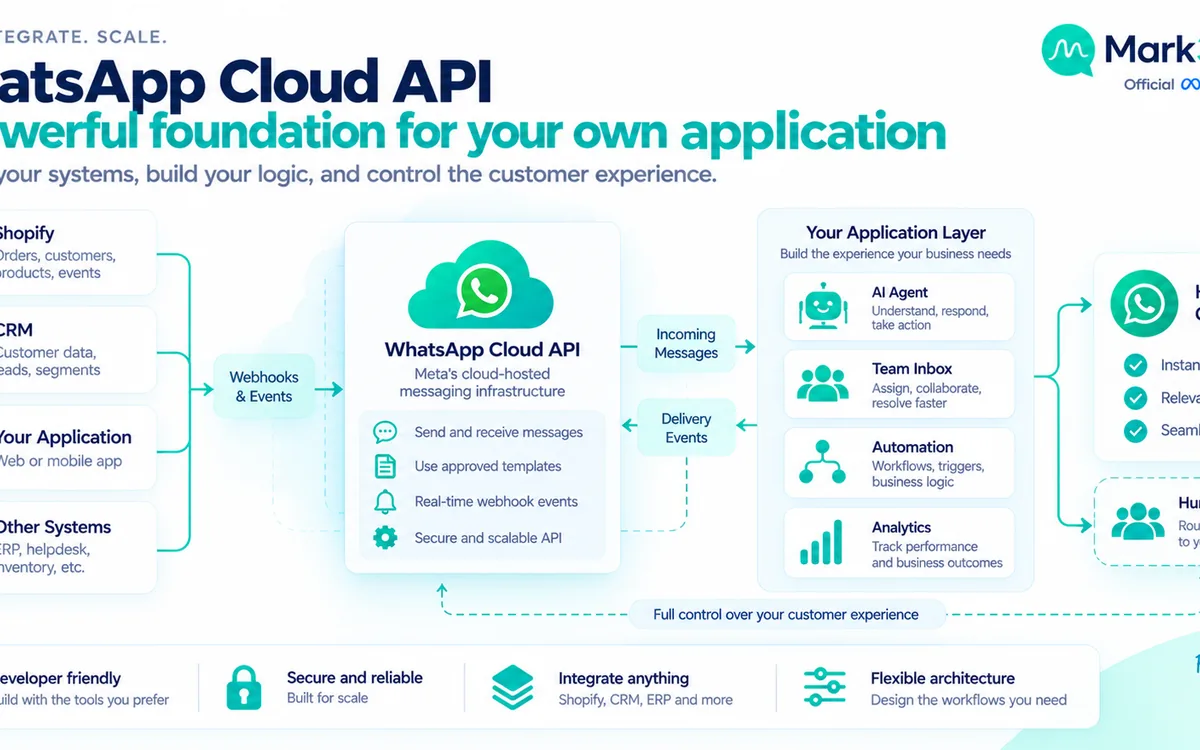
WhatsApp Business API shines with templates outside the customer service window, catalogs, payments patterns, CTWA entry points, and team inboxes at scale. Pricing is category- and market-based per Meta's rules.
Use-case channel map
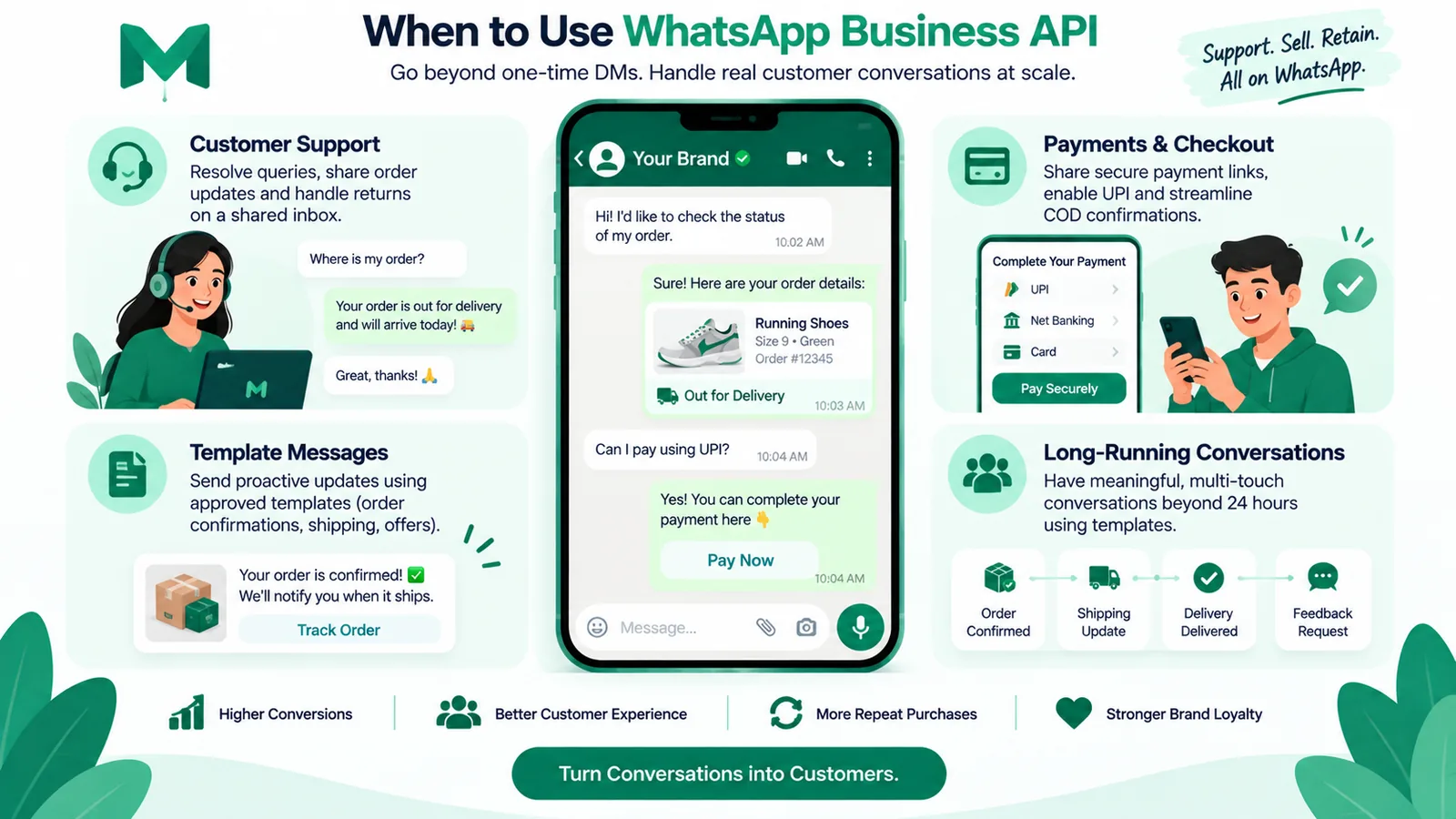
| Use case | Lead with | Also use |
|---|---|---|
| Viral Reel lead magnet | WhatsApp nurture | |
| Click-to-chat ads | WhatsApp (CTWA) | IG remarketing |
| Order updates | — | |
| Influencer campaign | WhatsApp close | |
| Support WISMO | IG if they start there | |
| Appointment booking | Either | Confirm on WhatsApp |
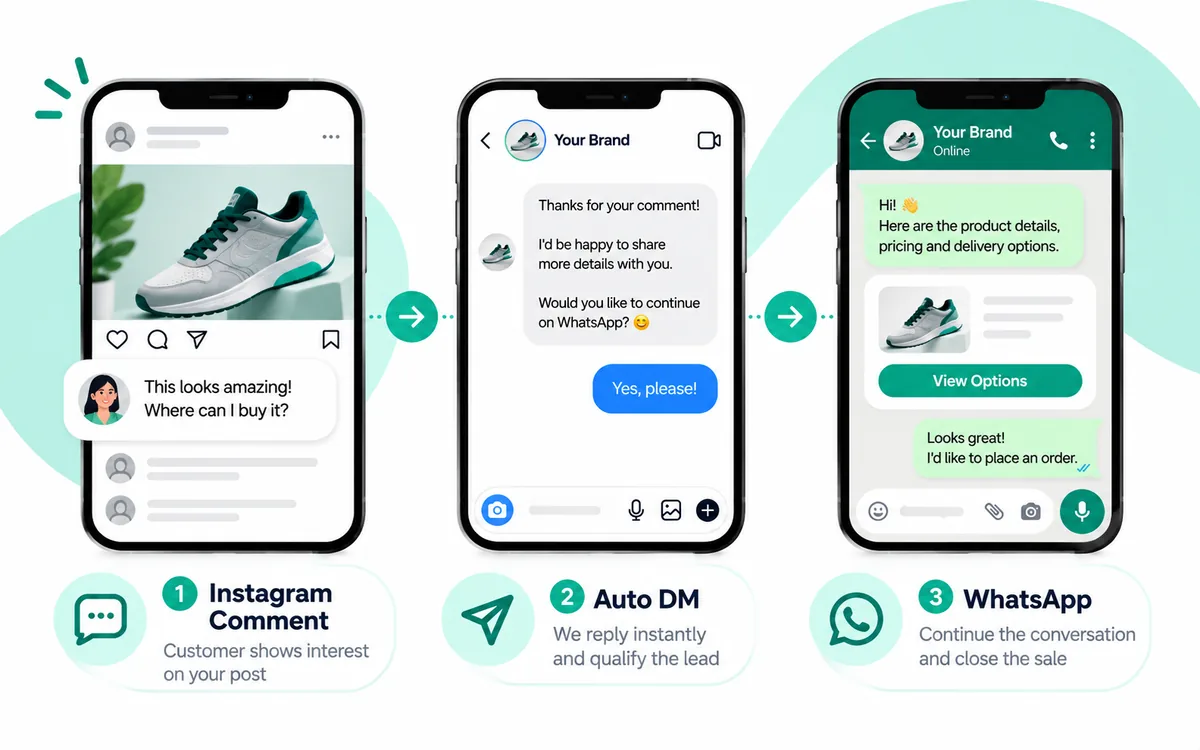
Recommended Meta funnel
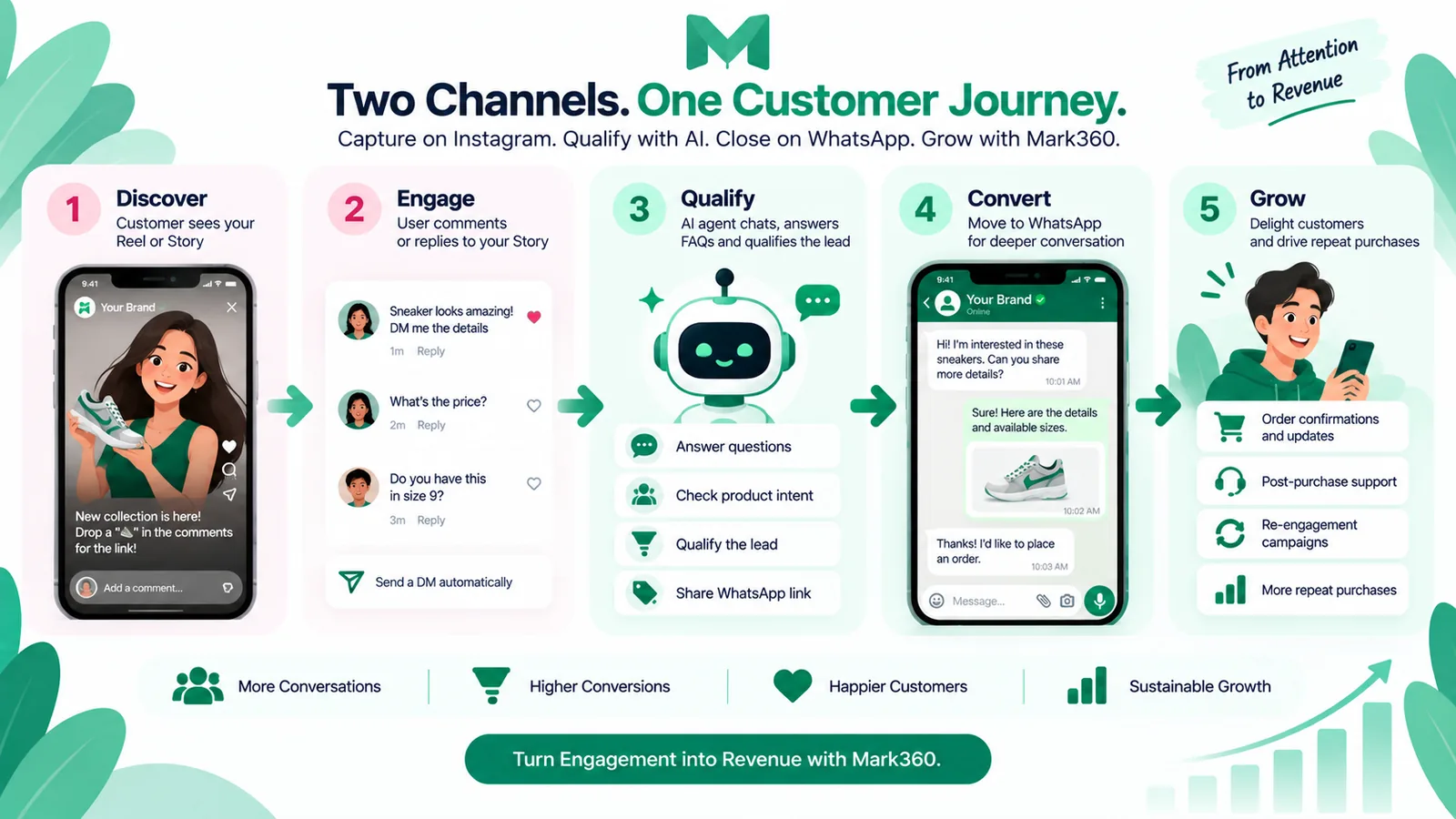
- Attention: Reels, creators, Instagram ads.
- Engagement: comment-to-DM / Instagram DM agent.
- Consent bridge: clear WhatsApp opt-in or deep link.
- Conversion: WhatsApp API templates + AI.
- Retention: utility updates and winbacks.
Pricing lens (global framing)
Instagram tooling is mostly SaaS. WhatsApp Business API adds delivered-message pricing by category and recipient market — see Meta's WhatsApp pricing documentation. We do not invent Meta USD cards. Prefer framing platform fees vs WhatsApp conversation pricing. India Mark360 examples only when needed: Marketing ₹0.94, Utility ₹0.138. Details: WhatsApp API pricing India and service message pricing Oct 2026.
Channel decision checklist

- Where do buyers already message you?
- Is the offer impulse (IG) or consultative (WA)?
- Do you need templates outside the 24-hour window?
- Do ads need Click-to-WhatsApp entry points?
- Can your team staff one shared inbox?
- Have you read Meta Instagram and WhatsApp messaging docs?
How Mark360 fits both channels
Mark360 runs AI agents across Instagram and WhatsApp with WhatsApp Business API, shared inbox, and Meta Business Partner support — so you do not need one tool for capture and another disconnected stack for close. Compare vendors in Manychat alternatives and Wati alternatives.
Key takeaways
- Instagram DM automation leads discovery; WhatsApp API leads conversion ops
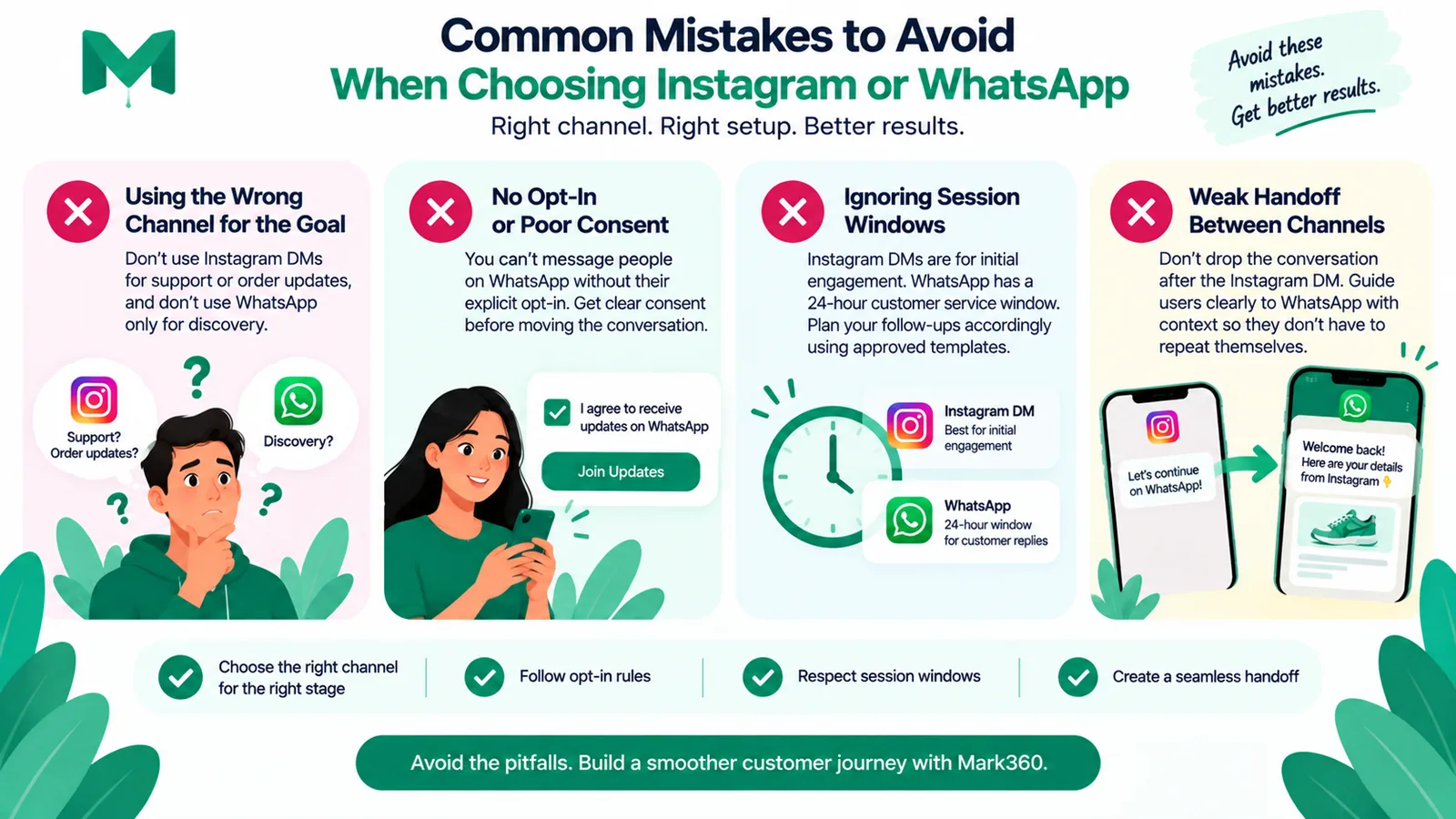
- Use both in a Meta funnel with explicit consent bridges
- Map use cases before buying another tool
- Separate SaaS fees from WhatsApp message pricing
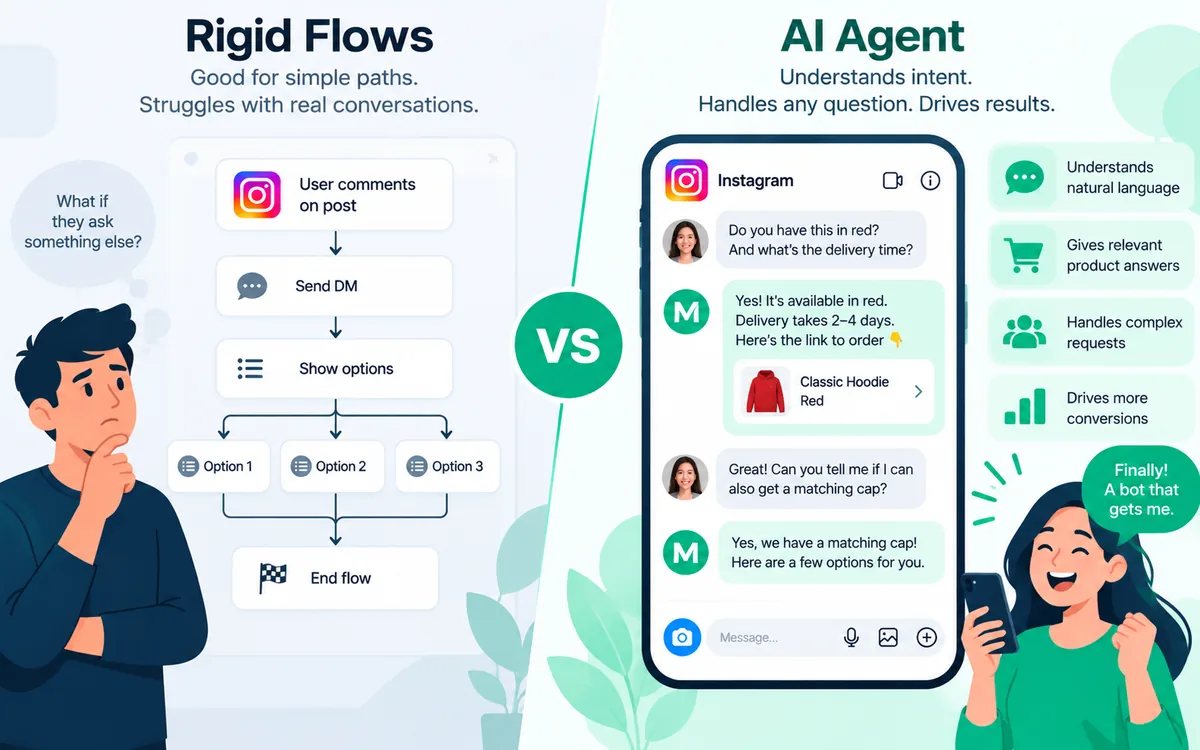
- AI agents make the bridge between channels less brittle
Governance, consent, and brand safety
Every Instagram and WhatsApp automation inherits your brand reputation. Before scaling comment keywords or AI agents, decide how you store opt-in evidence, how you honor opt-outs, and which topics the bot must never answer. Keep a short brand safety sheet next to your prompt library.
Consent is not a checkbox buried in a flow. Say why you are moving someone to WhatsApp, what they will receive, and how to stop. On WhatsApp Business API, template categories and the customer care window define what you can send and when. Read Meta documentation. When India Mark360 examples help finance teams, use Marketing ₹0.94 and Utility ₹0.138 as Mark360 totals only.
Analytics that executives actually trust
Vanity metrics create false confidence. Build a single funnel board with stage conversion and revenue. Sample transcripts weekly. When a stage collapses, fix that stage. Pass campaign identifiers through WhatsApp deep links into CRM. Distinguish organic comment capture from Click-to-WhatsApp ads.
Compare cohorts by creative, keyword, and agent version. The goal is learning velocity, not a dashboard museum. Report qualified conversations and attributed revenue to leadership every week.
Team operating model
Assign a messaging owner for growth, a messaging owner for support, and a shared escalation path for VIP and PR-risk conversations. Publish business hours and response SLAs. Train humans on how to take over from an AI agent without making the customer repeat themselves.
Prompt and flow changes should follow propose, review, ship, measure. Treat production messaging like production software. Rollbacks should be minutes, not meetings. During launches, staff a war room for the first seventy-two hours.
Common failure patterns and fixes
Too many qualifying questions? Ask two or three, then hand off. WhatsApp handoff with no context? Pass tags and summary into CRM. Templates rejected late? Submit early. AI invents prices? Use tool-constrained catalog lookups. No human path? Add speak-to-human intents and VIP routing.
Most AI postmortems are process failures. Fix the process, then tune the model. Document keyword lists, agent intents, WhatsApp templates, escalation phrases, quiet hours, and CRM field maps in one living runbook reviewed every two weeks.
Playbook note 4: Governance, consent, and brand safety
Every Instagram and WhatsApp automation inherits your brand reputation. Before scaling comment keywords or AI agents, decide how you store opt-in evidence, how you honor opt-outs, and which topics the bot must never answer. Keep a short brand safety sheet next to your prompt library.
Consent is not a checkbox buried in a flow. Say why you are moving someone to WhatsApp, what they will receive, and how to stop. On WhatsApp Business API, template categories and the customer care window define what you can send and when. Read Meta documentation. When India Mark360 examples help finance teams, use Marketing ₹0.94 and Utility ₹0.138 as Mark360 totals only.
Playbook note 5: Analytics that executives actually trust
Vanity metrics create false confidence. Build a single funnel board with stage conversion and revenue. Sample transcripts weekly. When a stage collapses, fix that stage. Pass campaign identifiers through WhatsApp deep links into CRM. Distinguish organic comment capture from Click-to-WhatsApp ads.
Compare cohorts by creative, keyword, and agent version. The goal is learning velocity, not a dashboard museum. Report qualified conversations and attributed revenue to leadership every week.
Playbook note 6: Team operating model
Assign a messaging owner for growth, a messaging owner for support, and a shared escalation path for VIP and PR-risk conversations. Publish business hours and response SLAs. Train humans on how to take over from an AI agent without making the customer repeat themselves.
Prompt and flow changes should follow propose, review, ship, measure. Treat production messaging like production software. Rollbacks should be minutes, not meetings. During launches, staff a war room for the first seventy-two hours.
Playbook note 7: Common failure patterns and fixes
Too many qualifying questions? Ask two or three, then hand off. WhatsApp handoff with no context? Pass tags and summary into CRM. Templates rejected late? Submit early. AI invents prices? Use tool-constrained catalog lookups. No human path? Add speak-to-human intents and VIP routing.
Most AI postmortems are process failures. Fix the process, then tune the model. Document keyword lists, agent intents, WhatsApp templates, escalation phrases, quiet hours, and CRM field maps in one living runbook reviewed every two weeks.
Playbook note 8: Governance, consent, and brand safety
Every Instagram and WhatsApp automation inherits your brand reputation. Before scaling comment keywords or AI agents, decide how you store opt-in evidence, how you honor opt-outs, and which topics the bot must never answer. Keep a short brand safety sheet next to your prompt library.
Consent is not a checkbox buried in a flow. Say why you are moving someone to WhatsApp, what they will receive, and how to stop. On WhatsApp Business API, template categories and the customer care window define what you can send and when. Read Meta documentation. When India Mark360 examples help finance teams, use Marketing ₹0.94 and Utility ₹0.138 as Mark360 totals only.
Playbook note 9: Analytics that executives actually trust
Vanity metrics create false confidence. Build a single funnel board with stage conversion and revenue. Sample transcripts weekly. When a stage collapses, fix that stage. Pass campaign identifiers through WhatsApp deep links into CRM. Distinguish organic comment capture from Click-to-WhatsApp ads.
Compare cohorts by creative, keyword, and agent version. The goal is learning velocity, not a dashboard museum. Report qualified conversations and attributed revenue to leadership every week.
Playbook note 10: Team operating model
Assign a messaging owner for growth, a messaging owner for support, and a shared escalation path for VIP and PR-risk conversations. Publish business hours and response SLAs. Train humans on how to take over from an AI agent without making the customer repeat themselves.
Prompt and flow changes should follow propose, review, ship, measure. Treat production messaging like production software. Rollbacks should be minutes, not meetings. During launches, staff a war room for the first seventy-two hours.
Playbook note 11: Common failure patterns and fixes
Too many qualifying questions? Ask two or three, then hand off. WhatsApp handoff with no context? Pass tags and summary into CRM. Templates rejected late? Submit early. AI invents prices? Use tool-constrained catalog lookups. No human path? Add speak-to-human intents and VIP routing.
Most AI postmortems are process failures. Fix the process, then tune the model. Document keyword lists, agent intents, WhatsApp templates, escalation phrases, quiet hours, and CRM field maps in one living runbook reviewed every two weeks.
Playbook note 12: Governance, consent, and brand safety
Every Instagram and WhatsApp automation inherits your brand reputation. Before scaling comment keywords or AI agents, decide how you store opt-in evidence, how you honor opt-outs, and which topics the bot must never answer. Keep a short brand safety sheet next to your prompt library.
Consent is not a checkbox buried in a flow. Say why you are moving someone to WhatsApp, what they will receive, and how to stop. On WhatsApp Business API, template categories and the customer care window define what you can send and when. Read Meta documentation. When India Mark360 examples help finance teams, use Marketing ₹0.94 and Utility ₹0.138 as Mark360 totals only.
Playbook note 13: Analytics that executives actually trust
Vanity metrics create false confidence. Build a single funnel board with stage conversion and revenue. Sample transcripts weekly. When a stage collapses, fix that stage. Pass campaign identifiers through WhatsApp deep links into CRM. Distinguish organic comment capture from Click-to-WhatsApp ads.
Compare cohorts by creative, keyword, and agent version. The goal is learning velocity, not a dashboard museum. Report qualified conversations and attributed revenue to leadership every week.
Playbook note 14: Team operating model
Assign a messaging owner for growth, a messaging owner for support, and a shared escalation path for VIP and PR-risk conversations. Publish business hours and response SLAs. Train humans on how to take over from an AI agent without making the customer repeat themselves.
Prompt and flow changes should follow propose, review, ship, measure. Treat production messaging like production software. Rollbacks should be minutes, not meetings. During launches, staff a war room for the first seventy-two hours.
Playbook note 15: Common failure patterns and fixes
Too many qualifying questions? Ask two or three, then hand off. WhatsApp handoff with no context? Pass tags and summary into CRM. Templates rejected late? Submit early. AI invents prices? Use tool-constrained catalog lookups. No human path? Add speak-to-human intents and VIP routing.
Most AI postmortems are process failures. Fix the process, then tune the model. Document keyword lists, agent intents, WhatsApp templates, escalation phrases, quiet hours, and CRM field maps in one living runbook reviewed every two weeks.
Playbook note 16: Governance, consent, and brand safety
Every Instagram and WhatsApp automation inherits your brand reputation. Before scaling comment keywords or AI agents, decide how you store opt-in evidence, how you honor opt-outs, and which topics the bot must never answer. Keep a short brand safety sheet next to your prompt library.
Consent is not a checkbox buried in a flow. Say why you are moving someone to WhatsApp, what they will receive, and how to stop. On WhatsApp Business API, template categories and the customer care window define what you can send and when. Read Meta documentation. When India Mark360 examples help finance teams, use Marketing ₹0.94 and Utility ₹0.138 as Mark360 totals only.
FAQs
Is WhatsApp better than Instagram for sales?
For consultative and multi-day sales, usually yes. For top-of-funnel discovery, Instagram often wins. Use both.
Can I automate both channels?
Yes, within Meta policies. Use Instagram for capture automation and WhatsApp Business API for templates and ops.
Do I need WhatsApp if Instagram DMs convert well?
Maybe not for low-ticket impulse offers. Add WhatsApp when you need templates, catalogs, CTWA, or team inbox scale.
How does pricing differ?
Instagram tooling is typically subscription. WhatsApp adds category-based delivered-message costs by market per Meta rules.
Where should Click to WhatsApp ads sit?
CTWA is a paid WhatsApp entry point that pairs well with Instagram organic/paid awareness. See CTWA guide.

Soft next step with Mark360
Mark360 gives you Instagram + WhatsApp AI agents on a Meta Partner stack so channel choice becomes a playbook, not a tool war.
Explore WhatsApp automation · Pricing · See the full funnel.