

WhatsApp marketing automation is the structured use of the WhatsApp Business Platform to send relevant messages to opted-in audiences, trigger follow-ups from customer actions, and coordinate automated conversations without relying on unofficial bulk-sending methods.
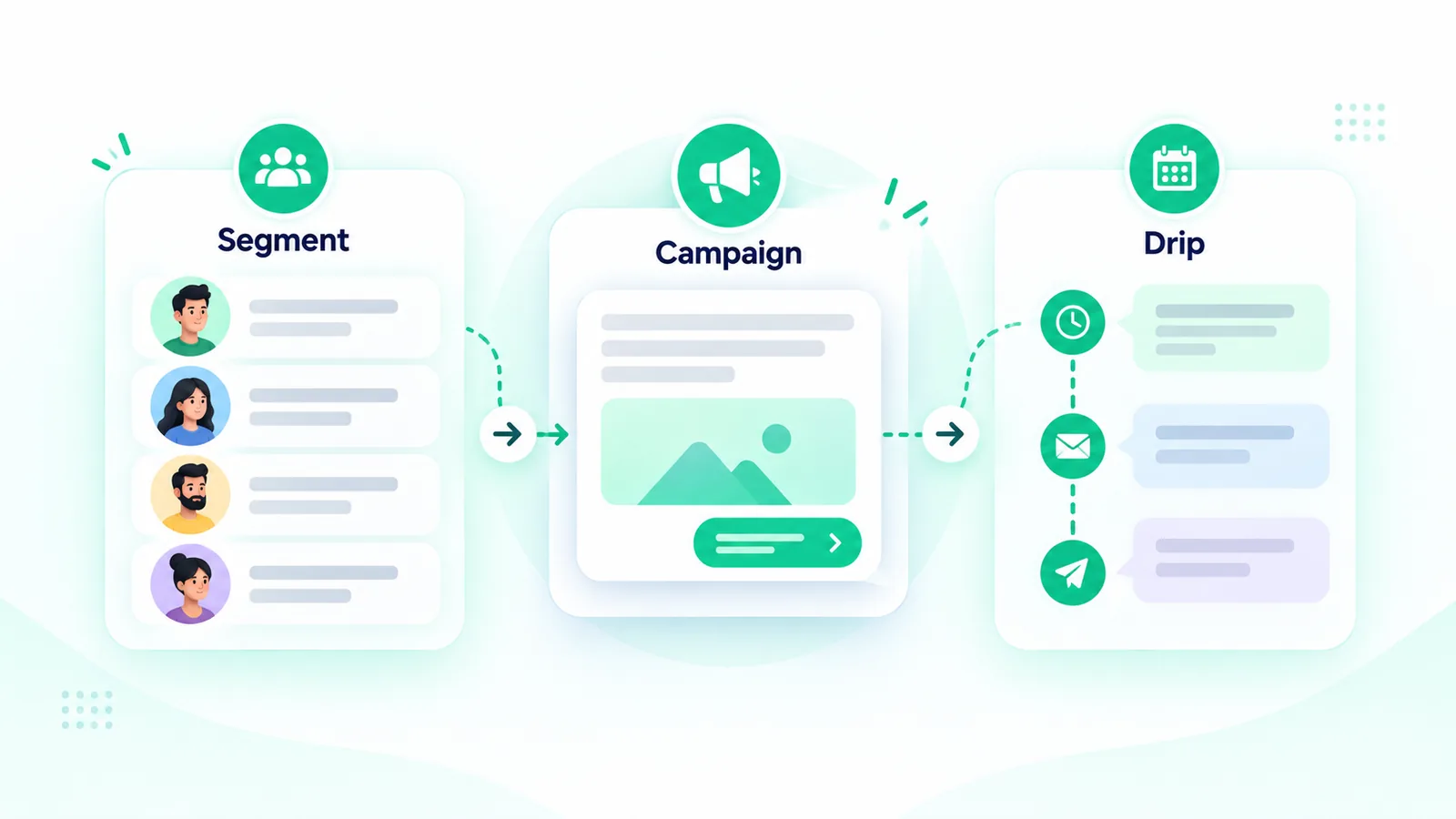
The practical model is simple: use a one-shot campaign when a message needs to reach a defined audience once, use segmentation to decide who should receive it, and use a drip campaign when the communication should unfold over several steps. The official WhatsApp Business Platform provides the infrastructure for business messaging, while approved templates, consent, quality management, and sensible pacing help reduce avoidable restriction risk. See the official WhatsApp Business Platform overview.
No tool can guarantee that a WhatsApp number will never be restricted. Risk reduction comes from permission-based messaging, approved templates where required, maintaining message quality, sensible pacing, respecting opt-outs, and avoiding cold blasting or unofficial sender patterns.
What is WhatsApp marketing automation?
WhatsApp marketing automation connects audience data, messaging rules, approved message templates, triggers, and follow-up actions into a repeatable communication system. Instead of manually deciding which person should receive every message, a business defines the conditions under which a message should be sent.
For example, a business might define an audience as people who explicitly opted in to marketing communications, interacted with a particular campaign, or belong to a specific lifecycle stage. A campaign can then address that audience with a relevant message. A separate automated journey can respond to a later action or inactivity.
This distinction matters because automation is not simply about sending more messages. Good automation determines who should receive a message, why they should receive it, when it should be sent, and what happens next.
One-shot campaigns versus automated journeys
A one-shot whatsapp campaign is designed around a specific communication event. It has a defined audience, message, sending window, and purpose. Examples include an announcement, an invitation, a product update, a scheduled event reminder, or a time-bound promotion for an audience that has already given the appropriate permission.
An automated journey is different. It continues based on customer behavior or predefined timing. A person might enter a journey after subscribing, receive an introductory message, receive a follow-up later, and exit when they reply or complete the intended action.
| Approach | Best suited to | Audience logic | Timing | Follow-up |
|---|---|---|---|---|
| One-shot campaign | A defined announcement or communication | Selected segment at send time | Single scheduled window | Usually separate |
| Drip campaign | Multi-step education or nurturing | Entry conditions plus journey rules | Scheduled intervals or events | Built into the journey |
| Behavior-triggered automation | Relevant responses to customer actions | Action or state based | Triggered by an event | Conditional |
The strongest whatsapp marketing systems use all three approaches selectively rather than treating every communication as a bulk campaign.
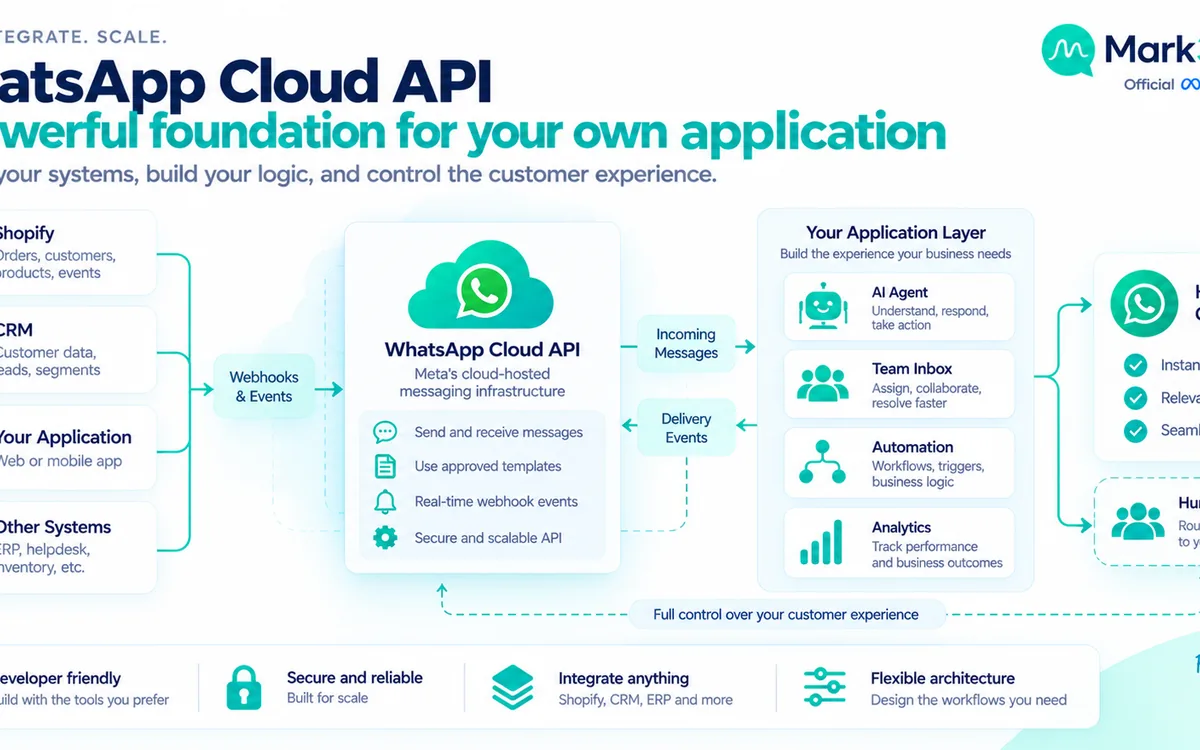
How the official WhatsApp Business Platform fits
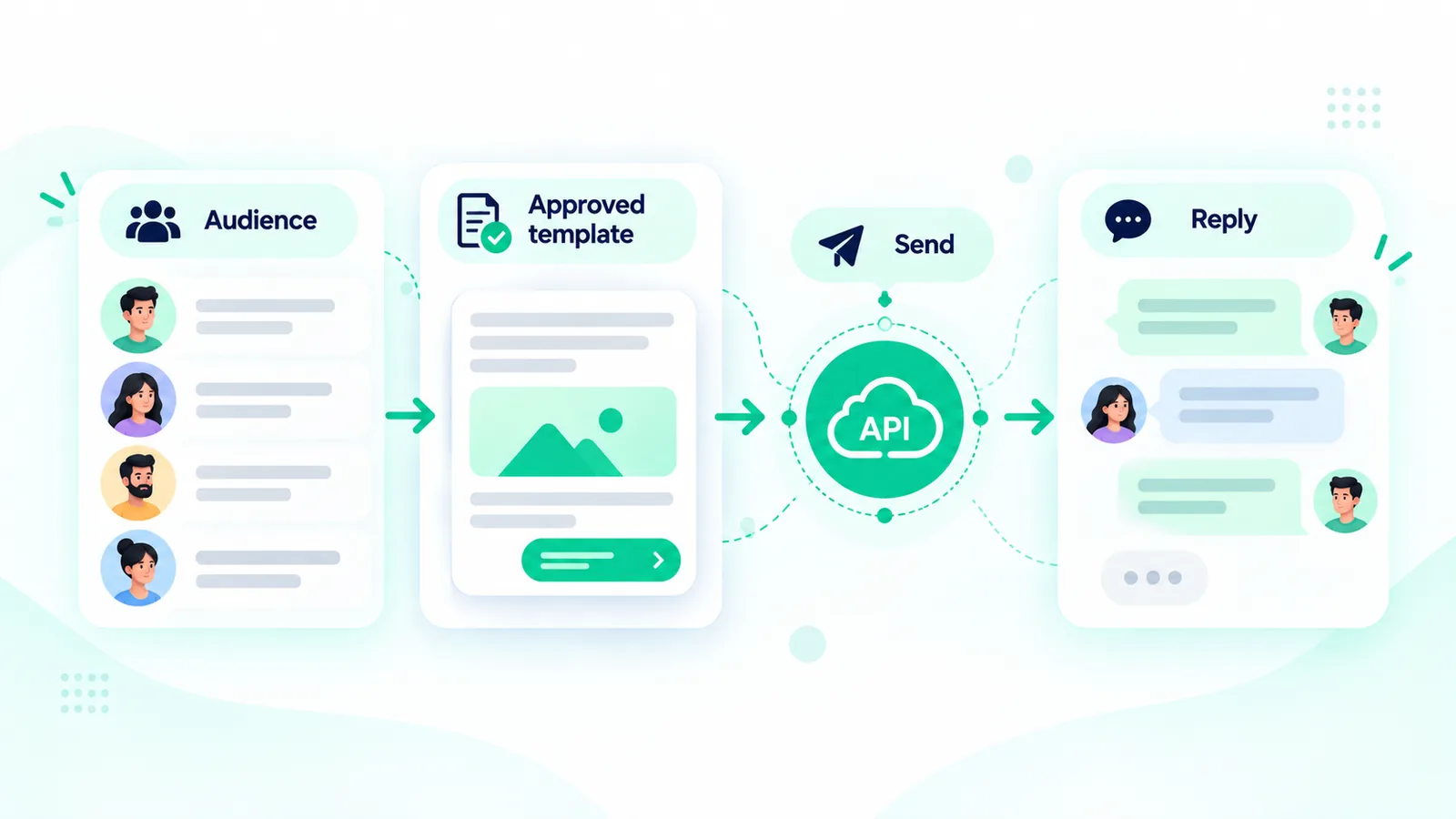
The official WhatsApp Business Platform provides business-facing APIs for sending and receiving messages and integrating WhatsApp into software and communication workflows. It is designed for businesses and authorized service providers rather than the unofficial automation patterns often associated with personal accounts and browser-based bulk senders. The official platform documentation explains the API model.
For business-initiated conversations on the Platform, approved message templates are an important part of the messaging workflow. Templates are reviewed and categorized by WhatsApp, and businesses should use them for their intended purposes. Read the official message-template documentation.
Within the applicable customer-service window, businesses can respond to user messages without using a template, subject to the platform's rules. This makes the architecture more useful than simply scheduling promotional messages: automation can also support conversational follow-up and human handoff.
Why segmentation is the foundation of better automation
Segmentation prevents the common mistake of treating every opted-in contact as one audience. Two people may have both consented to receive messages while having very different interests, lifecycle stages, previous interactions, and communication expectations.
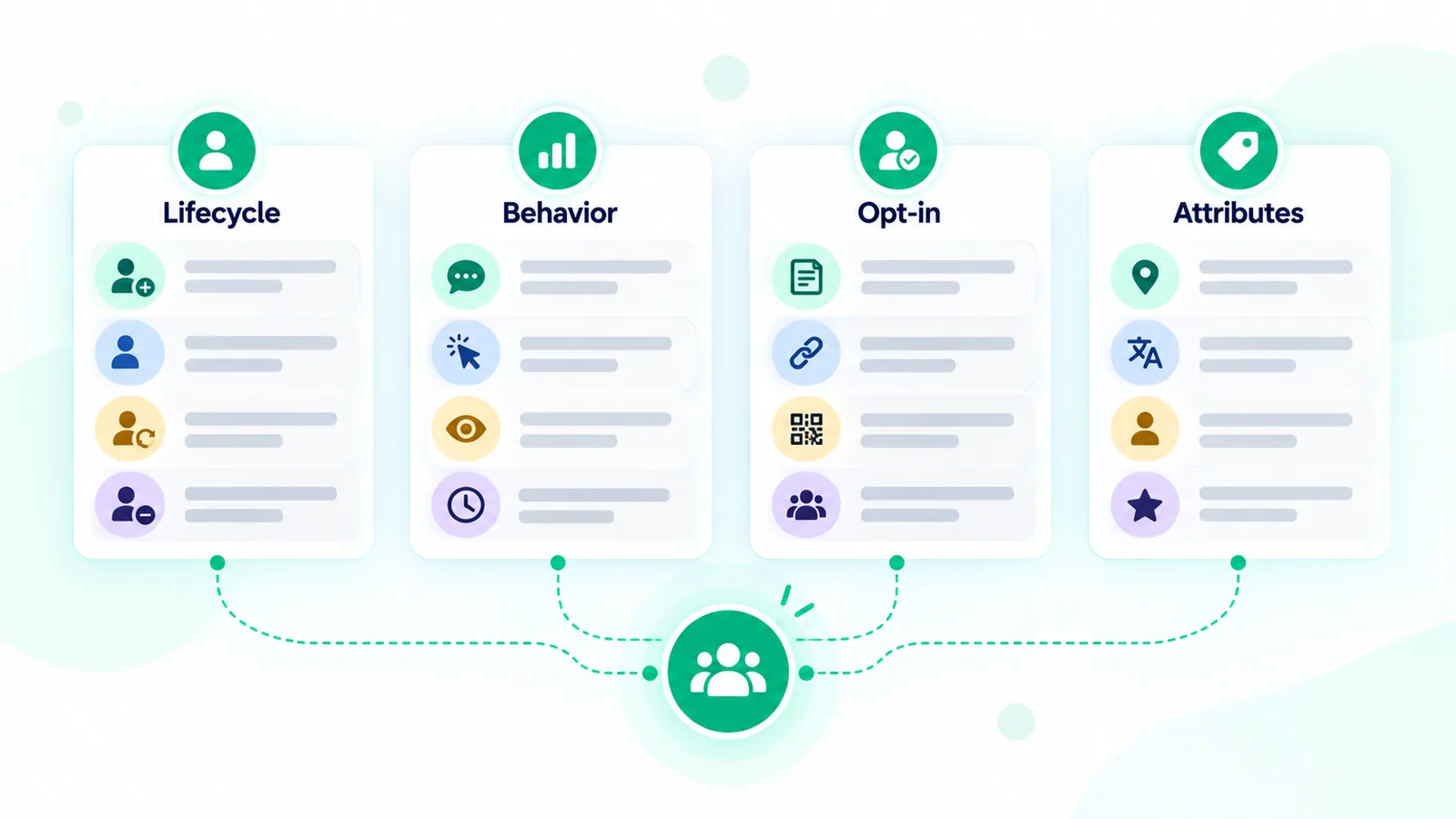
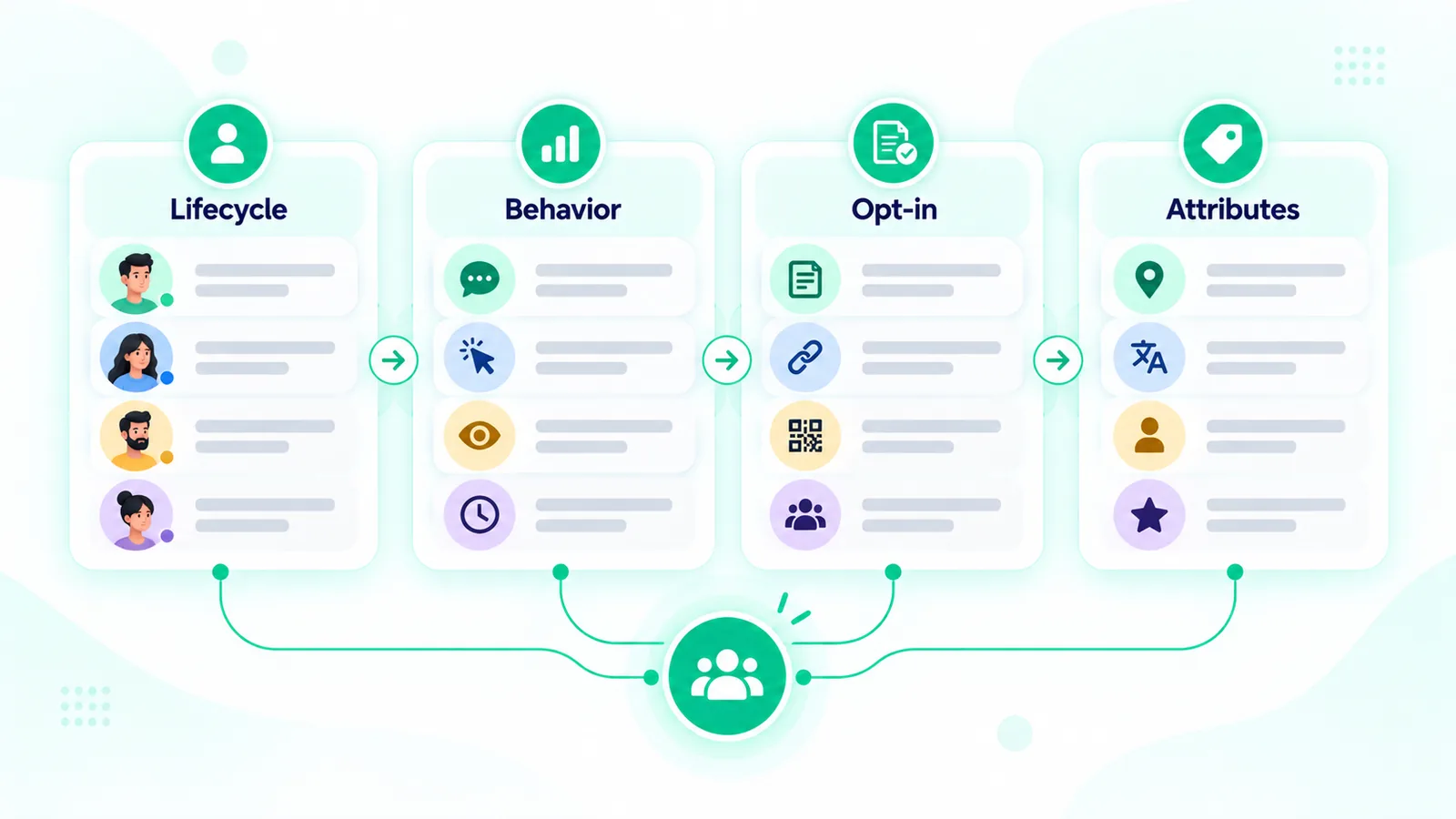
A useful segmentation model combines four dimensions: lifecycle, behavior, opt-in source, and relevant attributes. These dimensions can be used independently or combined into more precise audience rules.
Lifecycle segmentation
Lifecycle segments describe where someone is in the relationship with the business. Depending on the business model, useful states can include newly subscribed, active, recently engaged, inactive, returning, or awaiting a response.
Behavior segmentation
Behavioral segments use actions rather than assumptions. Examples include people who replied to a previous message, clicked a tracked destination, requested information, completed a form, or stopped engaging with a particular journey.
Opt-in source segmentation
Record where the permission originated. A person who opted in through a website form may have different expectations from someone who subscribed after a customer conversation. Source tracking also helps identify which acquisition paths produce audiences that remain engaged.
Attribute segmentation
Attributes can include language, country or region, stated preference, account type, communication preference, or another legitimate business field. Use only information that the business is entitled to process and that is relevant to the messaging purpose.
A practical segmentation model for WhatsApp
Start with broad, understandable segments before creating complex combinations. A useful hierarchy is:
- Permission: Is the person eligible for this type of WhatsApp communication?
- Lifecycle: What relationship stage are they currently in?
- Behavior: What has the person actually done recently?
- Intent: What communication or outcome appears relevant based on explicit actions?
- Attributes: Which legitimate profile fields affect the message?
- Suppression: Who should be excluded because they opted out, already completed the objective, or should not receive this communication?
Suppression is especially important. A mature audience system does not only answer “Who should receive this?” It also answers “Who must not receive this?”
What makes a strong whatsapp marketing campaign?
A strong campaign starts with a specific communication purpose. The message should make sense to the recipient based on why they opted in or what interaction created the relationship.
Before sending, define the audience, objective, template if required, call to action, sending window, exclusions, and success signals. Keep the message focused. If the recipient needs several pieces of information, consider whether a sequence would be clearer than placing everything into one message.
Template design also deserves care. A template should accurately represent the message's intended purpose and avoid misleading language. WhatsApp's official documentation covers template creation and management.
How to plan and launch a campaign
- Define the purpose. Write one sentence describing why the message is being sent.
- Confirm permission. Verify that the intended audience has the necessary opt-in or other applicable permission.
- Build the segment. Combine lifecycle, behavior, source, and attribute rules where relevant.
- Create or select the approved template. Make sure its content matches its approved purpose.
- Add suppression rules. Exclude opt-outs, completed users, invalid contacts, and other inappropriate recipients.
- Choose pacing. Avoid treating maximum technical capacity as the same thing as a suitable communication rate.
- Send and observe. Monitor delivery, reads, replies, and opt-outs.
- Feed learning back into segmentation. Use observed behavior to improve future audiences and journeys.
WhatsApp drip campaigns explained
A whatsapp drip is a planned sequence in which messages are released over time or in response to events. The sequence can educate, remind, qualify, onboard, or re-engage an opted-in audience.
The key difference from a one-shot campaign is state. A drip journey remembers that someone entered the sequence and can use later events to determine what happens next.
A simple journey might look like this: entry after an eligible opt-in, first message, wait period, follow-up if there is no relevant response, alternate branch if the person replies, and exit when the intended objective is reached.
Good drips should have clear entry conditions and clear exit conditions. Without exits, automation can continue communicating with people who have already completed the objective or who have indicated that they no longer want the communication.
Drip campaigns versus one-shot campaigns
| Question | One-shot campaign | Drip campaign |
|---|---|---|
| When should it be used? | When one communication event is enough | When context develops over multiple steps |
| What starts it? | A planned campaign send | An eligible entry event or segment |
| Does timing matter? | Yes, primarily the send window | Yes, across multiple steps |
| Can behavior change the next message? | Usually not | Yes |
| Should there be an exit condition? | Campaign ends after the send | Yes, explicitly |
The choice is not about which method is universally better. It is about matching the communication structure to the customer's context.
How to reduce ban and restriction risk
Ban-safe marketing should be understood as risk reduction, not a guarantee. WhatsApp can take action when businesses violate its terms or policies, and users can block or report businesses. WhatsApp also considers signals associated with poor-quality experiences. Review the official WhatsApp Business Messaging Policy before designing a campaign.
The most important prevention principles are straightforward:
- Use permission-based audiences. Do not turn scraped, purchased, guessed, or otherwise unauthorized phone lists into marketing audiences.
- Use the official platform. Avoid unofficial bulk senders, account automation tricks, modified clients, or systems designed to imitate normal user activity.
- Use approved templates where required. Do not attempt to bypass template requirements for business-initiated messages.
- Protect message quality. Relevance matters. A technically deliverable message can still create a poor user experience.
- Respect opt-outs. Suppress people who ask to stop receiving communications.
- Control pacing. Do not equate fast sending with effective marketing. Gradual, appropriate delivery can be part of a healthier communication system.
- Watch audience feedback. Blocks, reports, declining engagement, and rising opt-outs are signals to investigate.
For a separate explanation of common restriction causes and prevention context, see WhatsApp Business Banned: Causes and Solutions. This article focuses on designing safer automation rather than repeating an account-recovery or appeal playbook.
Why unofficial bulk sending creates problems
Unofficial bulk-sender patterns often focus on how many messages can be pushed through an account rather than whether each recipient expected the communication. That reverses the order of priorities.
Common risky patterns include importing large lists with unclear permission, repeatedly sending the same promotional message to unrelated audiences, attempting to bypass platform controls, automating a personal or app-based account through unsupported methods, and continuing to message people who have disengaged or opted out.
The safer alternative is to build the communication around explicit permission, legitimate audience data, official APIs, approved templates, relevant content, controlled pacing, and measurable outcomes.
Quality, pacing, and relevance work together
Pacing alone does not make a campaign safe. Sending slowly to a poorly targeted or unauthorized audience does not solve the underlying problem. Likewise, having an excellent audience does not justify bypassing official platform requirements.
Think of risk reduction as a system with several connected controls: permission → relevance → approved message structure → appropriate pacing → feedback monitoring → suppression.
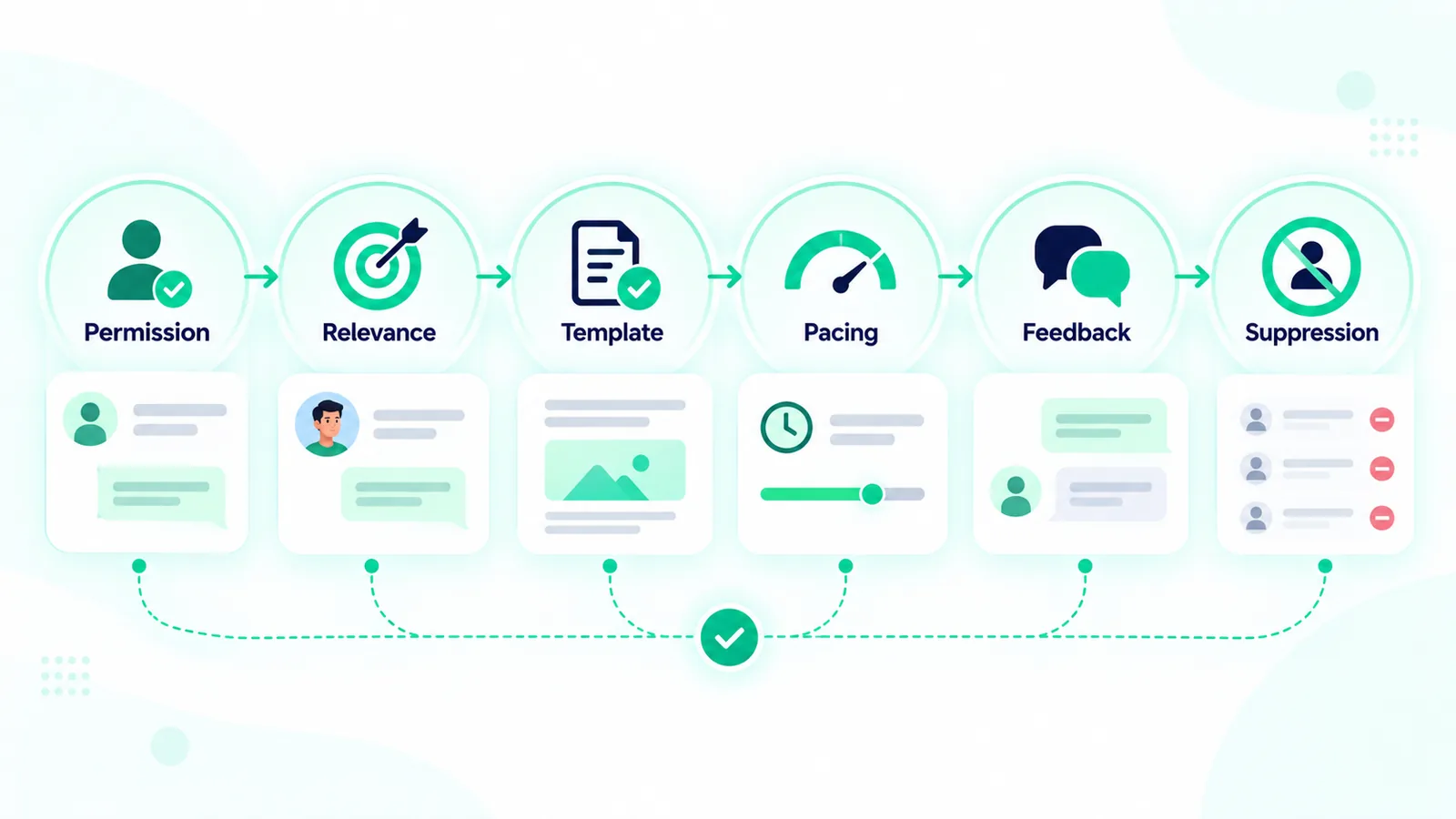
There is no legitimate setting that guarantees a number will never be restricted. The goal is to reduce avoidable risk by operating within the platform's policies and by designing communication that recipients actually expect and value.
Measuring WhatsApp marketing automation
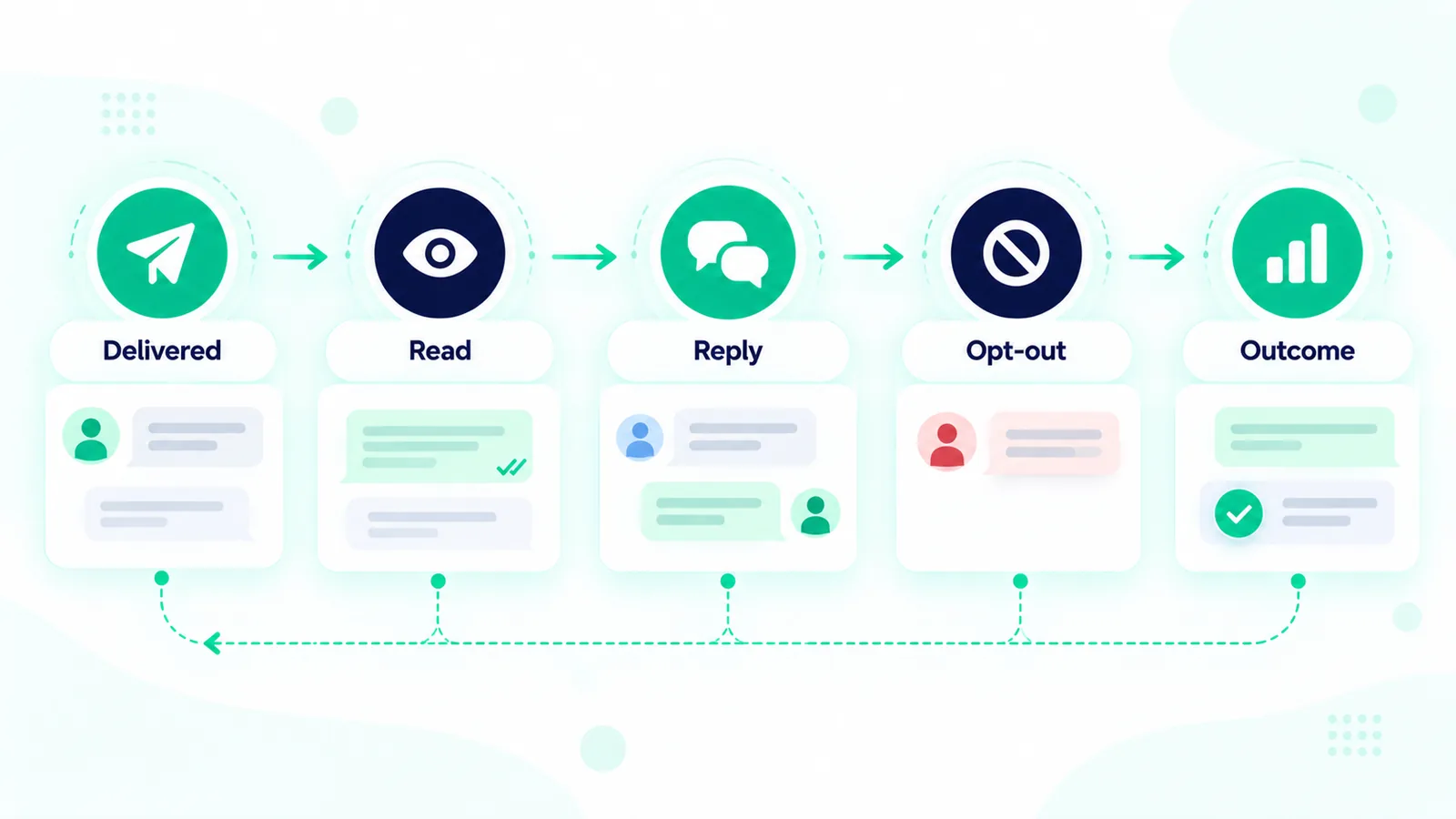
Measurement should describe what happened without relying on invented industry benchmarks. Start with the delivery funnel and then add engagement and audience-quality signals.
- Delivery: How many eligible messages were successfully delivered?
- Read: How many delivered messages were marked as read where read receipts permit that measurement?
- Reply: How many recipients responded?
- Opt-out: How many people asked to stop or otherwise entered a suppression state?
- Conversion: How many recipients completed the defined campaign objective?
- Quality signals: Did blocks, reports, negative feedback, or declining engagement change after the campaign?
These metrics should be interpreted together. A high delivery count does not automatically mean a successful campaign. A low reply count might indicate weak relevance, an unclear call to action, poor timing, or an audience that should not have been selected in the first place.
Troubleshooting common automation problems
Messages are not reaching enough eligible recipients
Check audience eligibility, phone-number validity, permission records, template status, policy restrictions, and delivery responses. Do not immediately assume that increasing send volume will solve a delivery problem.
People are receiving messages that no longer apply
Review segment freshness and suppression rules. Add exit conditions to journeys when someone completes the desired action or changes communication preference.
A drip keeps sending after a reply
Review the journey's branching and stop conditions. A reply should be treated as a meaningful event when the business process requires human or conversational follow-up.
Opt-outs are increasing
Examine message relevance, frequency, audience source, promise made at opt-in, and campaign expectations. Increasing frequency without fixing relevance can make the problem worse.
A template is rejected or unsuitable
Review the template against its intended category and purpose. Keep the content clear and aligned with what the recipient expects to receive. Use the official template documentation rather than relying on unofficial workarounds.
Designing a better WhatsApp automation architecture
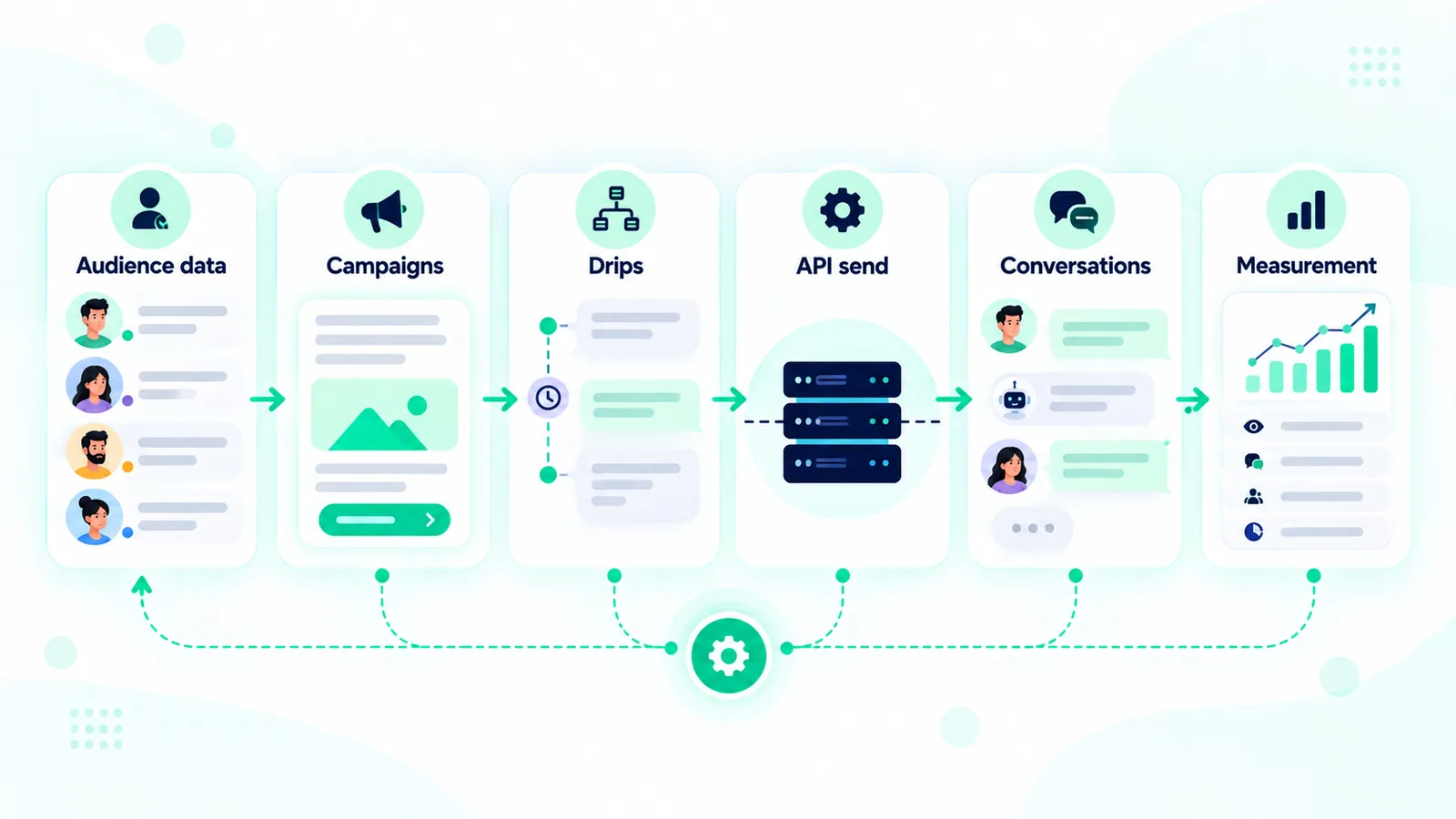
A practical architecture separates audience data, campaign logic, message content, delivery, and response handling.
- Audience layer: stores permission, lifecycle, behavioral, source, and relevant attribute data.
- Campaign layer: defines one-shot campaign audiences and schedules.
- Journey layer: manages drip timing, triggers, branches, and exits.
- Messaging layer: connects approved templates and the official WhatsApp Business Platform.
- Conversation layer: handles replies, automation, and human handoff.
- Measurement layer: records delivery, read, reply, opt-out, and business outcomes.
This separation makes it easier to change an audience rule without rewriting the whole journey and easier to identify whether a problem comes from targeting, content, delivery, or conversation handling.
Where Mark360 fits
Mark360.ai can support the operational layer of whatsapp marketing automation by helping businesses run WhatsApp marketing campaigns, work with rich user segmentation, build drip campaigns, and send through the official WhatsApp Business API.
The important distinction is that Mark360 does not turn an unauthorized contact list into a compliant marketing audience, nor can any platform guarantee that a WhatsApp number will never be restricted. Businesses remain responsible for obtaining the necessary permissions, following applicable laws and WhatsApp policies, using appropriate templates, respecting opt-outs, and maintaining a quality communication experience.
A sensible workflow is therefore: define the communication purpose, establish the correct permission basis, segment the audience, configure the campaign or journey, use approved messaging through the official API, monitor delivery and engagement, and suppress recipients when required.
A practical operating checklist
- Confirm the audience has the required WhatsApp marketing permission.
- Document the source and purpose of the opt-in.
- Separate audiences by lifecycle and behavior instead of treating every contact identically.
- Use relevant attributes only when they are legitimate and useful for the communication.
- Define exclusions before launching the campaign.
- Use approved templates when the platform requires them.
- Keep each message aligned with the recipient's expectations.
- Use one-shot campaigns for discrete communication events.
- Use drips when communication genuinely benefits from multiple stages.
- Build exit conditions into every multi-step journey.
- Respect opt-outs and maintain suppression lists.
- Monitor delivery, read, reply, opt-out, and outcome signals.
- Investigate quality problems before increasing campaign volume.
- Avoid unofficial bulk senders and attempts to bypass WhatsApp controls.
The core idea behind sustainable WhatsApp automation
The strongest WhatsApp automation is not the system that sends the most messages. It is the system that sends the right message to the right opted-in audience at the right point in the relationship, and then stops or changes course when the recipient's behavior requires it.
That is why segmentation and automation belong together. Segmentation determines who is eligible and relevant; a one-shot campaign handles a specific communication event; a drip handles a sequence; and the official WhatsApp Business Platform provides the technical channel. Permission, approved templates, quality, pacing, and suppression then provide the controls that help reduce avoidable restriction risk.
For businesses building a repeatable whatsapp marketing campaign system, this approach creates a more disciplined foundation than simply increasing sending volume. Automation should make communication more relevant and manageable—not turn WhatsApp into an uncontrolled bulk-sending channel.