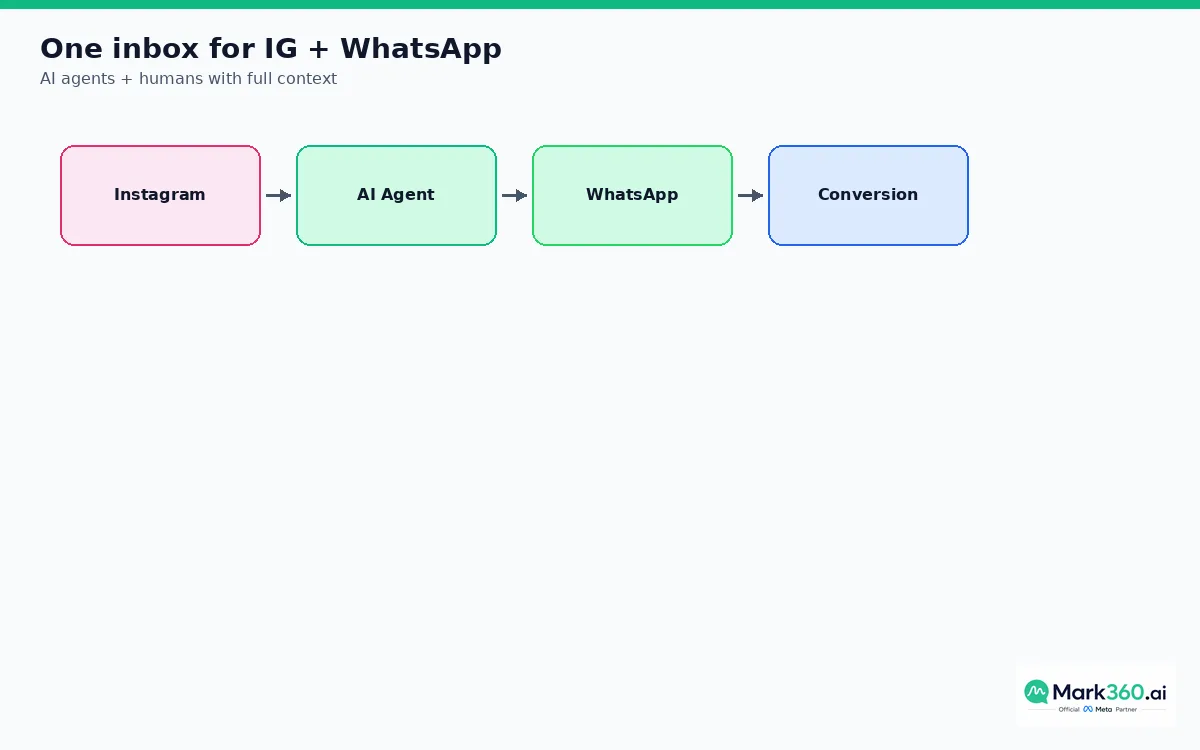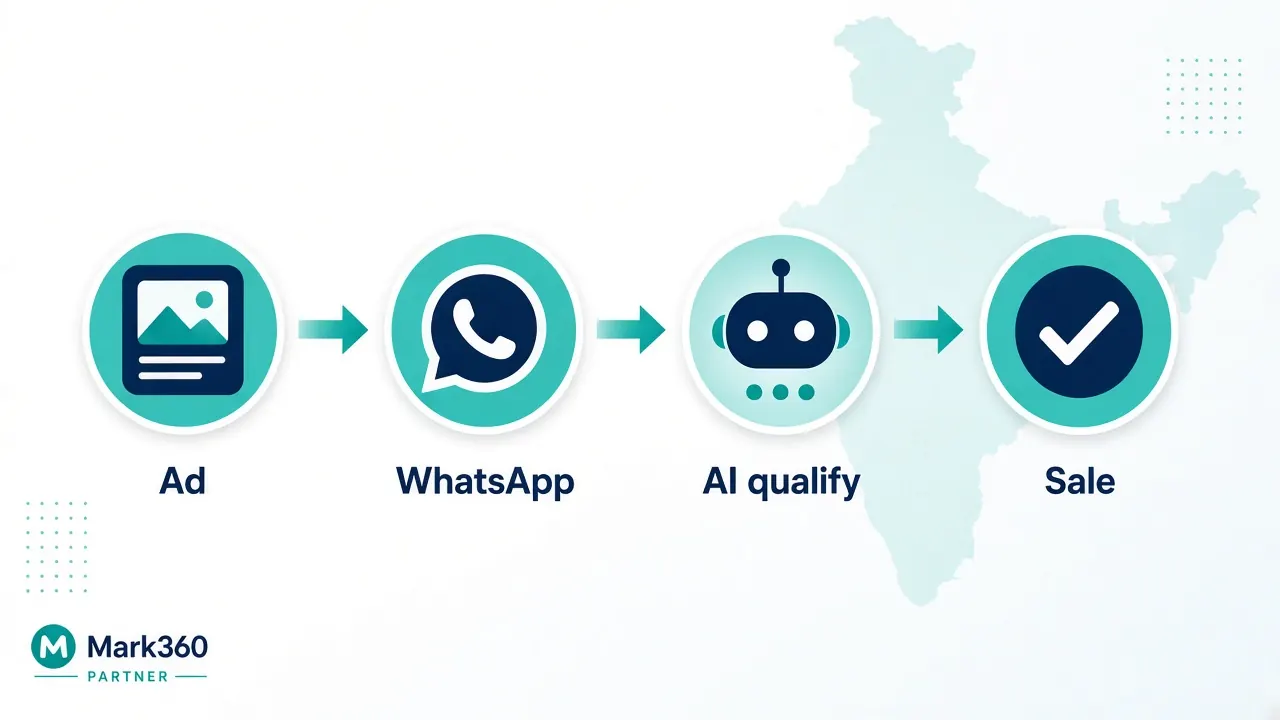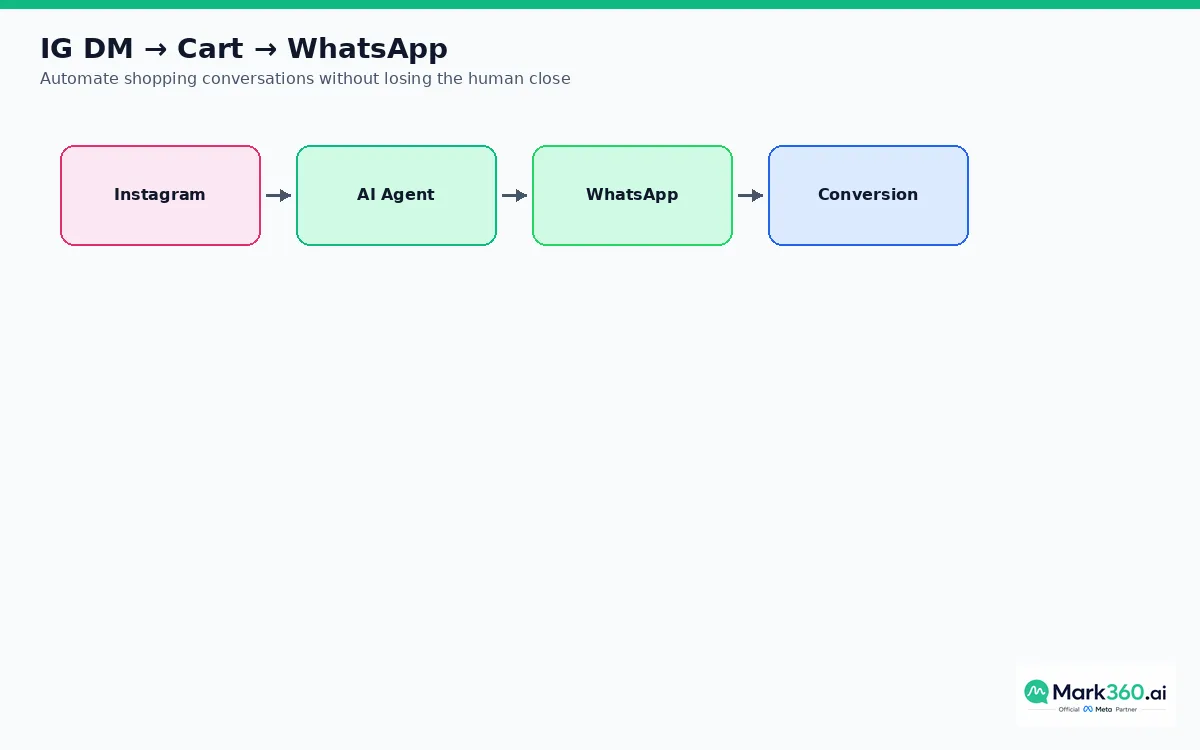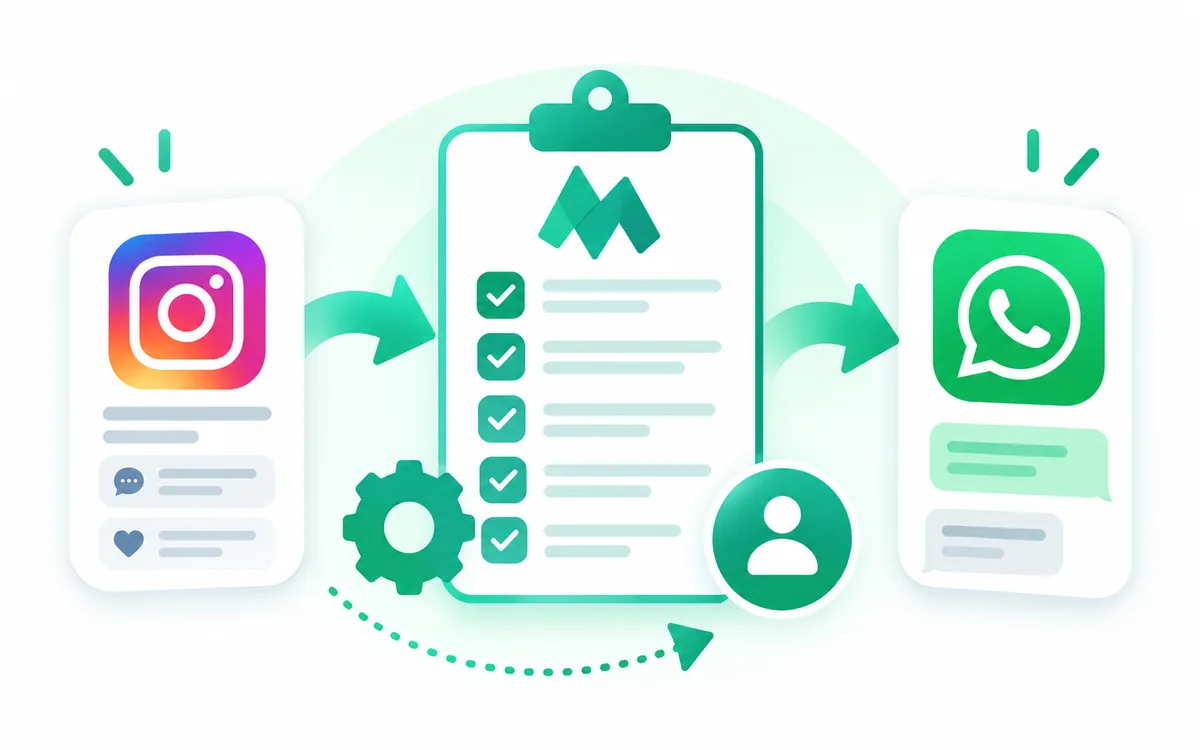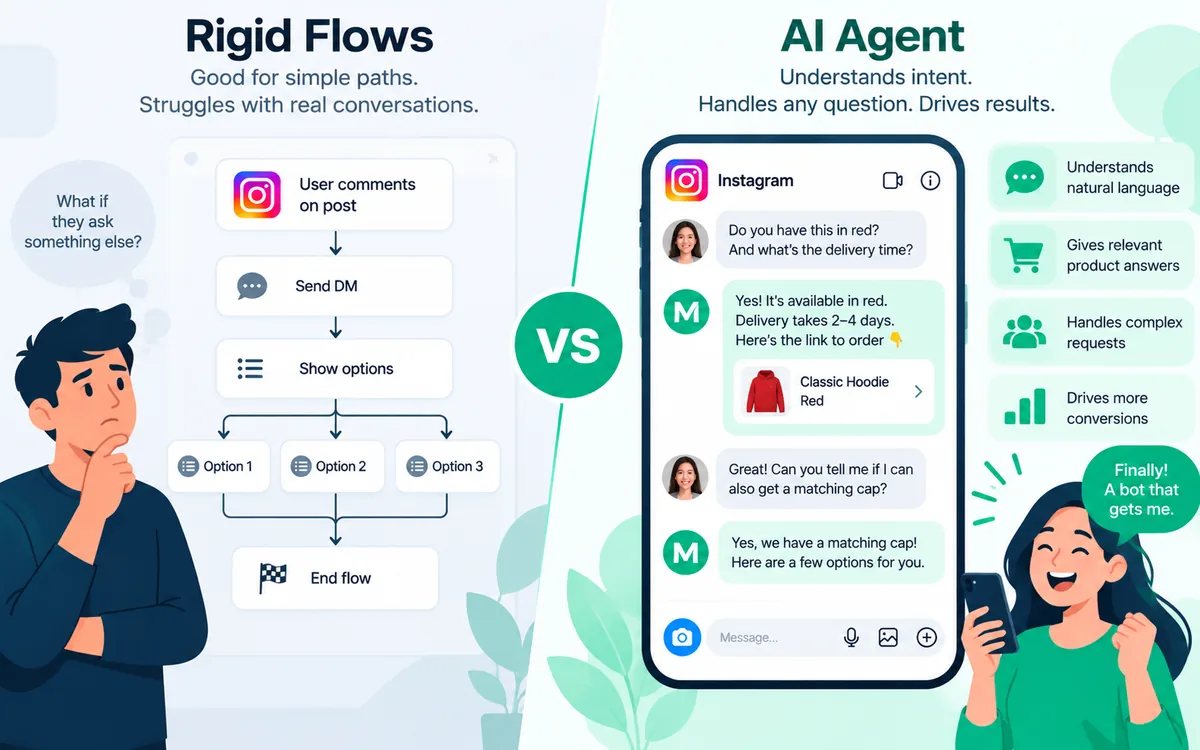

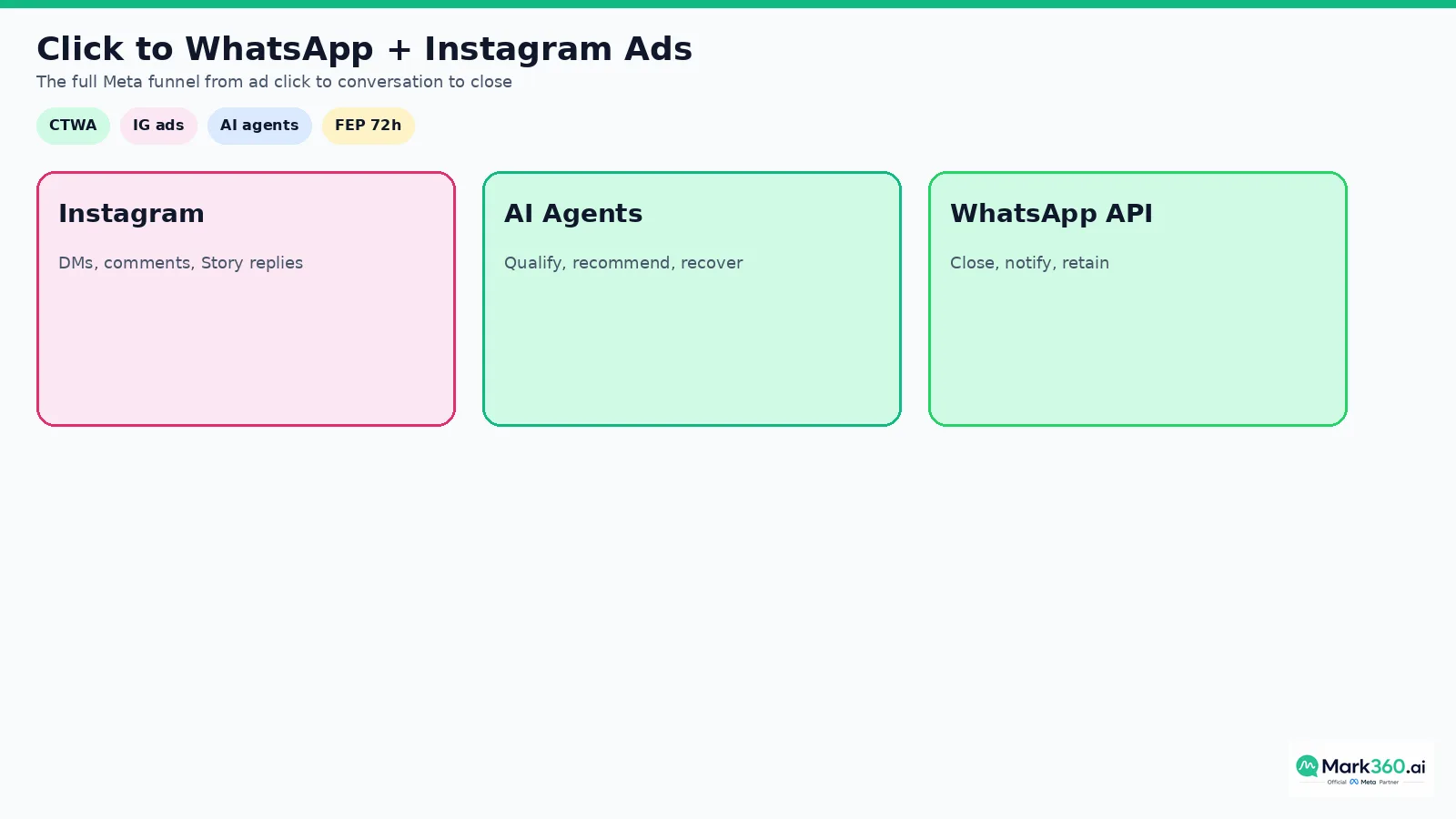
Direct answer: The full Meta funnel combines Instagram/Facebook ads with Click-to-WhatsApp (CTWA) and/or Instagram messaging destinations, then uses AI agents to reply in seconds, qualify intent, and close — while respecting WhatsApp free entry-point rules, template categories, and Instagram messaging policies.
What “full Meta funnel” means in 2026
A Meta messaging funnel is not “run ads, hope for DMs.” It is a designed path:
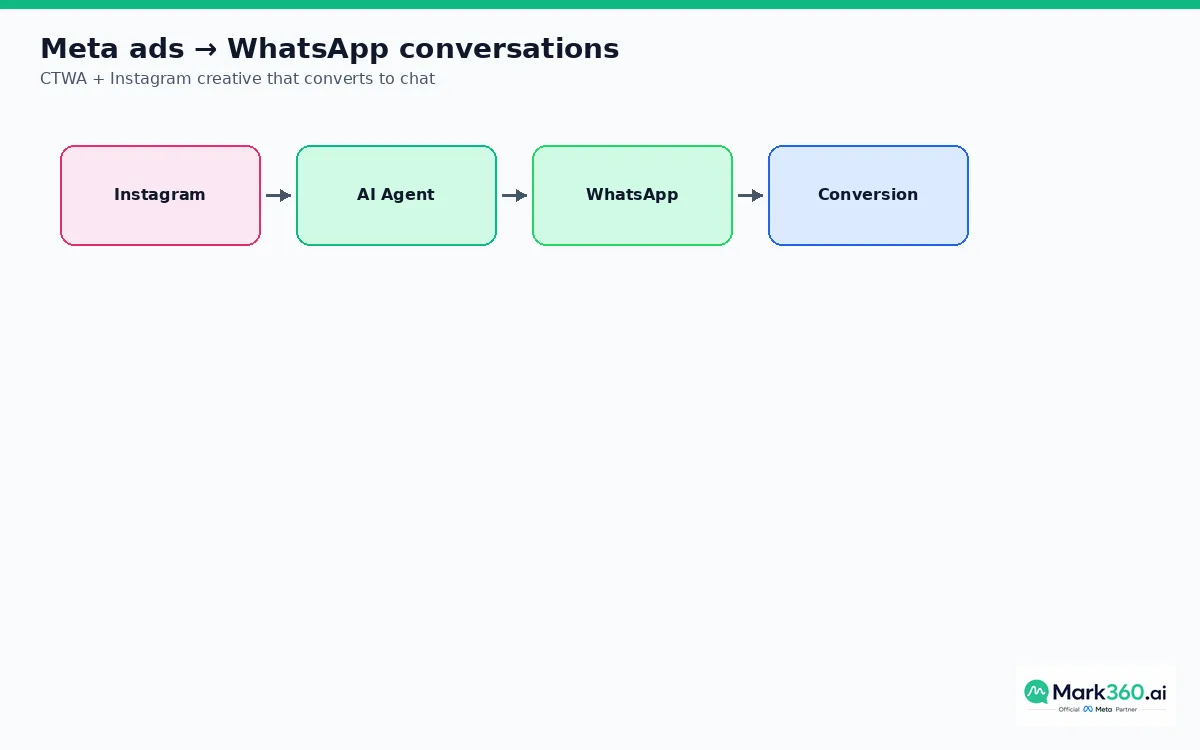
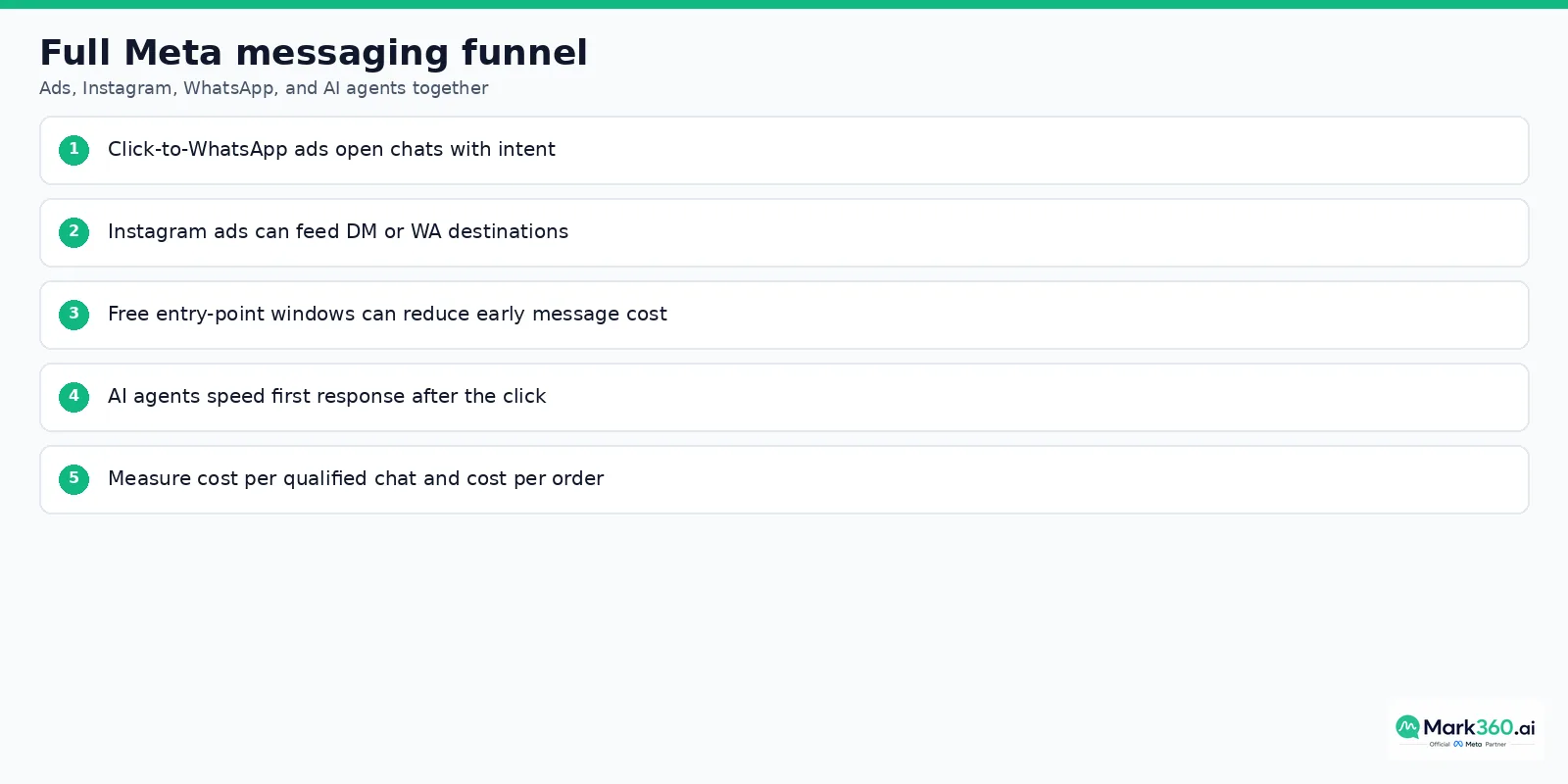
- Creative earns attention on Instagram/Facebook placements.
- CTA opens WhatsApp, Instagram DM, or another eligible destination.
- AI or humans respond immediately with ad-aware context.
- Qualification leads to cart, booking, or sales handoff.
- Utility/marketing templates continue only under Meta’s rules.
CTWA vs click-to-Instagram DM

| Destination | Choose when | Watch-outs |
|---|---|---|
| Click to WhatsApp | You need sales chat, COD markets, templates, multi-agent close | Requires WA API readiness and category discipline |
| Click to Instagram DM | Creative and community are native to IG; light Q&A first | Different messaging rules than WhatsApp; not WA pricing |
| Hybrid | Prospect on IG; move to WA for payment with consent | Needs shared inbox continuity |
Free entry-point (FEP) awareness
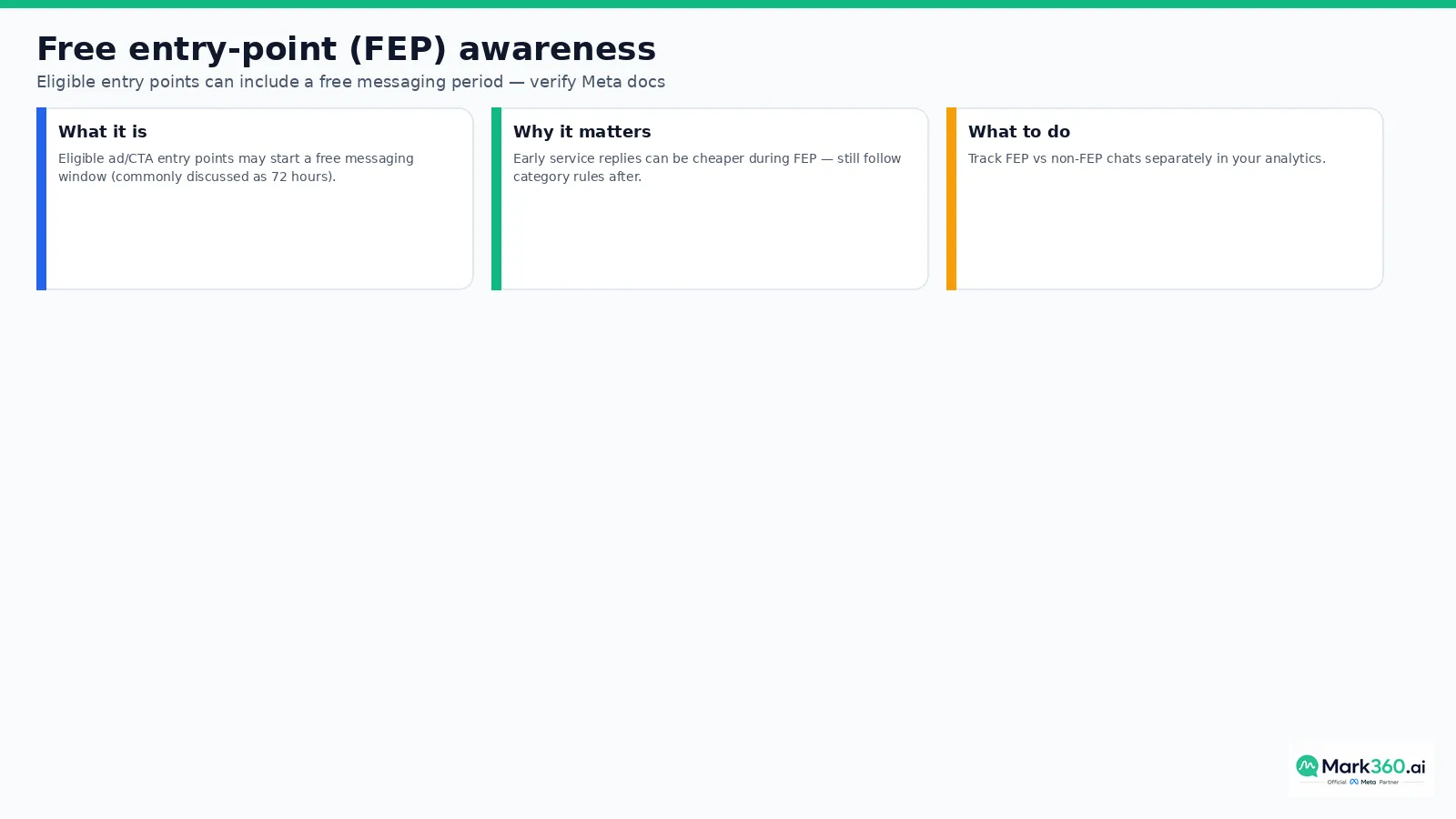
Eligible Click-to-WhatsApp ads and some Facebook Page CTAs can open a free entry-point messaging period (commonly discussed as 72 hours). During that period, business messages in the eligible conversation may not incur the usual charges — verify current rules in Meta’s WhatsApp pricing documentation.
Operationally: track FEP vs non-FEP chats separately. Do not assume every WhatsApp chat from ads is free forever. After FEP, standard category pricing applies to delivered messages.
Creative that earns the chat

- Lead with the question you want in the first customer message.
- Show product proof in the first seconds of video.
- Use an explicit CTA: Chat on WhatsApp / Message us.
- Match the first AI script to the ad promise (no bait-and-switch).
- Test one variable at a time: offer, hook, or CTA — not all three.
Post-click AI playbook
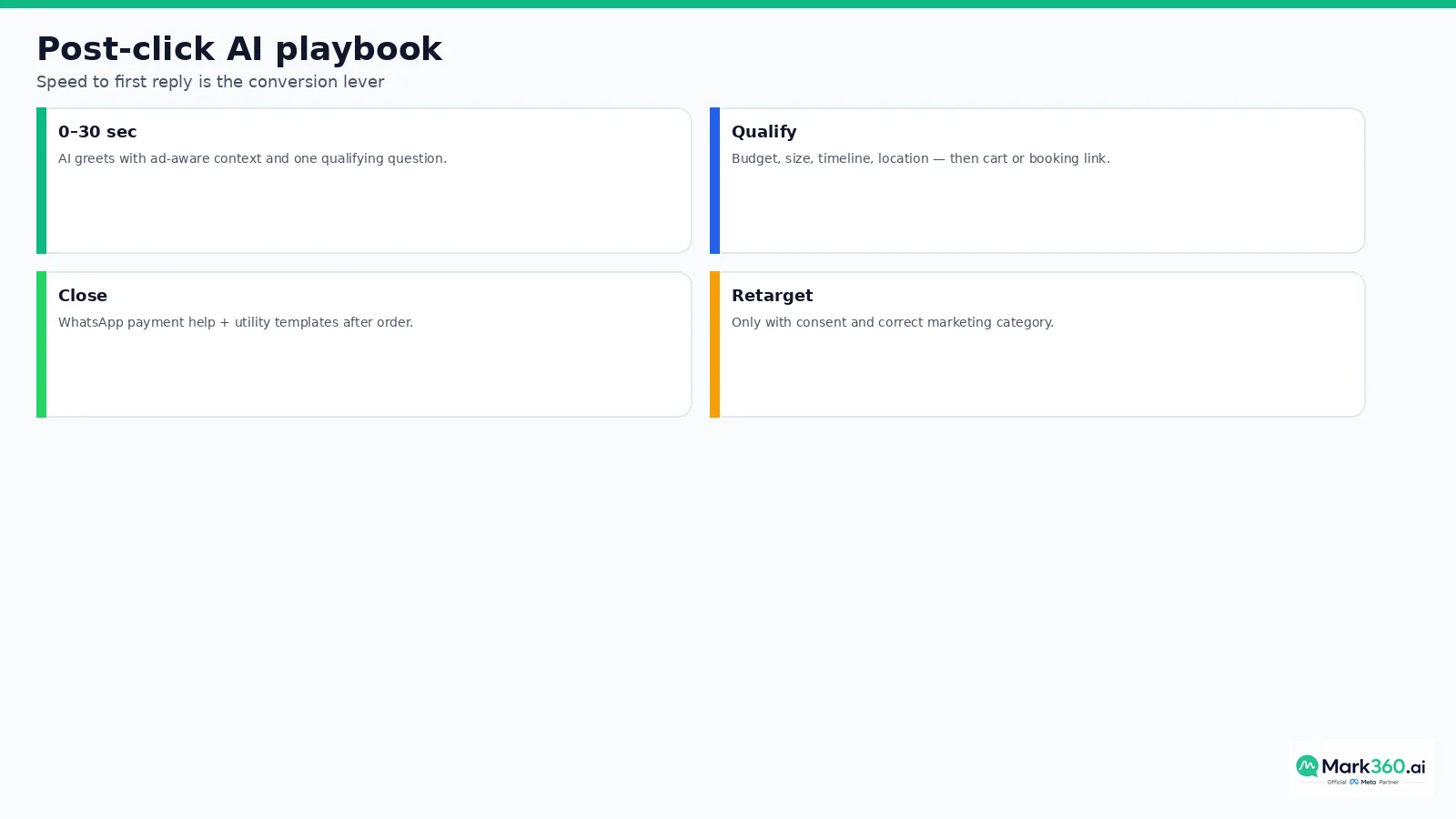
- 0–30 seconds: Greet with ad-aware context and one qualifying question.
- Qualify: Size, budget, timeline, location, payment preference.
- Convert: Cart/booking link; offer human help for objections.
- Confirm: WhatsApp utility messages for order/payment when applicable.
- Re-engage: Marketing templates only with opt-in and correct category.
Speed to first reply is often the highest-leverage conversion fix — faster than another creative iteration.
Measurement framework
- Cost per click vs cost per started chat.
- Cost per qualified conversation.
- Chat-to-order rate and revenue per chat.
- FEP utilization rate.
- Human takeover rate after ads.
- Block/report rate on WhatsApp (quality).
If cost per chat looks cheap but chat-to-order is weak, fix qualification and offer clarity before scaling spend.
Global vs India notes
CTWA mechanics are global; buyer behavior and payment norms vary. In India, COD and WhatsApp-native buying are common — see also Click to WhatsApp ads India guide. For Mark360 India messaging examples: Marketing ₹0.94 / Utility ₹0.138 (Mark360 totals). Always separate Meta category rules from platform packaging.
Compliance checklist for ad-to-chat
- Landing chat script matches ad claims.
- WhatsApp marketing sends require opt-in beyond the ad click where policy requires.
- Instagram DM destinations follow Instagram Messaging rules, not WA fee folklore.
- Provide human escalation for complaints arising from ads.
- Re-read Meta ads + messaging policies before major flights.
How Mark360 fits the Meta funnel
Mark360 connects Click-to-WhatsApp and Instagram messaging journeys to AI agents and WhatsApp Business API as a Meta Partner — so the chat after the click is fast, contextual, and closable. Soft CTA: mark360.ai. Related: WhatsApp API for Instagram brands and shared IG + WhatsApp inbox.
Campaign architecture examples
Example A — Product drop
IG Reels ads → CTWA → AI confirms size/stock → checkout link → utility order template.
Example B — Lead gen service
Lead form optional; prefer click-to-chat → AI qualifies budget → human books call on WhatsApp.
Example C — Hybrid discovery
IG DM ad for styling advice → consent to WhatsApp → payment and scheduling on WA API.
Common failure modes
- Ads promise discounts the chat bot never mentions.
- No one answers for 10 minutes after expensive clicks.
- Teams treat FEP as unlimited free marketing forever.
- No shared inbox — CTWA chats land on a personal phone.
- Creative optimized for clicks, not for chat quality.
Budgeting the funnel without vanity metrics
Allocate budget in three buckets: media (Meta ads), messaging (WhatsApp categories after FEP), and people/AI (inbox staffing). Brands that only watch CPM miss the real unit economics: cost per qualified chat and contribution margin after messaging + COD failure costs.
Run weekly creative and script standups together — media buyers and CX leads in one meeting. The best hook in Ads Manager can still fail if the first WhatsApp question feels generic. Likewise, a brilliant AI script cannot save an irrelevant audience.
When scaling, increase budget only after chat-to-order is stable for a statistically useful sample. Scaling a broken chat experience multiplies waste.
Audience and offer design for messaging ads
Messaging ads reward specificity. Broad awareness audiences often produce low-intent chats that burn agent time. Start with warm site visitors, engagers, and lookalikes seeded from purchasers — then expand. Pair the audience with an offer that can be completed in chat: size help plus checkout, demo booking, or limited drop access.
Exclude recent purchasers from acquisition CTWA flights unless the goal is upsell with a distinct script. Nothing frustrates buyers like an ad restarting a journey they already finished.
Script library essentials
Build reusable blocks: greeting with ad reference, qualification questions, objection handlers (price, shipping, authenticity), close with link, and escalation phrase. Version the library alongside creative IDs so you can attribute which script paired with which ad.
Review lost chats weekly. If many buyers go silent after the second bot question, you are interrogating instead of helping. Reduce questions; increase value in each reply.
Incrementality and testing
Where possible, hold out a region or audience from CTWA to estimate incremental lift versus landing-page checkout alone. Messaging funnels can look great on chat volume while stealing conversions you would have won anyway. Incrementality tests keep finance aligned with growth.
Also A/B the first AI question. “What size do you need?” may outperform “How can I help?” for product ads. “Want me to check delivery to your city?” may outperform for logistics-sensitive categories.
Handoff to humans without losing the click
When AI escalates an ad-sourced chat, pass the ad name, offer, and qualification answers in the agent note. Humans should continue mid-conversation. Re-asking “Which product?” after a paid click is an expensive way to destroy ROAS.
FAQs
Are Click-to-WhatsApp ads free to message?
Eligible entry points may include a free messaging period; verify Meta’s current FEP rules. After that, category pricing applies.
Should every brand use CTWA instead of IG DM ads?
No. Choose based on close channel, ops readiness, and creative context.
Do I need WhatsApp Business API for CTWA?
For serious multi-agent and template workflows, yes. Pair ads with an API-ready inbox.
Where do AI agents help most?
Immediate post-click reply, qualification, and catalog answers — with humans for objections and VIP.
Extended guidance for operators
Treat this channel system like a product: roadmap, owners, SLAs, and incident response. Weekly standups should include at least one growth lead and one CX lead. Review the top failure transcripts, not only dashboards. Dashboards show symptoms; transcripts show causes.
Document the happy path and the unhappy path. Happy path: ad or organic entry, AI answer, cart, WhatsApp confirmation. Unhappy path: wrong item, delayed shipment, angry tone — human ownership within minutes. Publish both paths so agents do not invent process under pressure.
Invest in catalog truth before clever prompts. An eloquent AI that invents stock levels is worse than a short AI that says “Let me check with a teammate.” Pair knowledge updates with every product launch the same way you pair creative with every campaign.
Finally, keep Meta documentation links in your internal wiki: Instagram Messaging, WhatsApp pricing, and messaging policies. When someone proposes a “growth hack” that sounds like cold outreach, open the docs in the meeting. Culture beats a one-time training session.
Quarterly, re-certify templates, opt-in language, and escalation matrices. Platforms change. Teams change. The brands that win messaging are the ones that treat compliance as continuous operations, not a launch checkbox.
If you need a partner approach, Mark360 combines Instagram AI agents with WhatsApp Business API under Meta Partner practices — useful when you want one stack for capture, inbox, and close rather than stitching five tools manually.
Operator appendix: staffing, scripts, and weekly rituals
High-performing Meta messaging teams run a weekly ritual that looks more like a product standup than a marketing meeting. They review: median first response time, percentage of conversations resolved without a human, repeat-ask rate, template category mix, quality signals on WhatsApp, and one transcript win plus one transcript failure. The goal is not vanity automation rates — it is trustworthy speed.
Staffing models should assume spikes. A Reel that outperforms forecast can multiply inbound within an hour. Document surge staffing: who joins the shared inbox, which intents AI must keep handling, and which campaigns pause if quality rating dips. Without a surge plan, AI becomes a polite queue while angry buyers wait.
Script governance matters as much as model choice. Keep a versioned library of greetings, clarifiers, objection handlers, and escalation phrases. Tie script versions to campaign IDs when traffic comes from ads. When conversion drops, you need to know whether creative changed, audience changed, or the first bot question changed.
Catalog truth is non-negotiable. Sync stock, variants, shipping promises, and return windows into the agent knowledge layer. If those fields are wrong, every channel — Instagram and WhatsApp — will amplify the error at machine speed. Prefer “let me confirm with a teammate” over invented certainty.
Consent language should be short, explicit, and logged. When moving a shopper from Instagram to WhatsApp for marketing follow-ups, say what they will receive and how to stop. For transactional updates after an order, use the correct WhatsApp utility patterns and Meta’s category rules. Keep official documentation links in your runbook: Instagram Messaging on Meta’s Messenger Platform docs and WhatsApp Business Platform pricing docs.
Measurement should separate discovery metrics from close metrics. Instagram may generate conversations; WhatsApp may complete payment. Credit both without double-counting revenue. Use UTMs or order tags on cart links sent from chat. Leadership trusts messaging investment when attribution is boring and consistent.
Training for humans must include how to read AI summaries, how to avoid re-asking answered questions, and how to document outcomes. The shared inbox only creates leverage if humans continue mid-stream. Re-starting with “How can I help?” after a long AI thread is an expensive habit.
Finally, schedule a quarterly policy review. Meta updates messaging products. Templates expire in usefulness. Opt-in copy drifts. Assign a named owner — growth ops or CX ops — to re-read official Meta docs, re-certify templates, and update the escalation matrix. Continuous compliance is cheaper than emergency freezes during a launch week.
Mark360’s point of view is practical: Instagram AI agents for capture and qualification, WhatsApp Business API for trusted closes and notifications, and one shared inbox so context never resets — delivered with Meta Partner alignment rather than DIY folklore about “unlimited free broadcasts.”
Field notes from brands that scaled messaging
Brands that scale Instagram and WhatsApp together usually share three habits. First, they treat the first reply as a product surface — written, tested, and owned — not an afterthought dumped on interns. Second, they separate campaign experiments from service reliability so a viral ad does not break order support. Third, they budget for messaging the way they budget for ads: expected volume, category mix, and contingency if a campaign over-performs.
They also write down what AI must never do: invent discounts, promise delivery dates not in the system, argue with abusive users, or collect payment card details in free-text chat. Those guardrails belong in configuration and training, not in a Slack folklore thread.
When something fails publicly — wrong price, delayed handoff, tone-deaf automation — they post an internal incident brief within 24 hours: what happened, customer impact, fix, and prevention. Messaging incidents are brand incidents. Treating them casually teaches the organization the wrong lesson.
Key takeaways
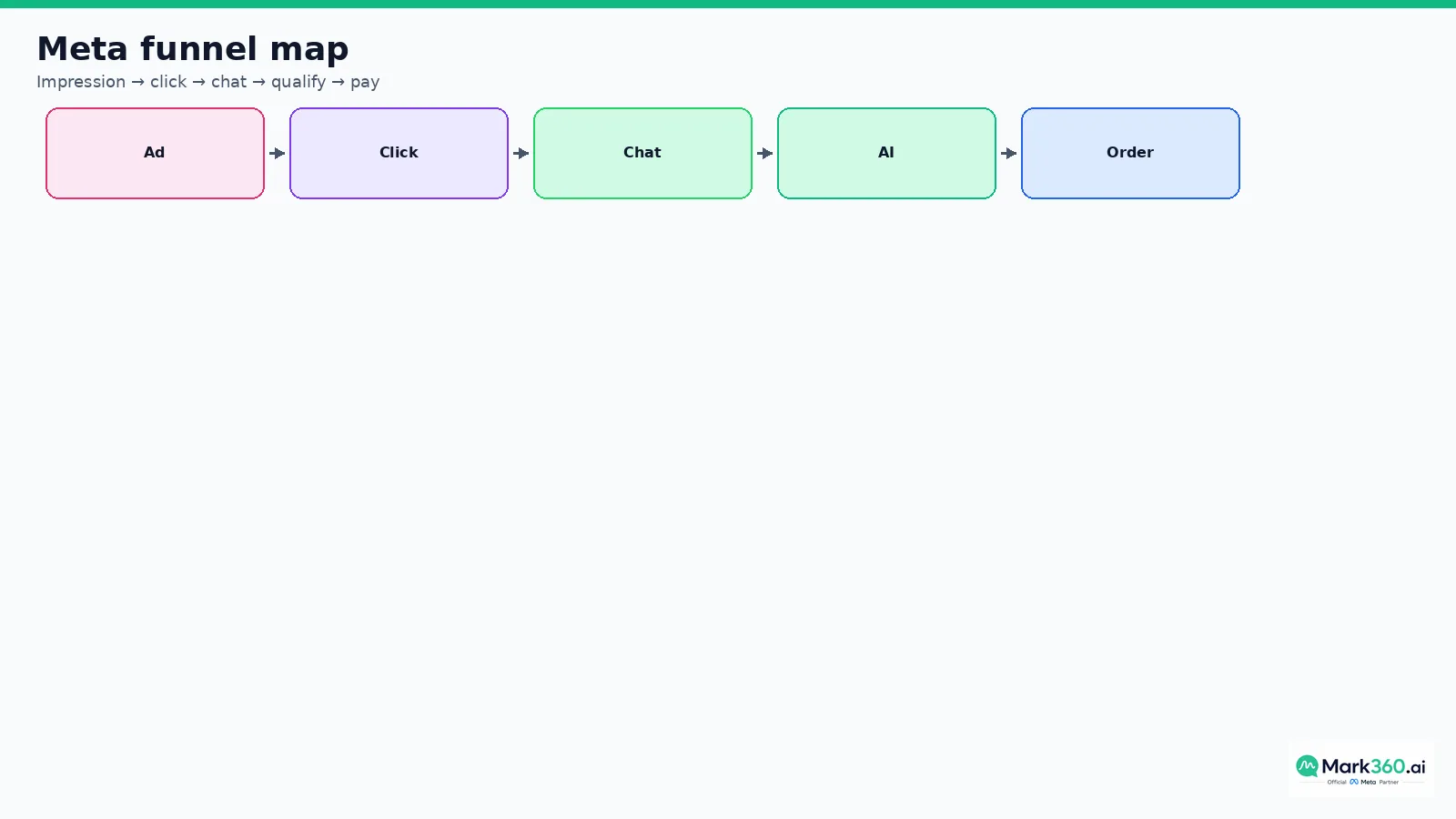
- Design the full path: ad → chat → qualify → close → compliant follow-up.
- Pick CTWA vs IG DM based on the job, not fashion.
- Track FEP separately; verify Meta pricing docs.
- Optimize cost per qualified chat and chat-to-order, not clicks alone.
- Mark360 supports Meta funnels with Instagram AI agents + WhatsApp Business API.