
Quick answer: What is the best AiSensy alternative in India?
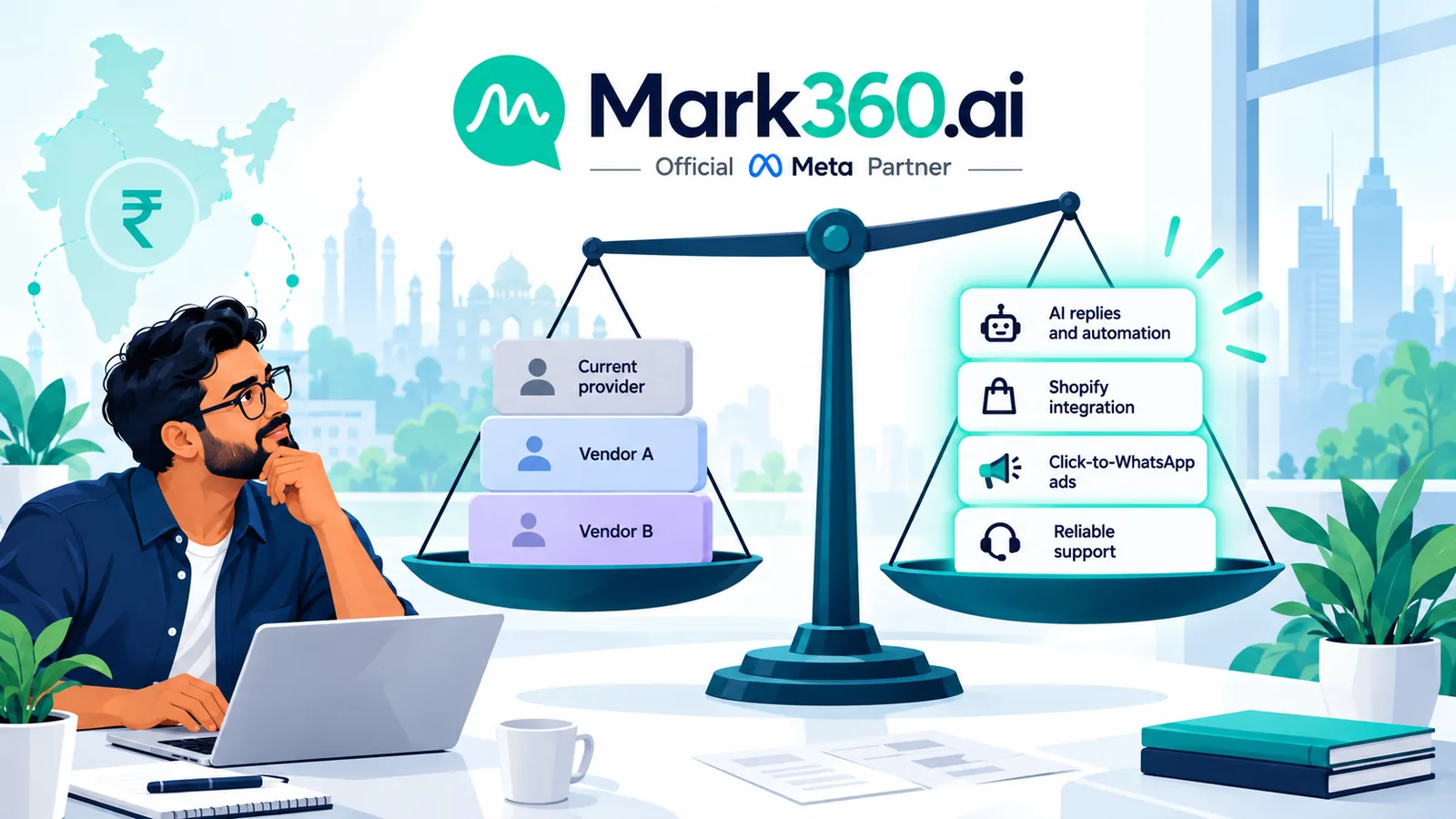
There is no single winner for every team. If you want AI agents, Shopify-aware journeys, and transparent Meta Partner pricing on WhatsApp, evaluate Mark360. If broadcast-heavy SMB marketing is your core and AiSensy already fits, staying can be rational. Enterprise CPaaS buyers may prefer Gupshup; Shopify CRM-centric teams often compare Interakt; inbox-first teams compare Wati and Gallabox. This guide stays fair: AiSensy has real strengths — switching only makes sense when your operating model outgrows it.
Who searches AiSensy alternatives and why
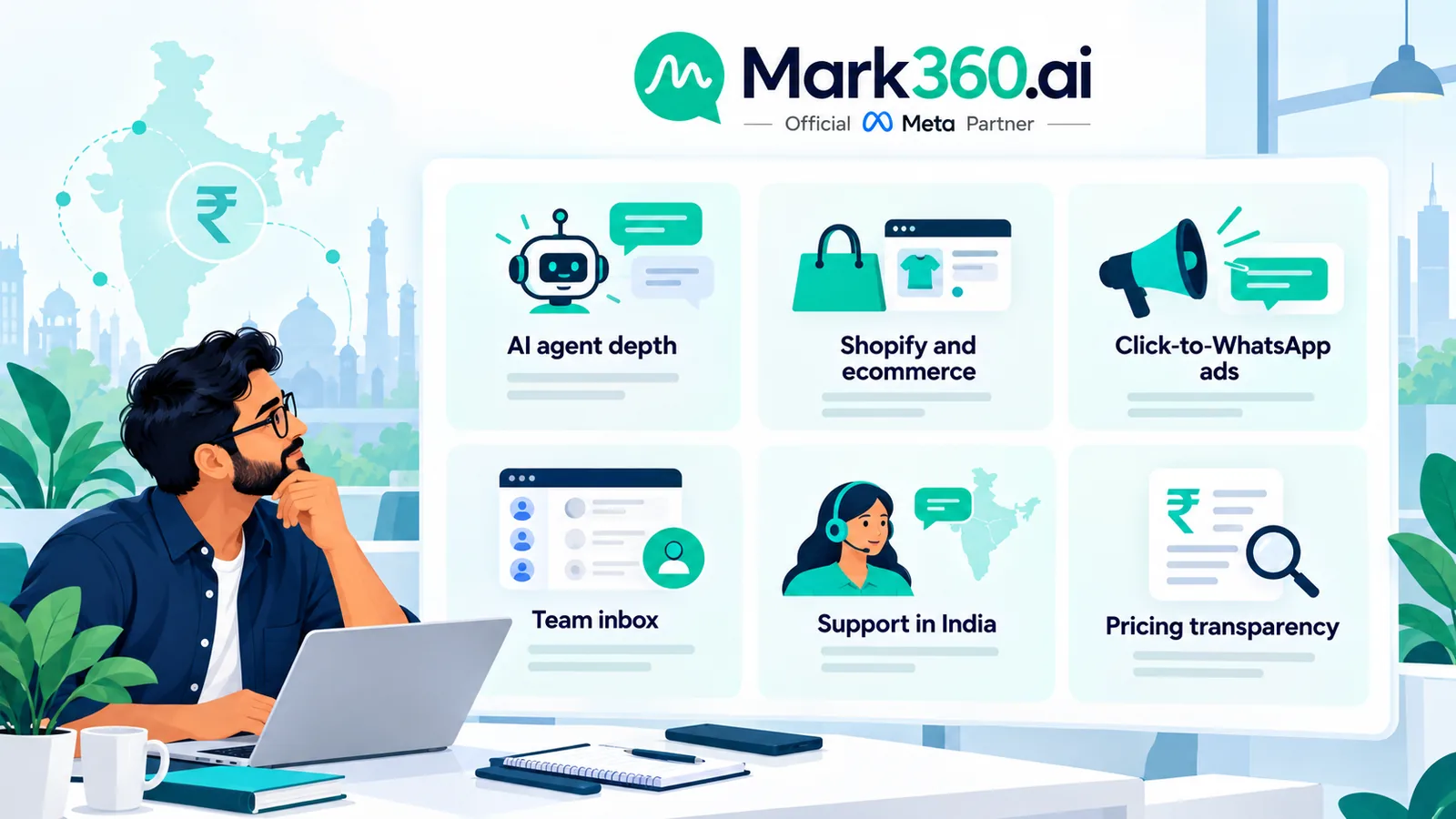
Indian buyers typing “AiSensy alternative” usually fall into a few buckets: Shopify D2C brands needing deeper AI or automation; teams unhappy with pricing clarity or support SLAs; agencies consolidating multiple client numbers; and switchers who already read Wati alternatives and want the same honest matrix for AiSensy. Intent is commercial — not academic. They want a Meta-official path that matches how their sales and support actually work.
Another trigger is festival-season pressure. When Diwali or Big Billion Days calendars demand abandoned-cart drips, COD confirmation, and CTWA routing in the same week, gaps in AI handoff or Shopify event coverage become expensive. That is when “AiSensy alternatives” searches spike — not because AiSensy is “bad,” but because the job-to-be-done changed.
Evaluation criteria for India BSP buyers
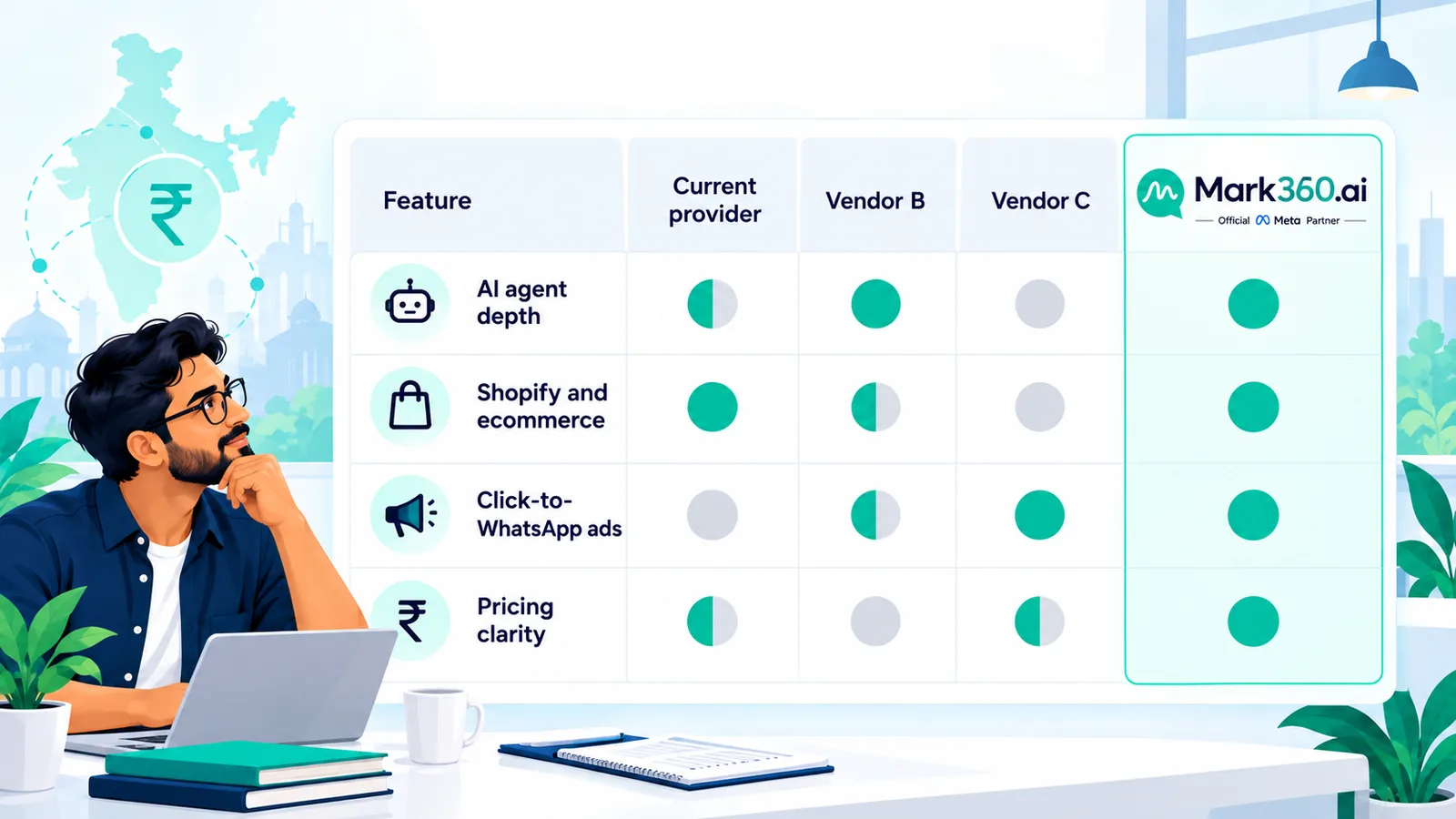
- Meta Partner status and clean Embedded Signup onboarding.
- Pricing transparency — Meta category rates vs platform fees (see India pricing).
- AI depth — FAQ bots vs true agents with handoff.
- Commerce — Shopify events, catalogs, COD/RTO workflows.
- Broadcast & drips — segmentation, frequency controls, template ops.
- CTWA / ads — lead routing and 72-hour window discipline.
- Inbox & teams — roles, shared context, reporting.
- Support & migration — template/number move help in India time zones.
AiSensy at a glance (honest strengths)
AiSensy is a well-known India-focused WhatsApp BSP with strong brand awareness among SMBs, frequent education content on Meta pricing changes, and a product motion centred on campaigns, chatbots, and onboarding narratives familiar to Indian marketers. Many teams start there because peers recommend it and the UI feels campaign-friendly. Those are legitimate strengths — not weaknesses to dismiss in a conquest post.
Where buyers shop alternatives: deeper AI agent workflows, Shopify-native automation sophistication, multi-product roadmaps (for example Instagram + WhatsApp under one AI ops model), or pricing/packaging that matches a different growth stage. Your mileage depends on plan tier and use case — always verify current AiSensy features and pricing on their site before deciding. We do not invent competitor list prices in this article.
Mark360 vs AiSensy
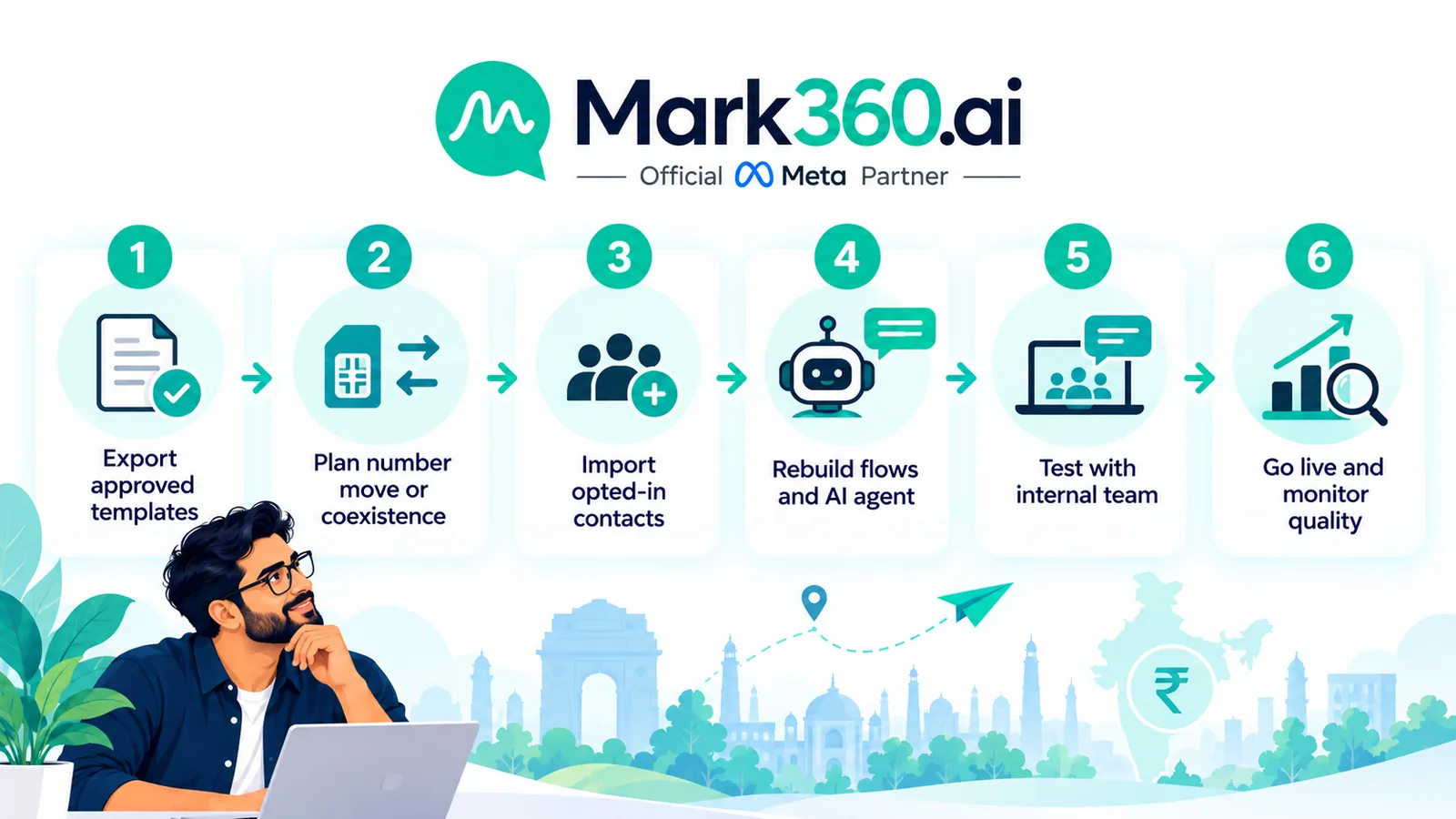
Mark360 positions as a Meta Business Partner platform for WhatsApp API messaging with AI agents, drips, broadcasts, and commerce integrations aimed at teams that treat WhatsApp as an operating system — not only a blast channel. Practical contrasts buyers usually test:
- AI agents: Mark360 emphasises agent + human handoff for sales/support; compare how each product handles knowledge bases, escalation, and Shopify/CRM context.
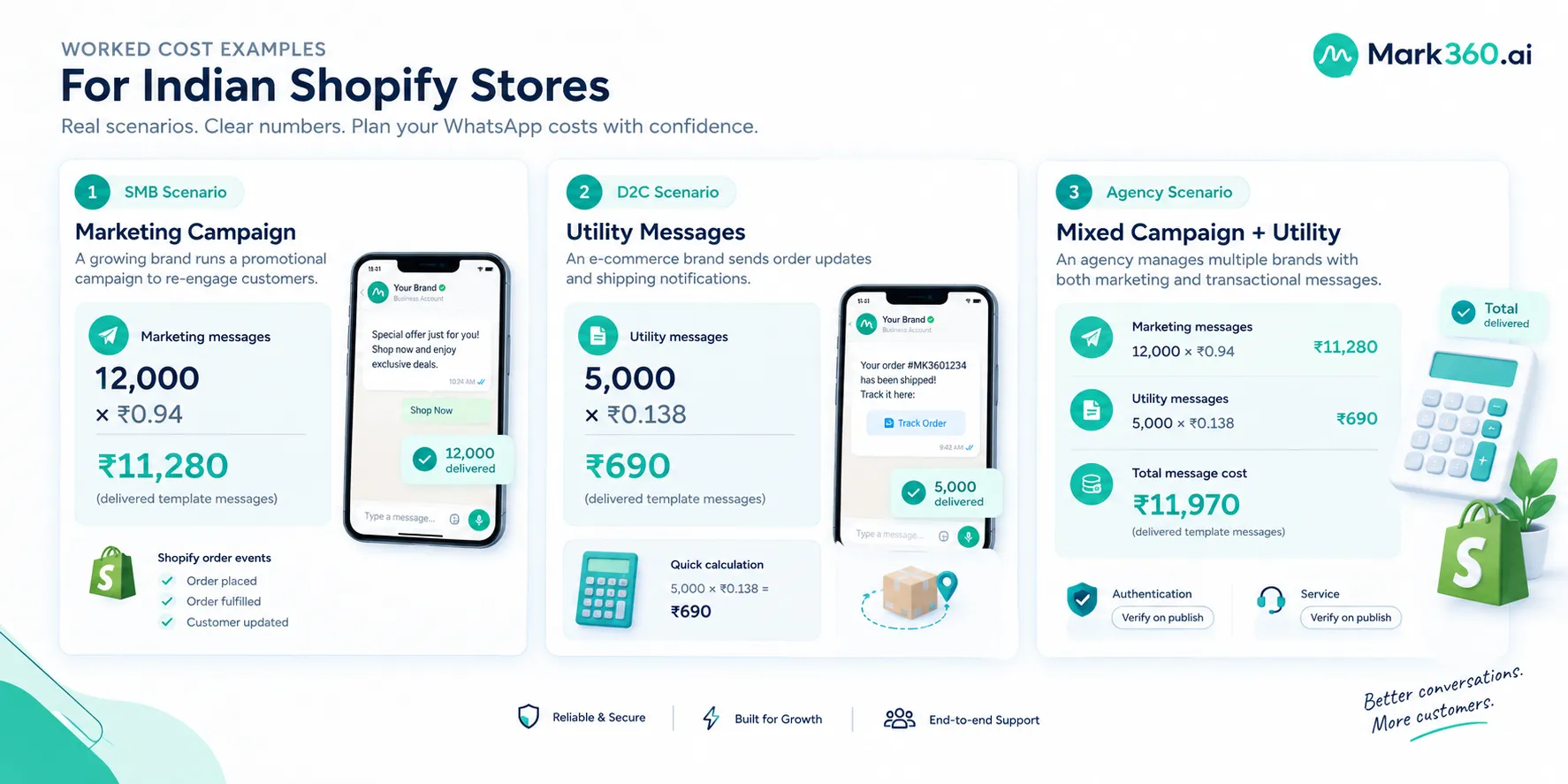
- Pricing clarity: Mark360 publishes India markup policy (Meta +10% in India for message rates) with known Marketing ~₹0.94 and Utility ~₹0.138 planning figures — confirm live invoices either way.
- Workflow breadth: evaluate CTWA, abandoned cart, and multi-channel roadmaps against your 2026 stack.
- Who wins: Mark360 when AI + commerce automation is the job-to-be-done; AiSensy when their campaign UX and existing playbooks already convert for you.
Run the same five journeys on both demos. Slideware feature matrices lie; sandbox journeys with your templates do not.
Wati, Interakt, Gallabox, Gupshup quick takes

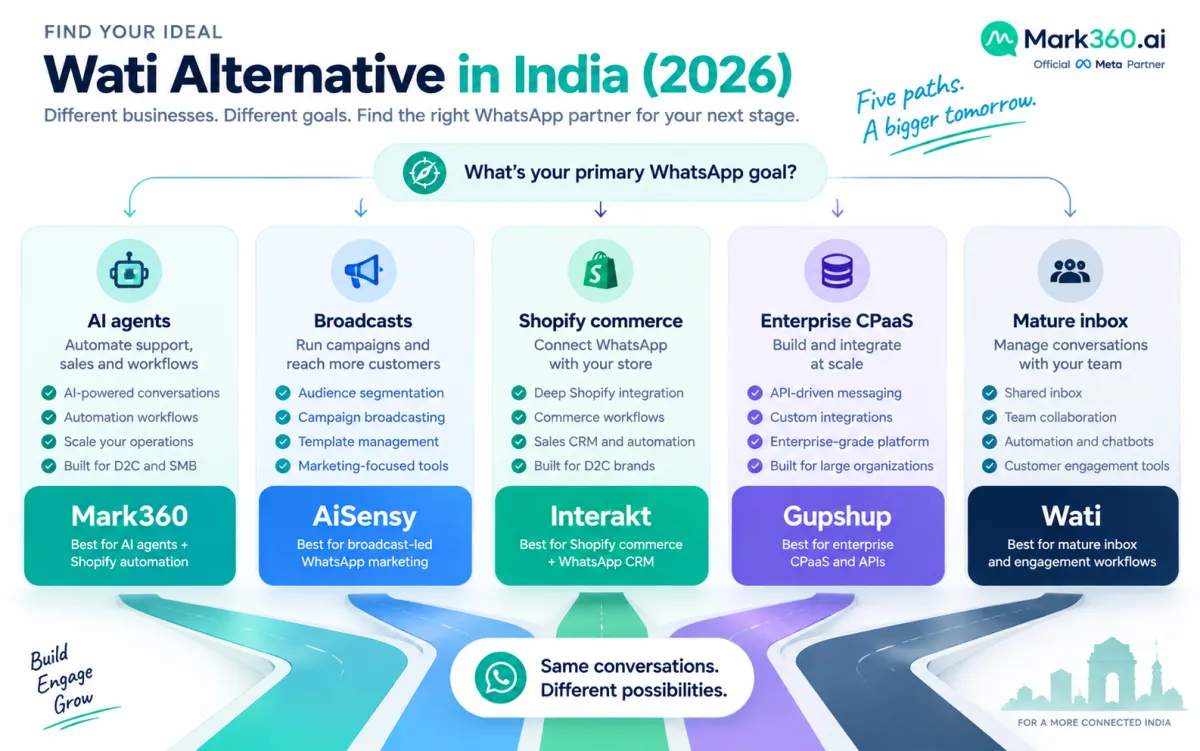
- Wati: Strong shared inbox and automation heritage; see our full Wati alternatives comparison.
- Interakt: Often considered by Shopify-centric Indian brands for CRM-flavoured WhatsApp journeys.
- Gallabox: Frequently evaluated for ecommerce conversations and growth tooling.
- Gupshup: Heavier enterprise / CPaaS and multi-channel messaging — better when engineering owns the stack.
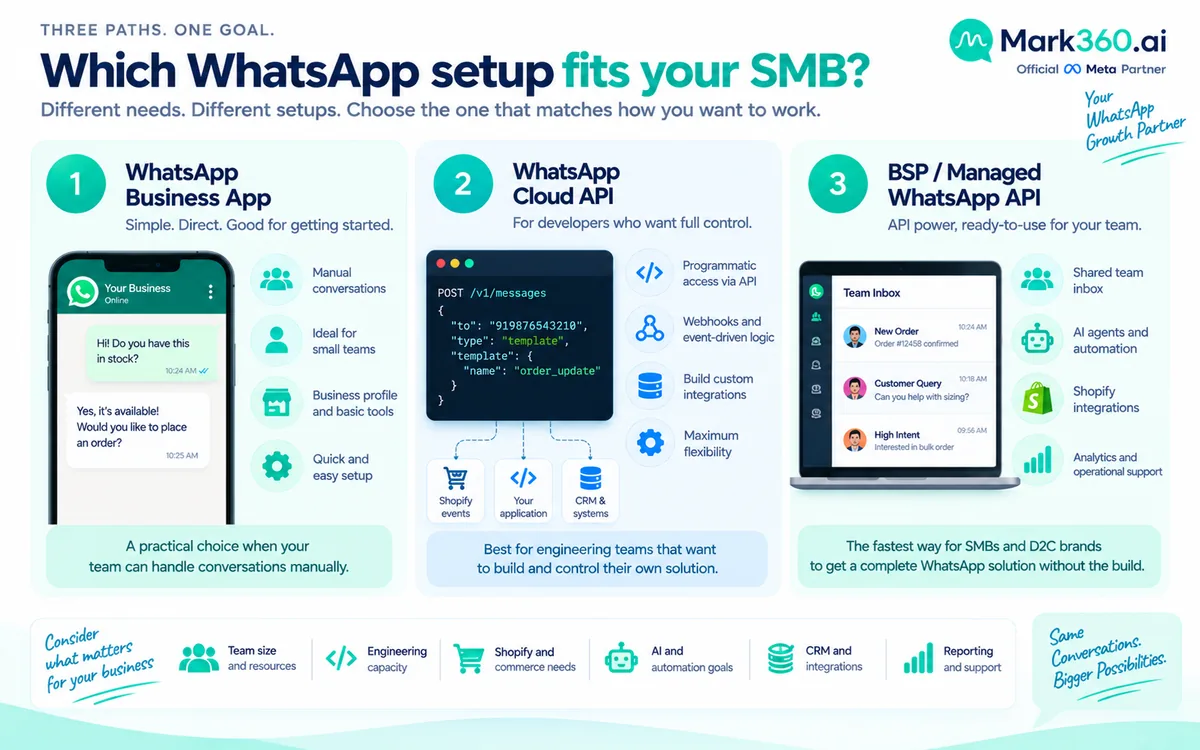
None of these “beat” AiSensy universally. Match the vendor to workflows, not blog hype. For architecture context, read Cloud API vs Business App vs BSP.
Feature matrix (AI, Shopify, CTWA, pricing transparency)
| Lens | What to test on a demo |
|---|---|
| AI | KB accuracy, hallucination controls, mandatory human handoff, multilingual India needs |
| Shopify | Order events, COD confirm, catalog sync, abandoned cart templates |
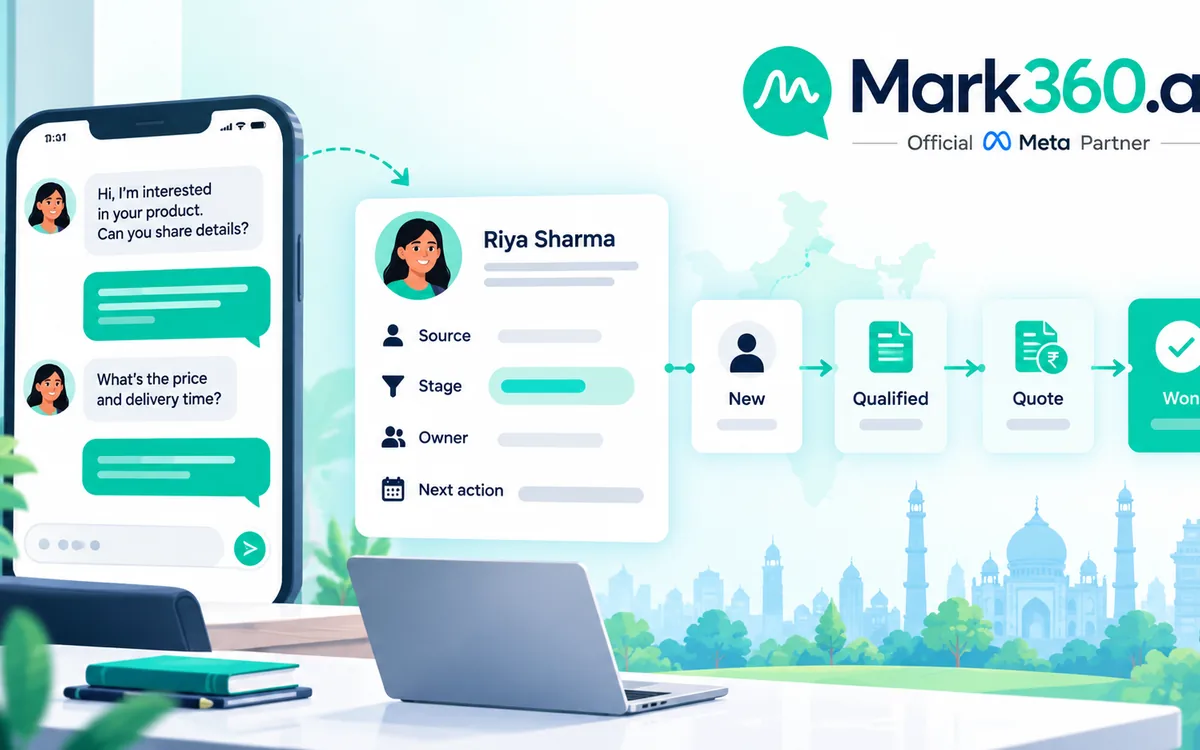
| CTWA | Ad-to-agent routing, first-reply SLA, reporting by campaign |
| Broadcasts | Segment builder, opt-out, template library, A/B if offered |
| Pricing | Meta pass-through clarity, platform fee, overage, India GST invoicing |
| Support | Onboarding timeline, template rejection help, escalation path |
Do not invent competitor list prices here — ask each vendor for a written quote against the same monthly Marketing/Utility volume.
Who should stay on AiSensy
Stay (or renew) if: your broadcasts and chatbots already hit ROI; your team is trained on their UI; migration cost exceeds upside; and your open feature gaps are minor. Switching BSP mid-festive season without a parallel-run plan is how brands drop deliverability and confuse customers. Loyalty to a working stack is a feature, not a failure.
Consider switching when AI qualification is blocking revenue, Shopify events require brittle workarounds, pricing invoices are hard to reconcile with Meta categories, or you need a broader Mark360-style automation roadmap. Switching for ego ranking (“we need the trendy tool”) is how projects stall.
Migration notes (templates, numbers, coexistence)
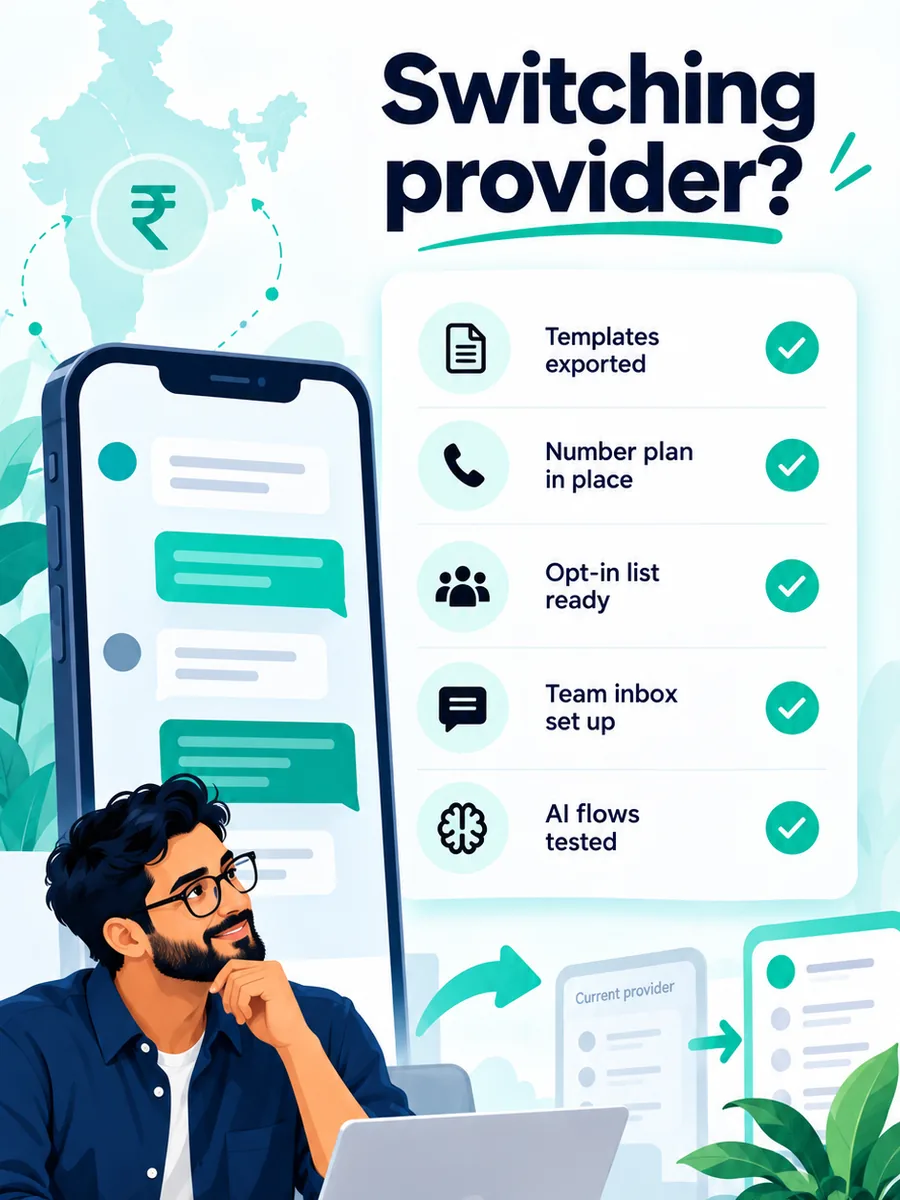
- Export template inventory and categories; rebuild or transfer with partner help.
- Clarify whether you keep the same number (coexistence / migrate) or launch a new line.
- Re-map webhooks, Shopify apps, and CTWA ad account links.
- Run dual-read analytics for two weeks; cut over only after quality rating is stable.
- Retrain agents on the new inbox shortcuts before pausing the old tool.
Budget engineering and ops time honestly. Template rebuilds and agent retraining usually dwarf the subscription line item in month one.
Related reading
Best Wati alternatives in India · Cloud API vs BSP · WhatsApp API pricing India.
How to structure a fair vendor bake-off
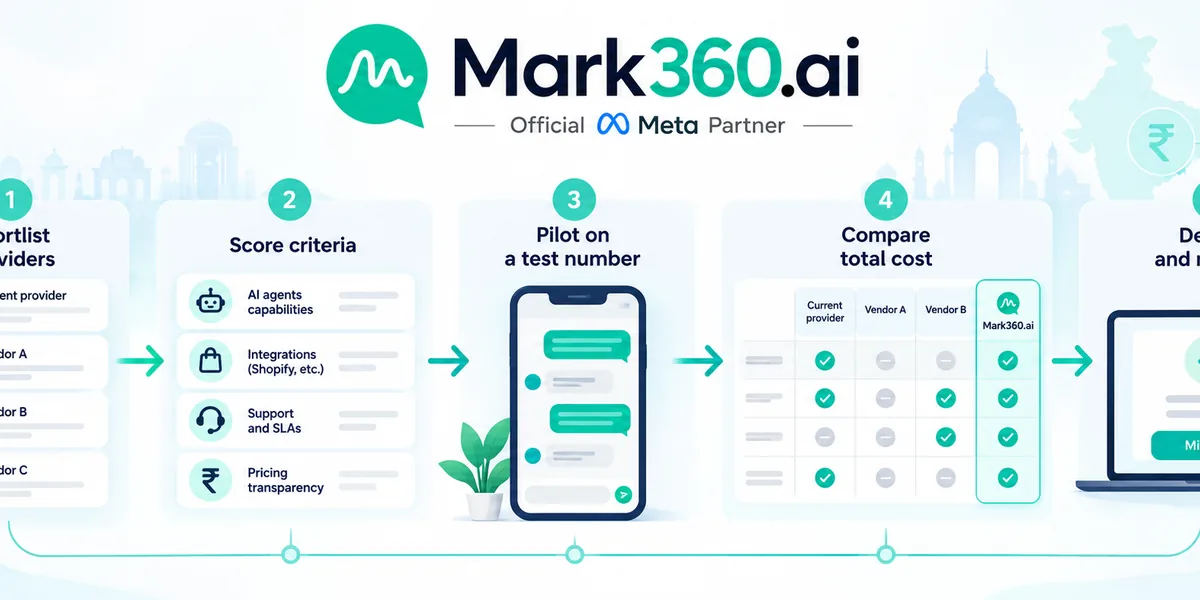
Invite at most three vendors (for example AiSensy if you are on it, Mark360, and one other). Share the same brief: monthly Marketing and Utility volume estimates, five journeys, Shopify yes/no, CTWA yes/no, languages, and number of agents. Require a written commercial proposal with Meta pass-through explained. Score demos the same week with the same stakeholders present.
Disqualify anyone who refuses to show template creation, cannot explain quality rating, or pressures you to import a cold CSV for a “proof blast.” Fair comparison dies the moment grey tactics enter the bake-off.
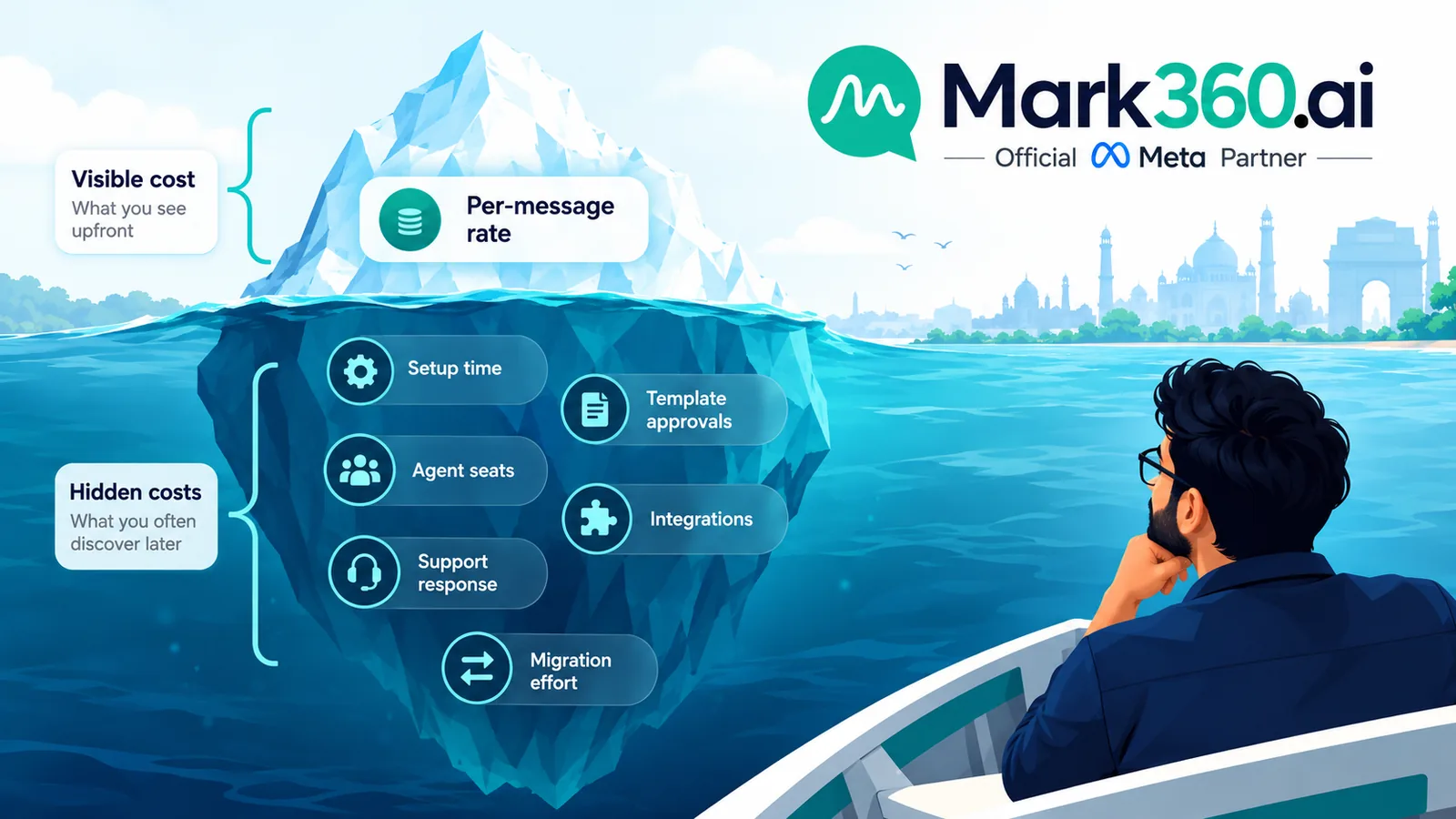
Total cost of ownership beyond per-message rates
Message rates matter, but so do agent hours saved, failed campaign rework, and migration downtime. A slightly higher platform fee that cuts average handle time with AI agents can win on contribution margin. Conversely, a cheap plan that forces manual CSV broadcasts every week costs more in people than it saves on software. Use Mark360’s published India Marketing ~₹0.94 and Utility ~₹0.138 planning figures as one transparent message-cost anchor, then layer labour and risk into the spreadsheet.
Also price the cost of being wrong: a banned number mid-festive season dwarfs a month of BSP fees. Official Meta Partner paths exist to reduce that tail risk.
Decision tree you can screenshot for stakeholders
- If AI agents + Shopify events are the primary gap → pilot Mark360.
- If inbox UX is the only complaint and campaigns ROI → negotiate with current vendor or evaluate Wati-class inbox tools.
- If you need multi-channel CPaaS under engineering ownership → shortlist Gupshup-class platforms.
- If AiSensy already clears the five journeys with clear invoices → stay and reinvest in creative/opt-in quality instead of migrating.
Pricing conversation scripts (without inventing competitor rates)
When a vendor will not separate Meta rates from platform fees, ask: “Please quote Meta Marketing and Utility for Indian recipients as line items, then your platform fee.” If they only return a blended “per conversation” number, request the Meta country card reference they used. You can independently sanity-check Marketing and Utility using Mark360’s published India planning figures (~₹0.94 Marketing / ~₹0.138 Utility on Meta ~₹0.87 / ~₹0.115) without pretending those are another BSP’s invoice.
Never accept “unlimited WhatsApp” as a professional answer. Unlimited usually means unofficial tooling or a promotional period that collapses under quality rating. Official bulk always has a unit economics story.
Team change management when you switch BSPs
Counsellors and support agents hate new inboxes mid-quarter. Schedule training before cutover, keep canned replies mapped, and run a week of shadow mode where leads still land in the old tool while the new tool mirrors. Celebrate a single early win (for example abandoned-cart recovery) so the team associates the switch with revenue, not bureaucracy.
Document which templates are seasonal vs evergreen. Festive creatives expire; Utility booking templates should survive the migration with variable names intact.
Next steps
List five WhatsApp journeys that make money or save support cost. Ask Mark360 and your current vendor to show those five in a live demo with your sample templates — not a generic feature slideshow.
If AiSensy already matches those five journeys, stay. If AI agents, Shopify depth, or pricing transparency are the blockers, a structured Mark360 pilot is the fair next test.