
Quick answer: What changes on October 1, 2026?
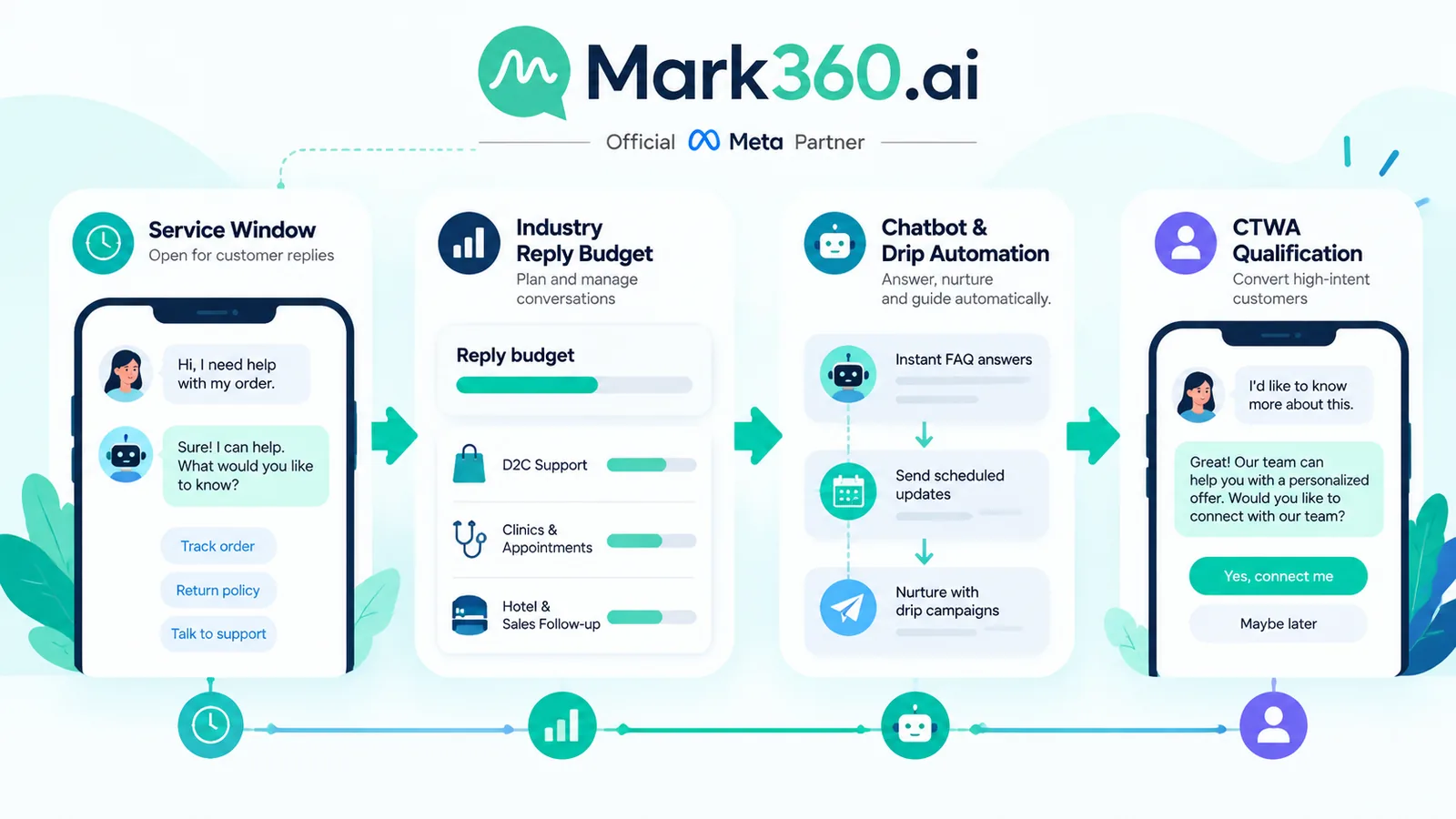
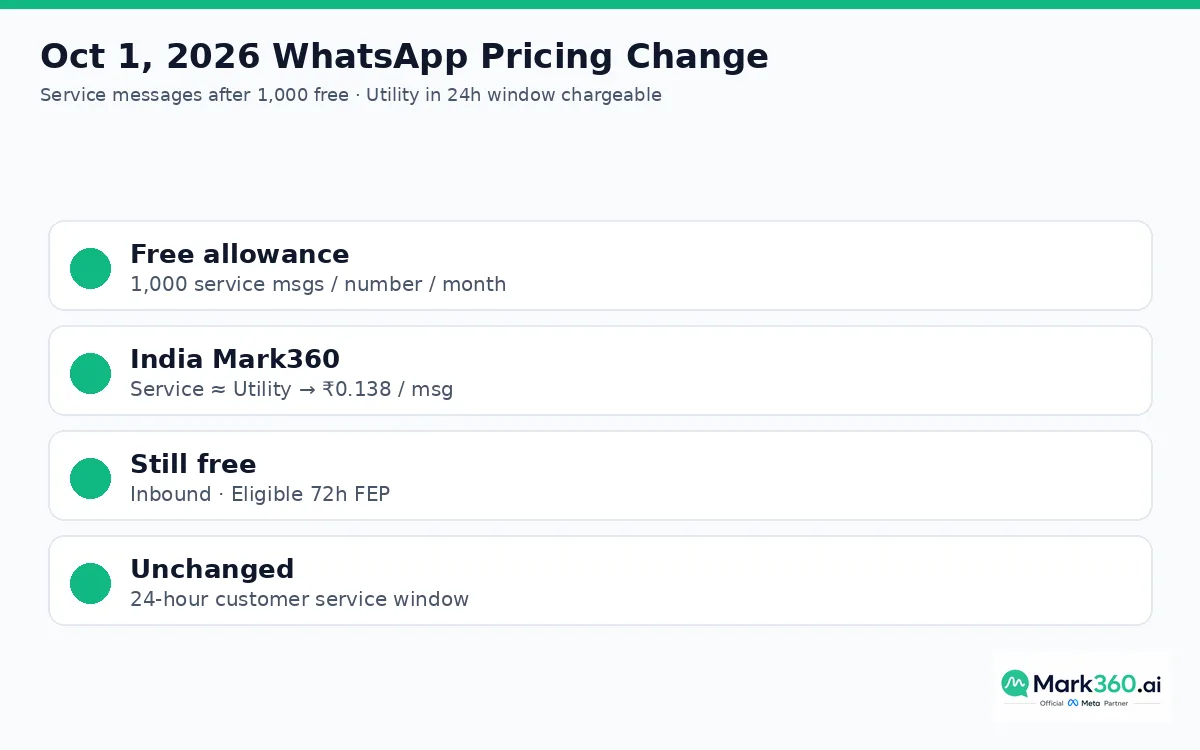
Meta starts charging per delivered WhatsApp service message (free-form replies inside the 24-hour customer service window), with 1,000 free service messages per business phone number each calendar month. Utility templates sent inside that window also become chargeable. Inbound customer messages stay free. Eligible Click-to-WhatsApp (CTWA) free-entry-point delivery stays free for up to 72 hours when the window opens correctly.
- Service messages = free-form replies (human, chatbot, or AI agent) inside the open 24-hour window — no template approval required.
- Allowance = 1,000 messages per number per month, not 1,000 conversations. Unused free messages do not roll over.
- Utility templates in-window are charged from message one; they do not consume the 1,000 service allowance.
- Service rates follow the recipient country’s utility-class Meta rate card (no volume discounts on service).
- Best hedge for most SMB teams: fewer noisy replies via chatbots, drips, in-window templates, and disciplined CTWA 72-hour handling — not “buy more numbers.”
What is a WhatsApp service message?
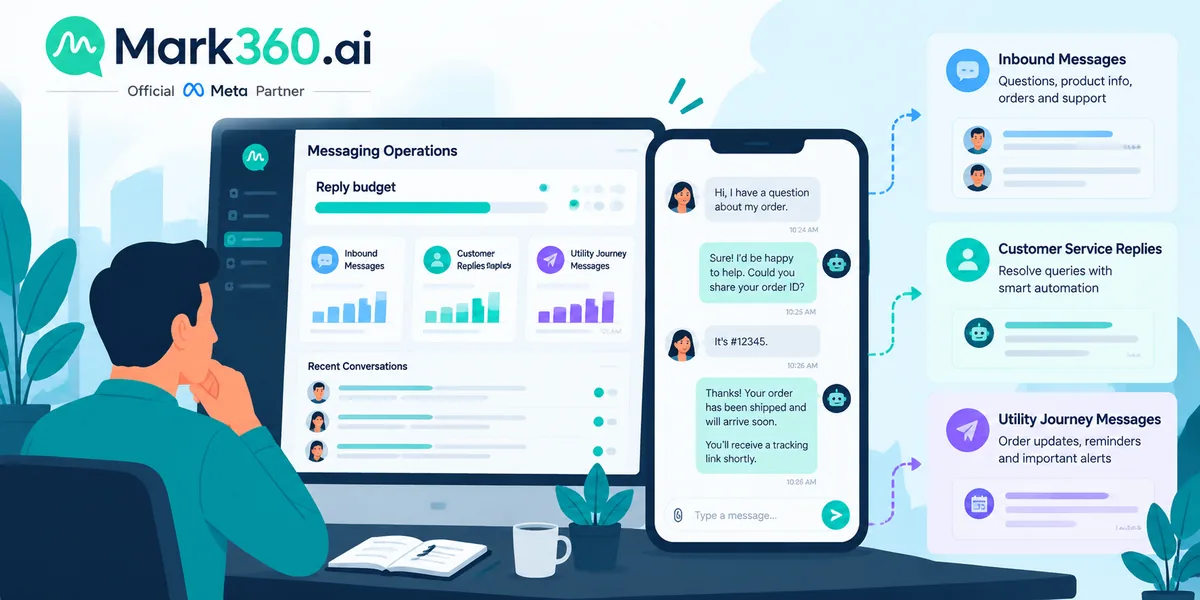
A service message is any free-form business reply sent while a customer service window is open. The window opens when a customer messages you and refreshes with each new inbound message. Examples:
- “Your order left the warehouse — tracking link below.”
- A chatbot answering “What are your clinic hours?”
- A sales rep typing floor-plan follow-ups after a real-estate lead asks about possession.
Templates are a separate category (marketing, utility, authentication). From October 1, 2026, Meta also charges utility templates delivered inside an open 24-hour window — ending the prior “utility free in-window” exception.
What stays free (and what does not)
| Still free | Now / still charged |
|---|---|
| Inbound customer messages | Service messages after the 1,000 free/number/month |
| First 1,000 service messages per number each month | Utility templates in-window (from message one) |
| Eligible CTWA free-entry-point message delivery (up to 72h when rules are met) | Marketing and authentication templates (unchanged — already charged) |
| Failed / undelivered messages (you pay on delivery) | Service messages have no volume-tier discounts |
CTWA fine print still matters: reply inside the normal opening window so the free entry point actually starts; desktop/web clicks may not qualify the same way as mobile app taps; after 72 hours you are back on normal billing. High-touch deals often close after day three — plan for that cost, do not assume ads stay “free forever.”
India pricing specifics (verify before you budget)
Meta publishes country rate cards that change; always confirm the live card and your BSP invoice. Mark360’s published India markup policy:
- India: Meta current rates + 10%
- Outside India: Meta current rates + 20%
Known India reference points (Marketing / Utility) used in Mark360 planning:
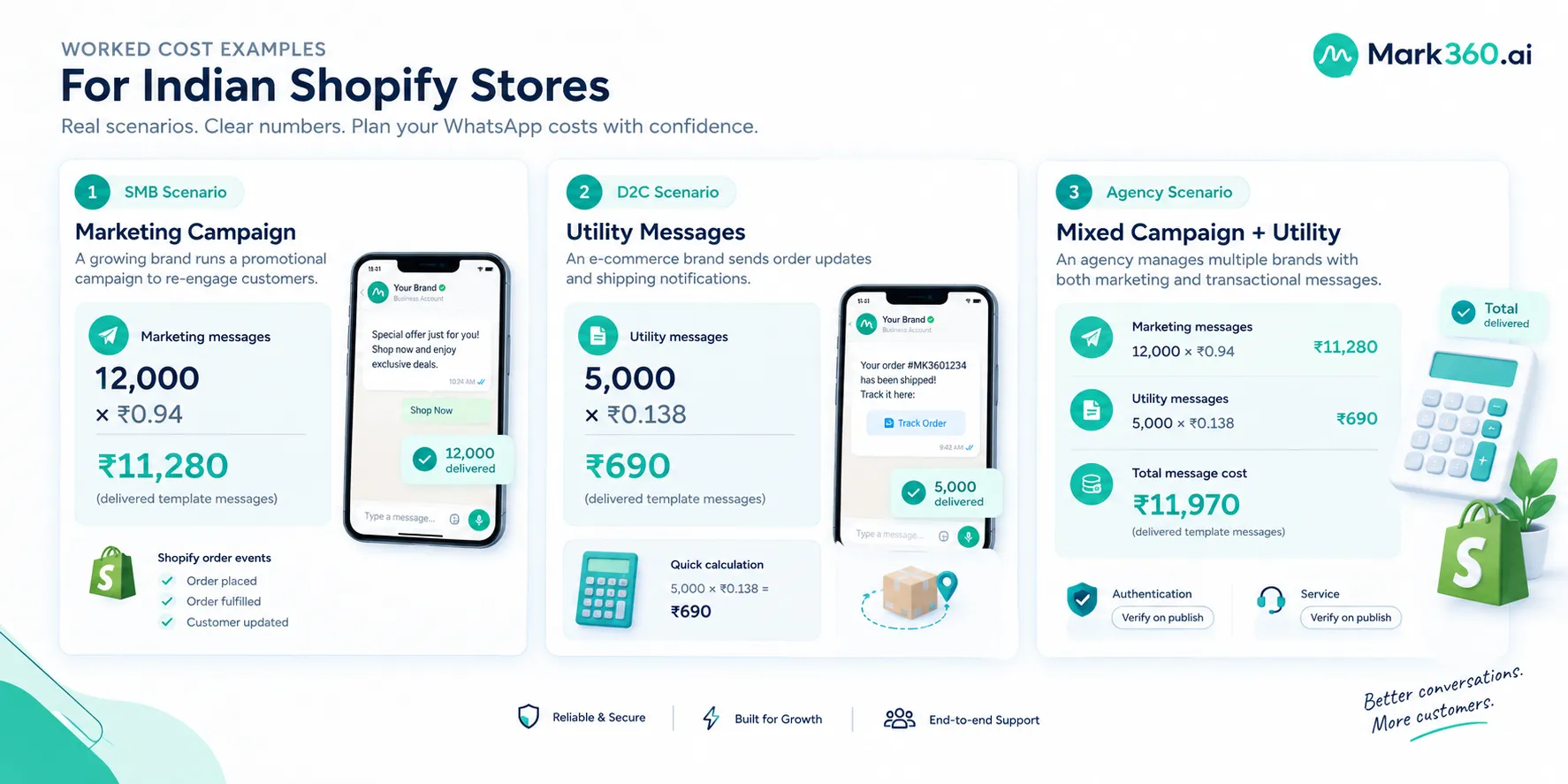
- Marketing: Meta ~₹0.87 → Mark360 ~₹0.94
- Utility: Meta ~₹0.115 → Mark360 ~₹0.138
Service INR: Public Meta guidance and competitor explainers (AiSensy, 360dialog, Gallabox) state that service messages are billed at the same country rates as utility / authentication. Mark360’s earlier India framing cited Meta service ≈ ₹0.115 per delivered message at the Meta rate-card level for India. AiSensy’s public Oct 1 update listed ₹0.145 as their platform Service rate for Indian recipients after the free allowance — useful as a competitor-sourced benchmark, not as Mark360’s invoice line.
We are not inventing a Mark360 Service INR here. After October 1, read Meta’s country card for Service + apply Mark360’s India +10% / outside +20% markup on the Meta amount, then confirm the Service line on your Mark360 bill. Do not budget from screenshots that mix Meta rates with a BSP’s all-in price.
Illustrative Meta-level India math (₹0.115 service after free tier)
| Service msgs delivered / month (one number) | Free | Chargeable | Example Meta charge @ ₹0.115 |
|---|---|---|---|
| 800 | 800 | 0 | ₹0 |
| 2,500 | 1,000 | 1,500 | ₹172.50 |
| 10,000 | 1,000 | 9,000 | ₹1,035 |
| 50,000 | 1,000 | 49,000 | ₹5,635 |
These are Meta-rate illustrations only. Add your BSP markup (Mark360 India +10% on Meta) and remember utility templates in-window bill separately.
How industries feel reply cost (messages ≠ conversations)
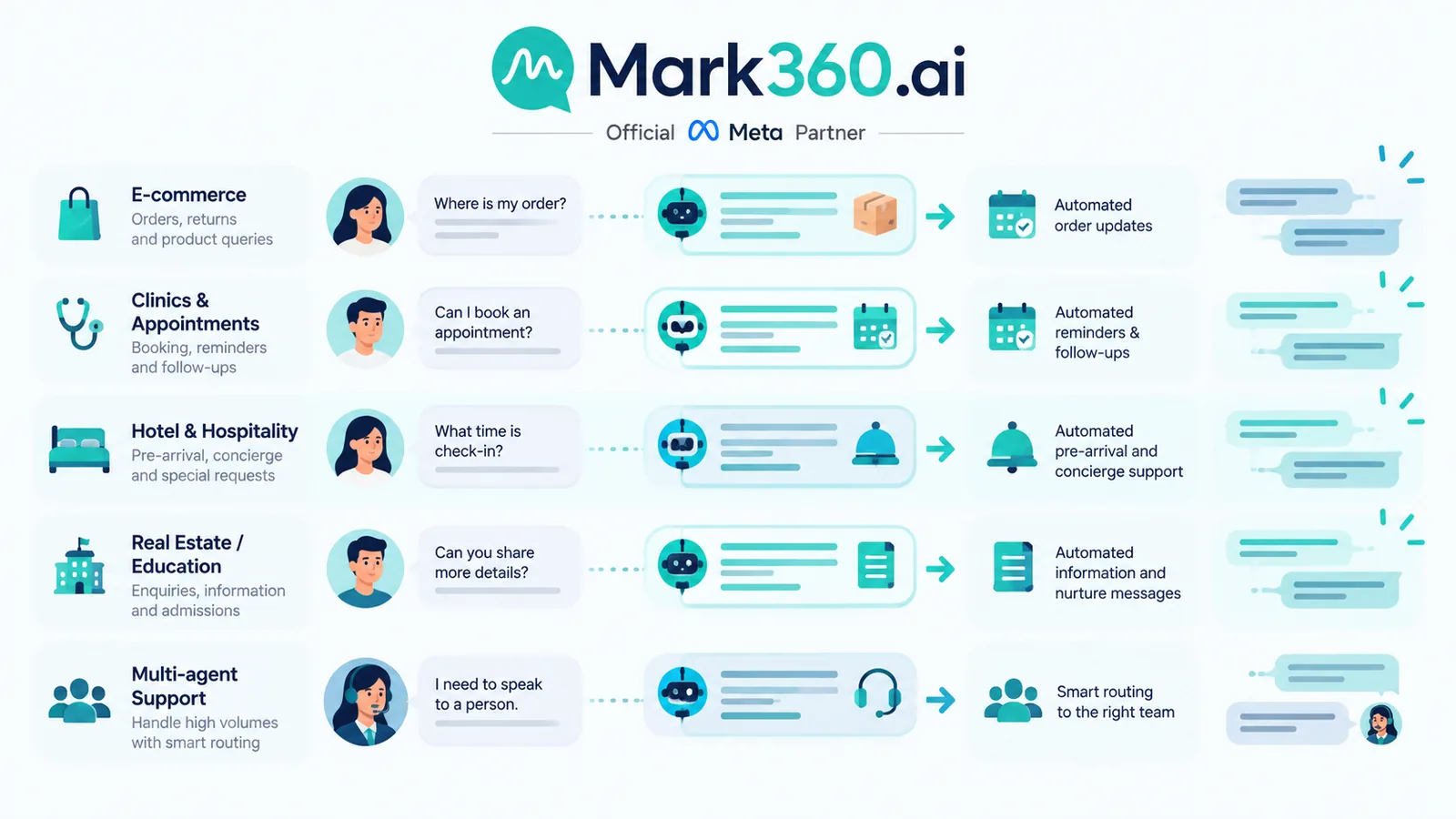
A “typical” support chat can burn 5–8 service replies. At that pace, 1,000 free messages is closer to ~125–200 conversations per number — roughly tens of replies per day, not unlimited chat.
| Industry pattern | Reply shape | Oct 1 pressure | Primary hedge |
|---|---|---|---|
| D2C / Shopify support | WISMO, size, COD confirm — many short threads | Allowance dies on volume days | Order-status chatbot + utility templates + COD drip |
| Clinics / salon / gym | Hours, booking, prep FAQs repeat daily | FAQ spam eats free tier | Booking chatbot + appointment drip; human for clinical edge cases |
| Hotels / restaurants | Pre-arrival FAQ + table/room changes | Seasonal spikes | Pre-arrival drip + concierge FAQ bot |
| Real estate / education sales | 15–20+ replies per warm lead | One lead can wipe days of allowance | Qualify in bot; move sprawl to call/human; use CTWA 72h deliberately |
| Ecommerce peak / multi-agent inbox | 100+ chats/day × 5 replies | Free tier gone mid-week | Deflection + templates + segment humans to revenue moments |
Spreading volume across extra WhatsApp numbers multiplies the 1,000 allowance on paper — and fragments customer context. Prefer fewer numbers with smarter automation unless you have a clear routing design.
How to cut replies without cutting revenue
1. Chatbots and AI agents that answer once
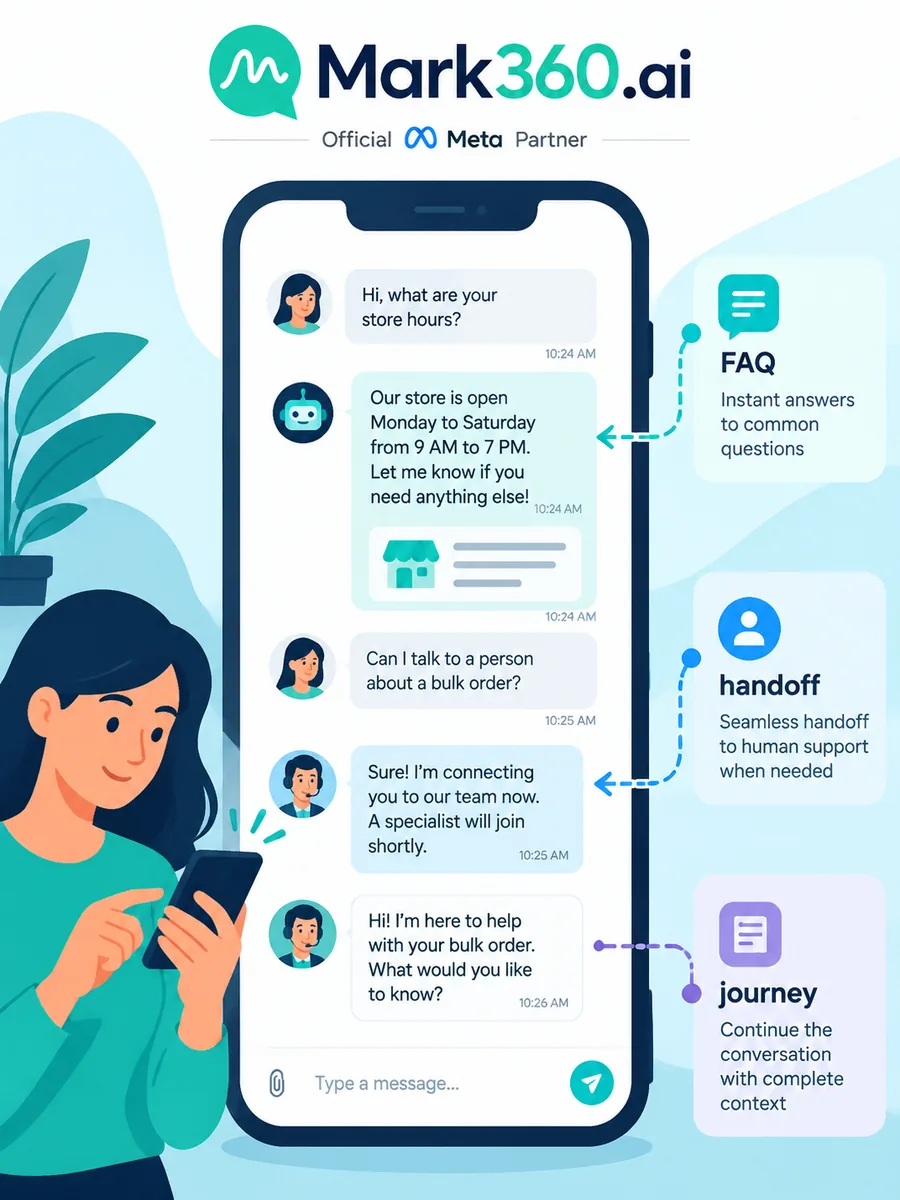
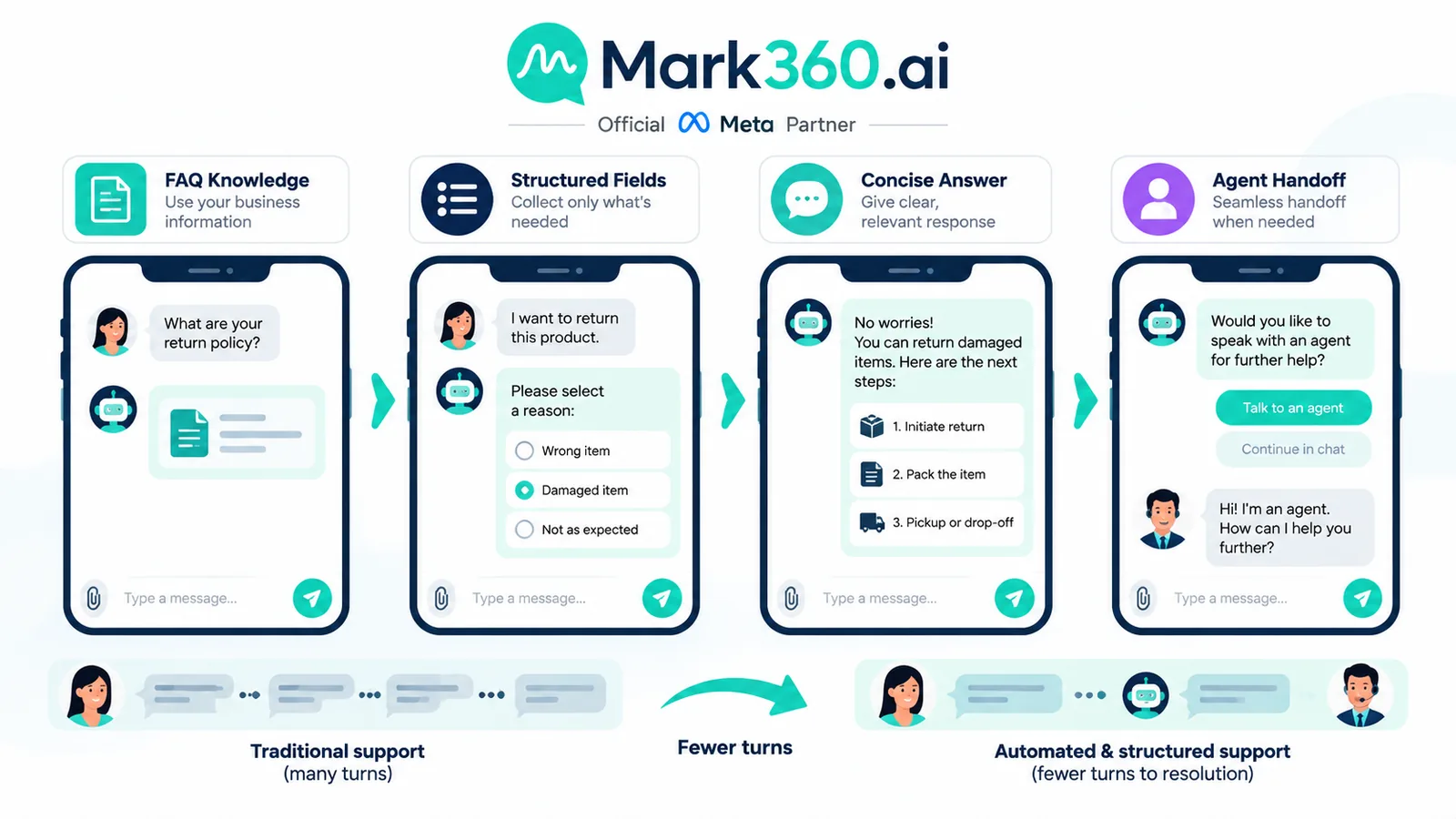
- Push high-frequency FAQs (hours, shipping SLAs, return policy, prep instructions) into a verified knowledge base.
- Collect structured fields (order ID, booking slot, budget band) in one interactive flow instead of five free-form pings.
- Hard-stop loops: after N bot turns or frustration signals, hand off to a human with full context — one good human reply beats ten confused ones.
- Every bot free-form reply is still a service message after the free tier. Bots reduce count and duration; they do not create a free category.
2. Drips and journey messages
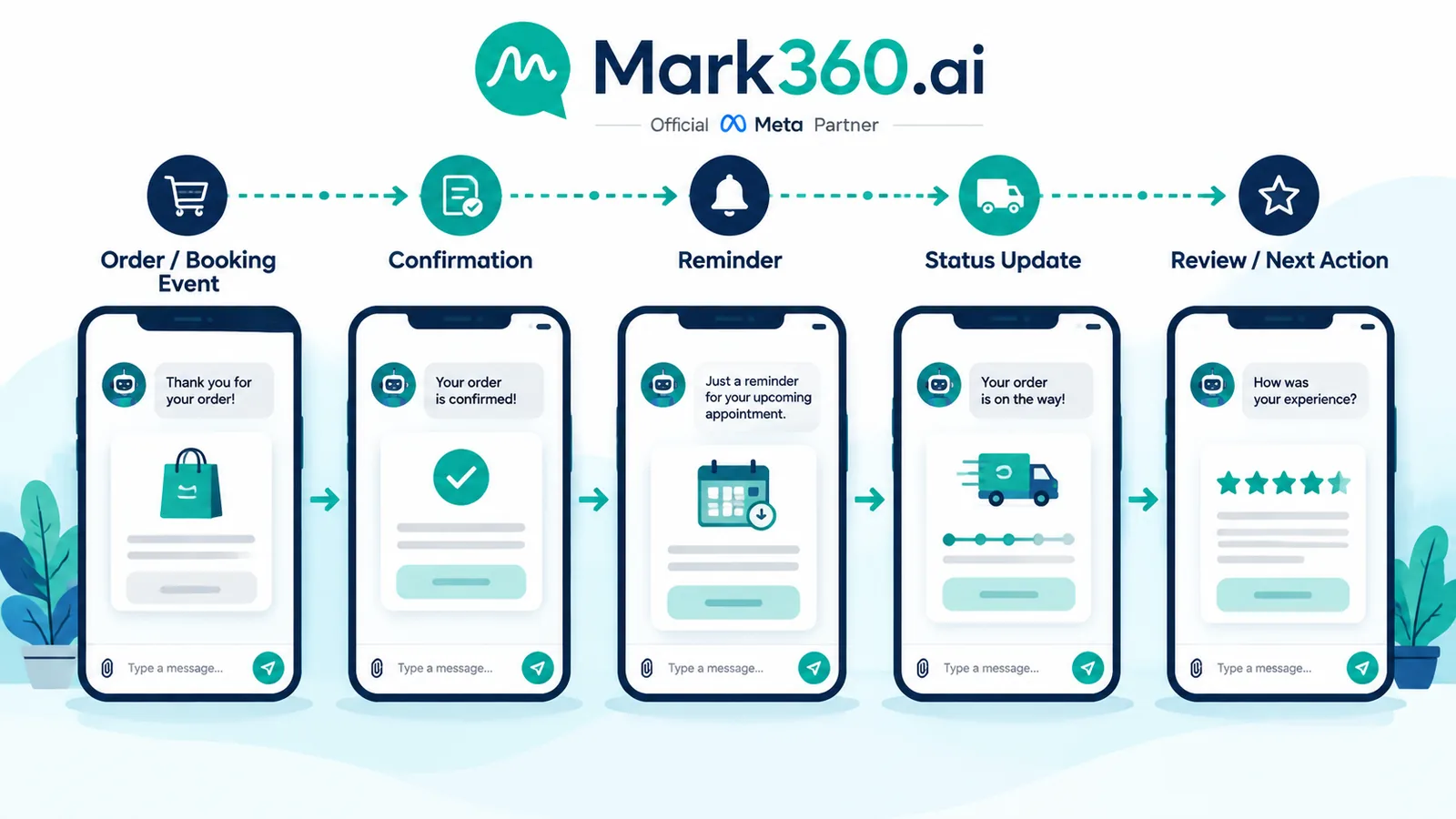
- Replace “just checking in” typing with scheduled journeys: abandoned cart, booking confirm → reminder → review, COD confirmation, pre-arrival hotel drip.
- Prefer approved utility templates for operational updates; keep marketing templates for offers with clean opt-in.
- Remember: from Oct 1, utility in-window is charged — still usually cheaper and clearer than long free-form tennis, and easier to forecast.
3. Templates inside the open window (on purpose)
- When the customer is already chatting, send the right utility template (order update, appointment reminder) instead of composition improvisation.
- Keep template libraries short, variable-accurate, and category-correct — wrong category = wrong price.
4. CTWA 72-hour free entry point
- Staff or bot-first-reply within the opening window so the free entry point starts.
- Use the free hours to qualify, book, or move complex topics to a call — not to burn twenty low-value free-form messages.
- After 72 hours, assume normal service/utility billing; design nurture drips accordingly.
5. Human playbooks for expensive threads
- Define “sprawl thresholds” (e.g., offer a call or slot book after 6 messages).
- Stop marketing blasts that generate curious replies you cannot afford to staff.
- Measure service messages per closed outcome, not sends alone.
Mark360 angle: automation that protects the reply budget
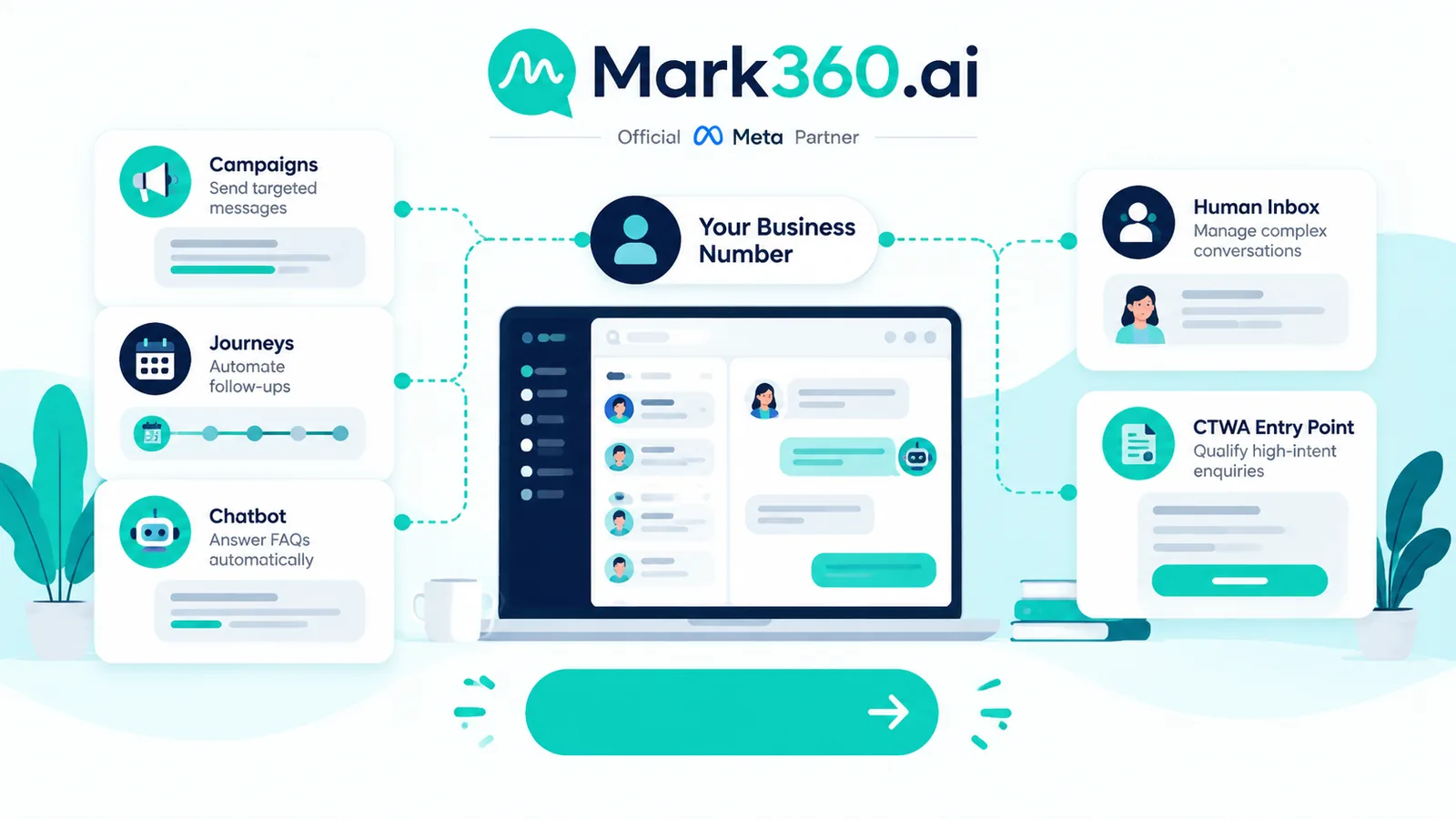
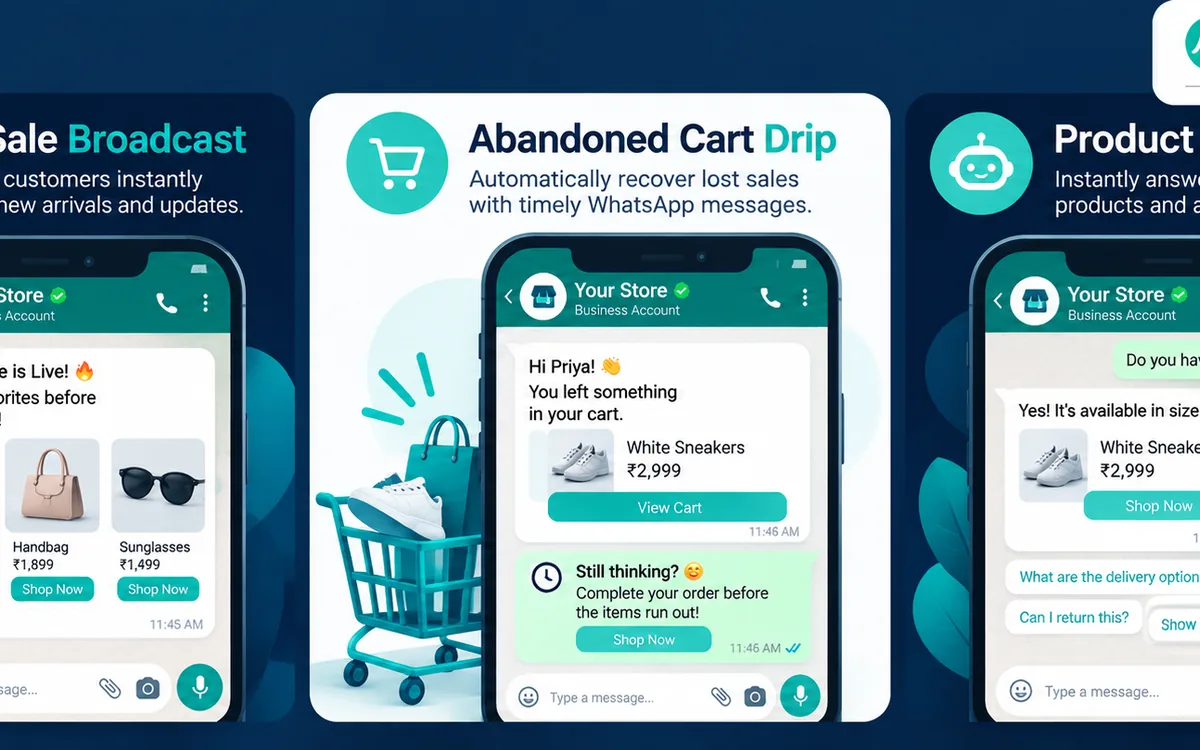
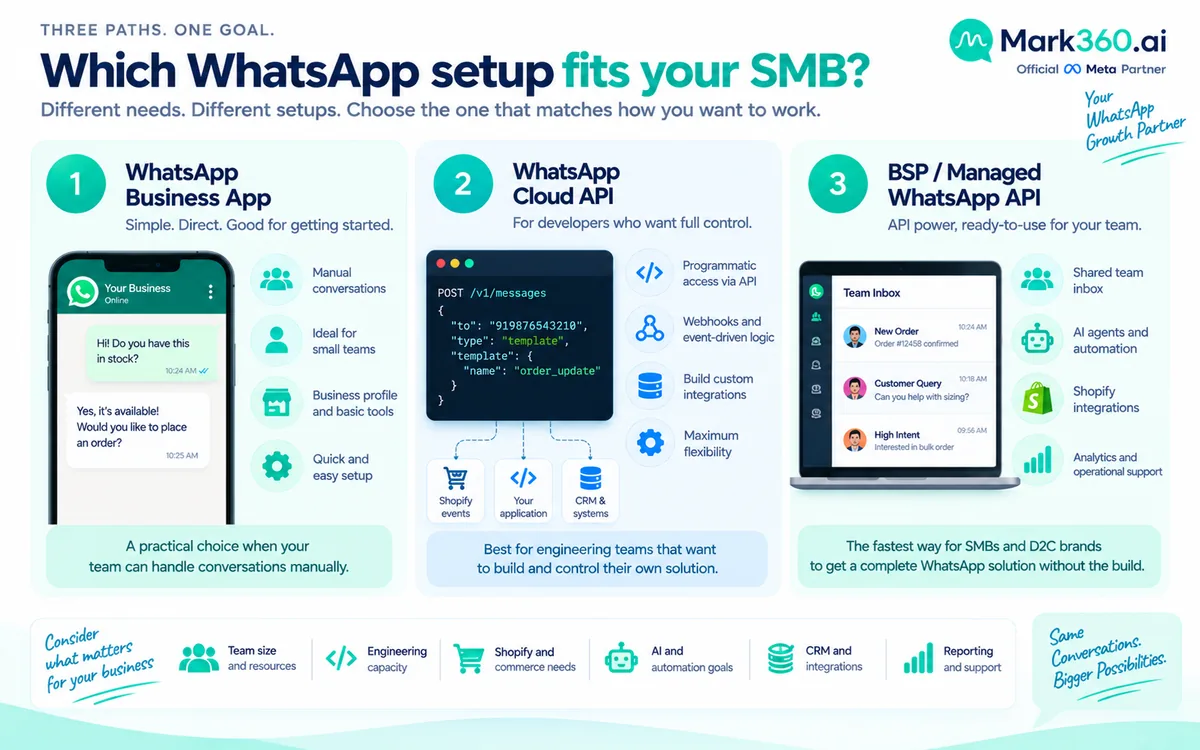
Mark360 is built for WhatsApp campaigns, drips, and AI agents on top of the Business API — so teams can answer common intents once, route revenue moments to humans, and keep Shopify / CRM context attached. Soft next steps:
- Connect your number and map order / booking events into templates.
- Launch FAQ + qualification chatbots with mandatory AGENT handoff.
- Turn repetitive “status?” chats into utility drips.
- Instrument CTWA openers so the 72-hour window is used for qualification, not chatter.
- Review monthly service + utility usage before peak season.
Explore Mark360 WhatsApp API and the existing primer WhatsApp Service Message Pricing: October 1, 2026.
October checklist
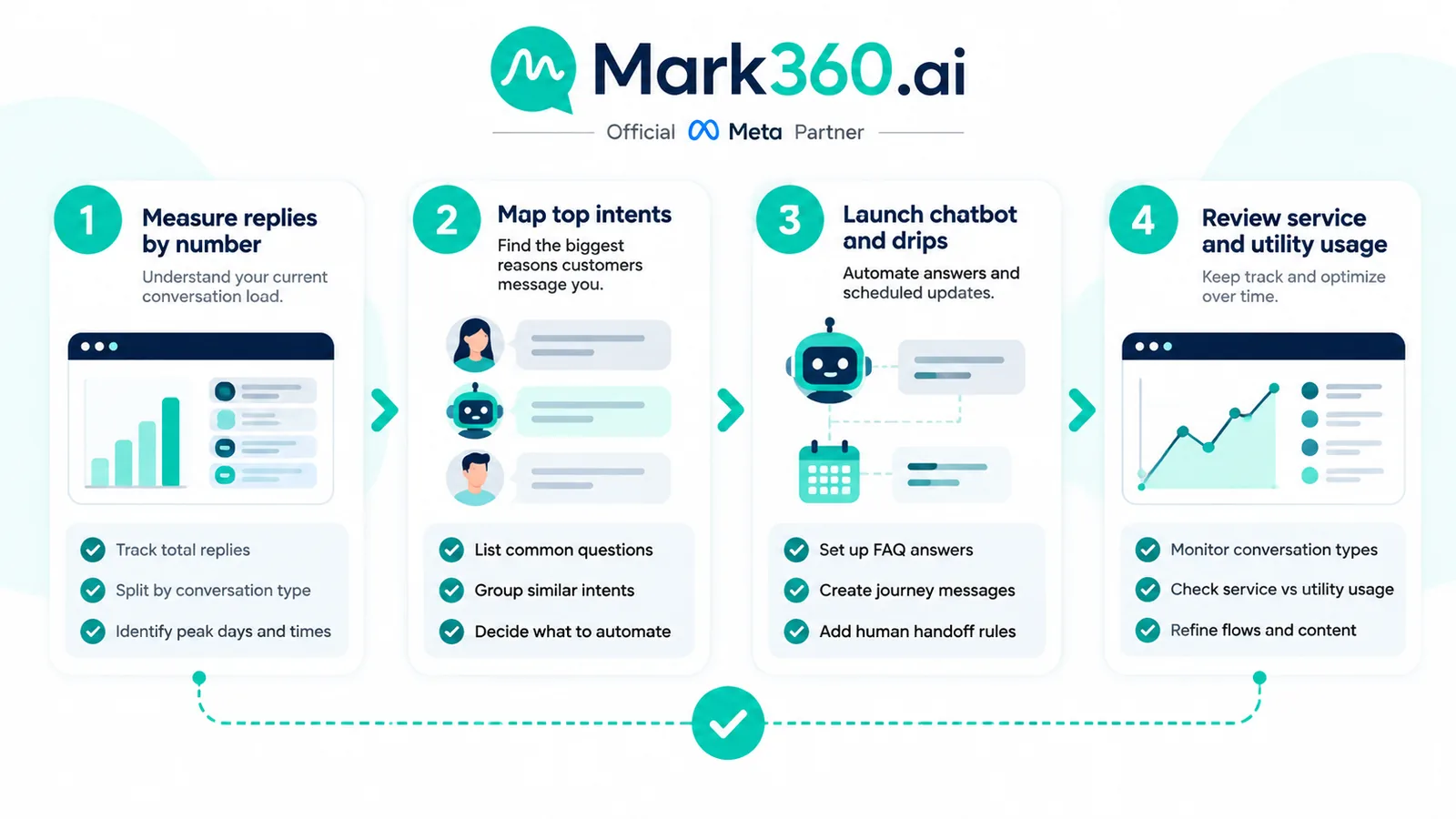
- Export last 30–60 days of free-form outbound volume per number; estimate chargeable service after 1,000.
- List top 20 intents by volume — automate or template the top 10.
- Separate marketing vs utility templates; fix miscategorized copy.
- CTWA: measure time-to-first-reply; fix after-hours coverage.
- Brief sales/support: every casual “ok / sure / sending now” is a billable unit after the free tier.
- Confirm Meta country rates + Mark360 markup on your next invoice — do not rely on competitor all-in screenshots alone.
Related reading
Service message pricing overview · WhatsApp Business API pricing India · CTWA India · WhatsApp AI agent guide · Ecommerce WhatsApp use cases.
Bottom line
October 1, 2026 does not kill WhatsApp support — it prices undisciplined reply habits. Brands that win will treat service messages like a scarce ops resource: automate FAQs, drip the predictable journeys, use templates deliberately, spend free CTWA hours on qualification, and reserve humans for moments that move revenue or reduce risk.